
Male Poses for Headshots: A Strategic Guide by Industry and Role
Learn which male headshot poses signal authority vs. approachability for your specific industry. Practical pose combinations for finance, tech, creative, and more.

I've reviewed thousands of professional headshots through our platform. Most men make the same mistake: they walk into a session and wait for the photographer to tell them what to do.
That's backwards.
Your pose isn't an afterthought. It's a signal. In the three seconds someone spends scanning your LinkedIn profile, your pose tells them whether you're someone they want to work with. The wrong pose for your industry creates friction before you've said a word.
The generic advice (stand straight, tilt your chin, smile) treats all headshots as interchangeable. They're not. A corporate attorney needs to communicate something different than a startup founder. A healthcare provider signals different values than a creative director. I've broken down exactly which poses work for which roles, as I explore further in my guide on headshot poses for men.
Here's what I've learned about making your pose a strategic choice.
Why Your Pose Matters More Than You Think
Let's start with the psychology. People form judgments about your trustworthiness and competence after just 100 milliseconds of exposure to your face. That's faster than conscious thought.
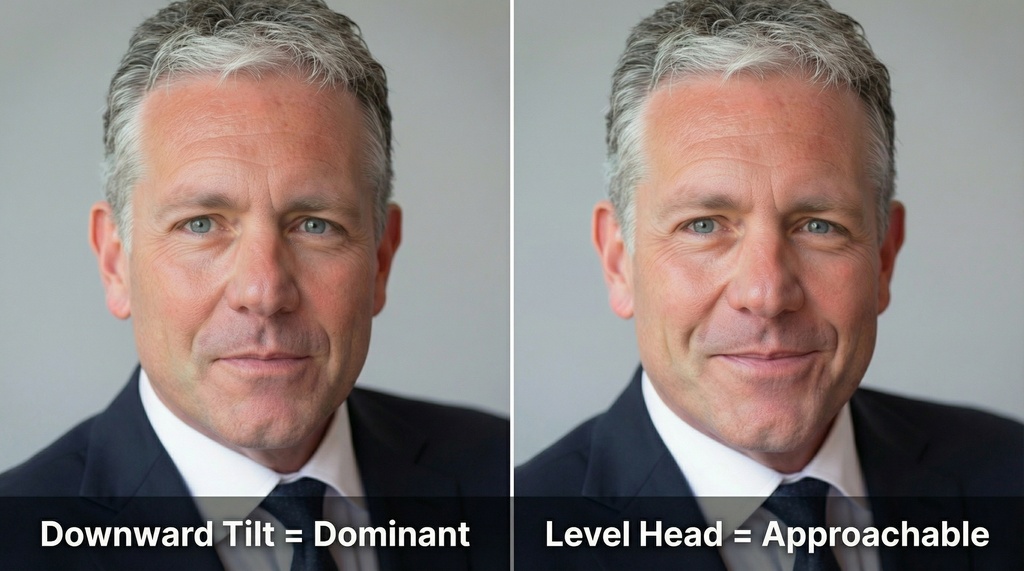
These snap judgments fall into two categories: warmth and dominance. Faces that resemble happy expressions read as trustworthy. Faces with structural cues like a downward head tilt read as dominant, sometimes intimidating.
Here's where it gets interesting. A study on head positioning found that tilting your head down changes how your eyebrows appear. It creates a V-shape that mimics anger, making you seem more dominant. That might work for a litigator. It undermines trust for a therapist.
This is a systems issue. Your pose interacts with your expression, your clothing, and your industry's expectations. Get one variable wrong and the whole thing falls apart.
The Seven Core Poses Every Man Should Know
I've mapped the most common waist-up poses to their mechanics. Think of this as your reference sheet.
| Pose | Body Position | Head Position | Hands | Best For |
|---|---|---|---|---|
| Executive Squared | Squared to camera, shoulders back | Straight, chin slightly forward | Visible at waist or touching lapel | C-Suite, Law Partners, Finance |
| Conversational Turn | 30-45 degree turn from camera | Turned back to lens, minimal tilt | Relaxed at sides or one in pocket | Consultants, PMs, Tech ICs |
| Engaged Lean | Slight turn, leaning forward | Direct eye contact, head level | Resting on surface or clasped | Sales Leaders, Founders, Coaches |
| Relaxed Crossed-Arms | 45-degree turn, shoulders dropped | Straight, chin slightly elevated | Arms crossed, fingers visible | Executives, Speakers, Lawyers |
| Creative Asymmetry | Stronger turn, weight on back leg | Subtle tilt, direct or off-camera gaze | Adjusting cuff or holding glasses | Designers, Marketers, Artists |
| Warm Clinician | Slight turn, relaxed posture | Direct gaze, no tilt | Hands visible and open | Physicians, Therapists, Healthcare |
| Hands-in-Frame Adjust | Angled torso | Direct gaze, chin forward | Grabbing lapel or adjusting cuff | Entrepreneurs, Personal Branding |
The key insight: don't leave your pose to chance. Pick one or two from this list that match your role before your session.
Mapping Poses to Your Industry
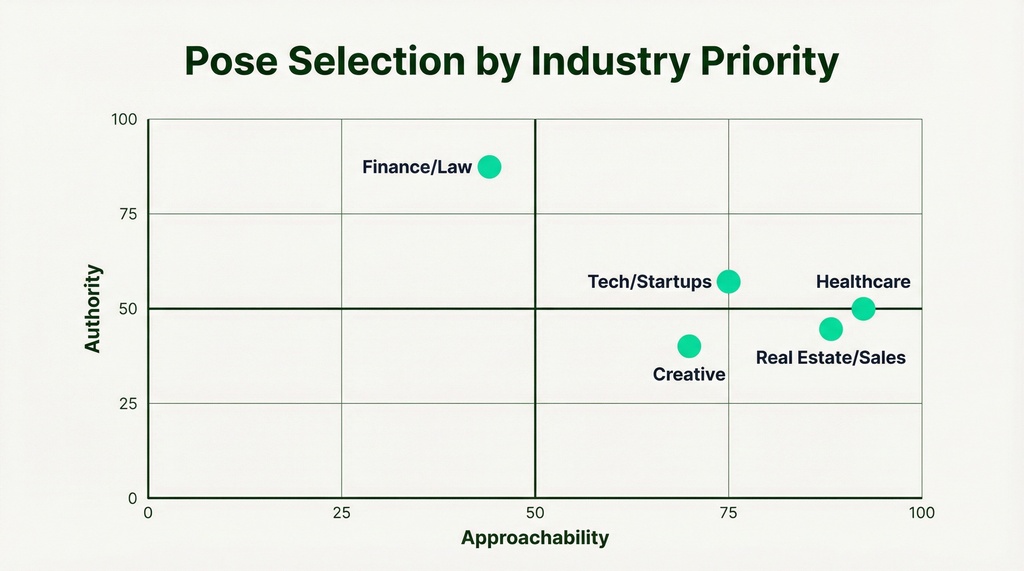
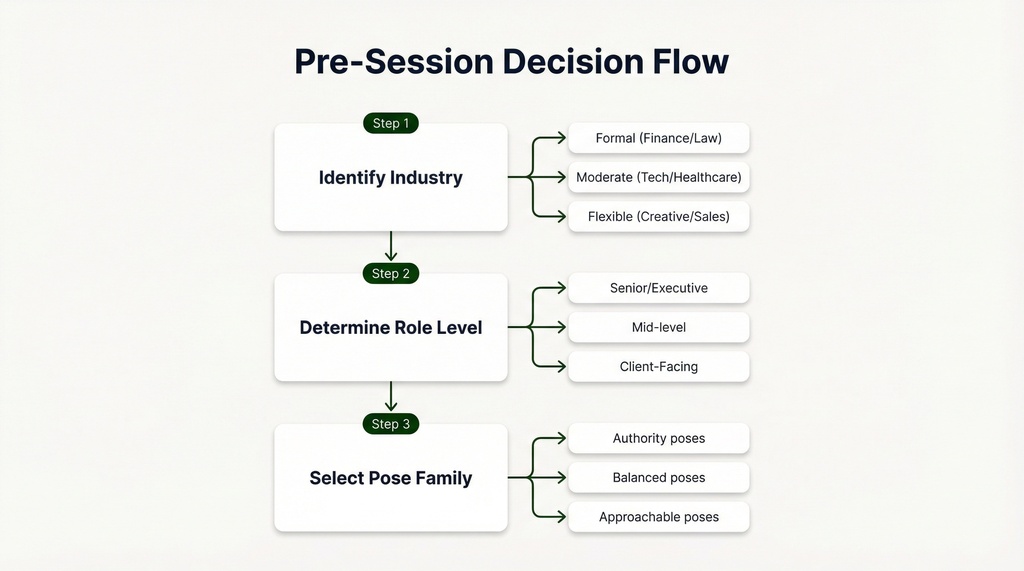
Industry norms dictate how much authority versus approachability you need to project. Here's my breakdown.
Finance and Law: Authority First
These fields still expect formal presence. The standard is business attire against neutral backgrounds in navy or charcoal.
For executives and partners, the Executive Squared or Relaxed Crossed-Arms works best. The goal is gravity without coldness. Keep expressions composed. A subtle closed-mouth smile or confident neutral.
For associates and client-facing roles, the Conversational Turn softens formality. You appear competent but accessible.
Tech and Startups: Competence Plus Approachability
Tech culture favors smart-casual. Nice shirt, jacket optional. The vibe is forward-thinking, not corporate.
Founders and CEOs benefit from the Engaged Lean. It projects active listening and momentum. Engineers and PMs should consider the Conversational Turn with relaxed shoulders. It signals teamwork over hierarchy.

Creative Industries: Express Individuality
Designers, marketers, and media professionals can break traditional rules. Creative Asymmetry or Hands-in-Frame (adjusting glasses, playing with a cuff) showcases personality. Off-camera glances and vibrant backgrounds are acceptable here.
Healthcare: Empathy Above All
Trust is paramount in healthcare. Patients evaluate visual cues to assess whether you'll actually listen to them.
A study on telemedicine empathy confirmed that facial expression, eye contact, and genuine smiles are the critical nonverbal cues. Use the Warm Clinician pose. Avoid crossed arms or downward tilts, which can appear dismissive.
Real Estate and Sales: Bridge the Gap Fast
You need to connect with strangers instantly. The Conversational Turn or Engaged Lean paired with a full, natural smile works well. Open posture signals you're ready to help, not to sell.
The Hand Problem: Where Most Men Fail
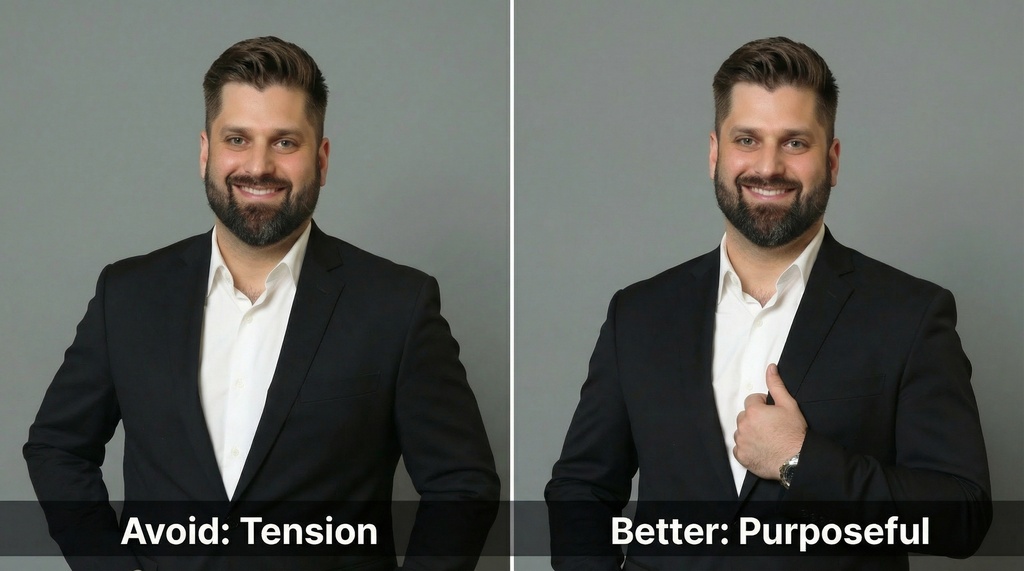
Hands are the make-or-break variable. Hidden hands or clenched fists signal discomfort. They create a subtle tension that ruins the photograph.
One technique photographers use: imagine you're holding a large submarine sandwich at waist level. This gives your hands purpose and naturally pulls your shoulders back.
Crossed arms are tricky. They put a barrier between you and the viewer, often signaling defensiveness. If you use crossed arms for authority, you must drop your shoulders low, keep fingers visible (not tucked into armpits), and pair it with a warm smile.
Better options: one hand in a pocket with thumb visible, or lightly grasping a jacket lapel. Both create a flattering triangular composition that draws the eye up to your face.
Head Position and Expression: The Details That Matter
Two techniques separate average headshots from compelling ones.
First, the "squinch." Coined by headshot photographer Peter Hurley, it involves slightly narrowing the distance between your lower eyelid and pupil. This subtle tension conveys confidence and focus. It prevents the wide-eyed, anxious look that kills headshots.
Second, the jawline push. To eliminate a double chin, push your chin forward toward the camera, then tilt slightly down. It feels unnatural but photographs well.
On smiles: a genuine smile that reaches your eyes significantly boosts perceived likability. But for senior executives or lawyers, a subtle "Mona Lisa" micro-smile maintains authority. Match your expression to your role's expectations.
Body Type Considerations
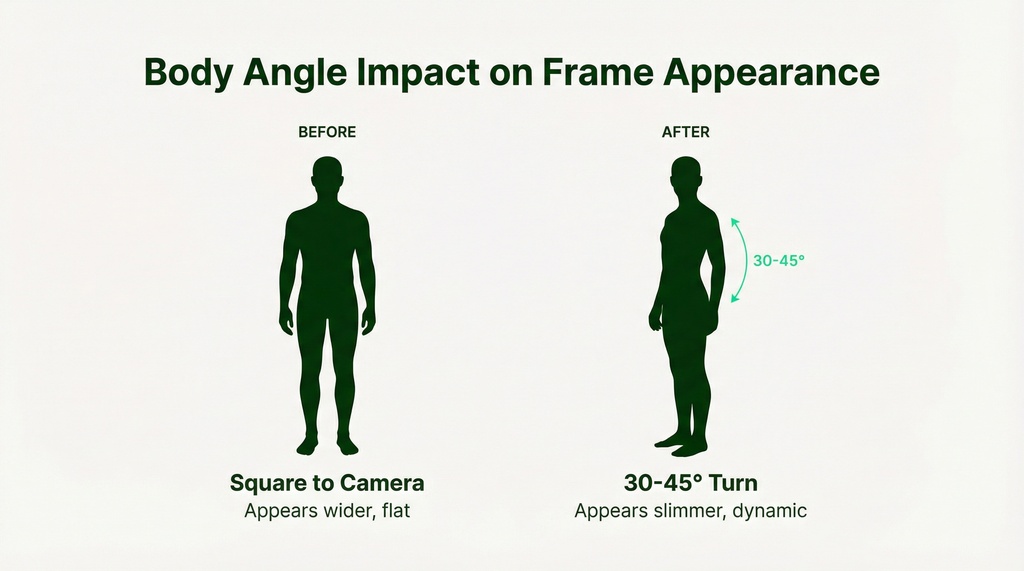
A straight-on pose makes anyone look wider. Turning your body 30-45 degrees from the camera while keeping your face toward the lens instantly slims your profile and adds depth. This applies regardless of build.
For arms: pressing them against your sides makes them look larger. Pushing elbows slightly backward creates space between arm and torso for a slimmer appearance.
Quick Fixes for Common Failures
| Problem | Why It Happens | Fix |
|---|---|---|
| Deer in Headlights | Anxiety opens eyes too wide | Engage lower eyelids (squinch) |
| Double Chin | Head pulls back defensively | Push chin forward, then slightly down |
| Stiff Board | Standing square with pinned arms | Turn torso 45°, shift weight to back foot |
| Arrogant Glare | Head tilted too far back | Level head, camera at or above eye level |
| Defensive Wall | Tight crossed arms, high shoulders | Drop shoulders, show fingers, add smile |
Run this mental checklist before every shot: Shoulders down? Chin forward? Eyes engaged? Hands purposeful?
Using AI Headshots Strategically
The AI headshot market has exploded, with projections exceeding $450 million in 2026. The cost and convenience advantages are real. But most AI generators default to generic corporate poses.
To get usable results, you need pose-specific prompts. Something like: "Subject standing in 45-degree conversational turn. Upper body leans slightly forward. One hand lightly adjusting suit lapel. Shoulders relaxed. Direct eye contact with confident squinch, warm closed-lip smile."
Services like InstaHeadshots let you generate 40-200 headshot variations from selfies. The key is knowing what you want before you start. Apply the same pose strategy whether you're in a studio or using AI.
One thing I've noticed: people often reject their AI headshots because the image shows them un-mirrored. You're used to seeing yourself flipped in selfies. Test your results with third parties to gauge actual perception.

Your Pre-Session Checklist
Before your next headshot session (studio or AI), answer these questions:
- What does my industry expect? Finance and law lean formal. Tech and creative allow more flexibility.
- What's my role's balance? Senior leadership needs more authority signals. Client-facing roles need approachability.
- Which 2-3 poses fit? Pick from the seven-pose matrix based on your answers above.
- What will I do with my hands? Have a plan. Pocket, lapel, or resting position.
- What expression matches my role? Full smile for sales and healthcare. Subtle smile for executives.
The Bottom Line
Constraints create clarity. Once you know your industry expects authority, or approachability, or creative expression, your pose choices narrow significantly. That's a good thing.
Don't walk into your next session hoping the photographer figures it out. Execution is a strategy. Know your pose before you arrive. Know what your hands will do. Know what expression fits your role.
The three seconds someone spends on your profile? Make them count. Your pose communicates your professional identity before you say a word. Choose it deliberately.