
Professional Headshots Near Me: When to Book Local vs. Skip the Studio
Searching 'professional headshots near me'? I researched local studio costs, vetting, and AI options. Here's how to pick based on stakes, speed, and budget.

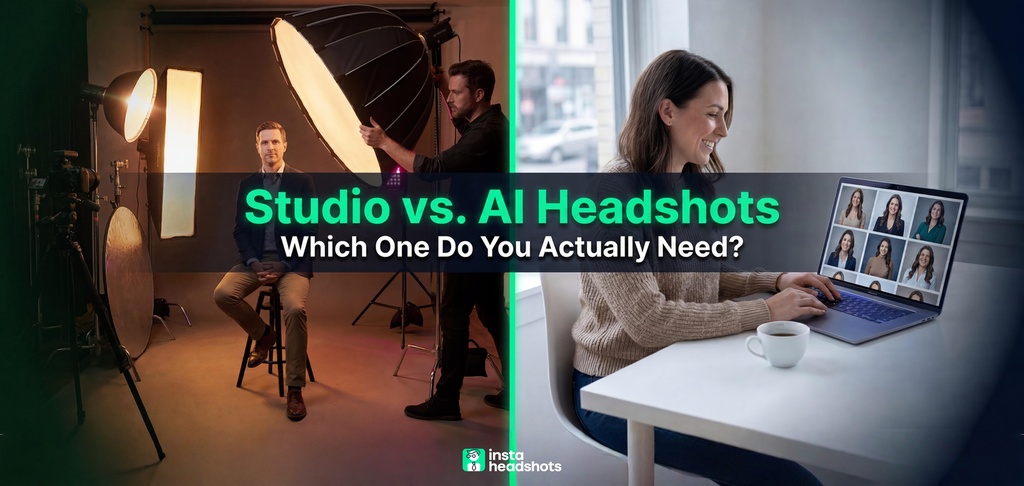
I typed "professional headshots near me" last month. The first studio quoted me $400 for three edited photos. A friend in another city paid $175 for the same thing. Same quality. Different zip code.
That gap made me dig in. I spent weeks pulling pricing data, photographer forums, and AI tool reviews. What I found surprised me. The "near me" search assumes geography is the thing that matters. For most everyday headshots, it isn't.
If you need a photo for LinkedIn, your email signature, or a team page, proximity is mostly irrelevant. The real decision is built on three things: stakes, speed, and budget. Get those right and the answer becomes obvious.
Here's everything I learned, including how to vet a local studio properly and when skipping it entirely makes more sense.
The Quick Answer: It Depends on Stakes, Speed, and Budget
Let me save you the scroll. Most growth problems are structural, and this decision is too.
Here's the short version:
- Local studio session: $150 to $450+ (median around $250) for 2 to 3 edited photos. Turnaround is 48 hours to 3 weeks.
- AI headshot tools: $49 to $69 for 40 to 200 images. Turnaround is 15 to 90 minutes, no appointment.
Choose a local pro when the stakes are high: C-suite branding, press, book jackets, or team photos that must match. Authenticity and consistency win here.
Skip the studio when you need a usable photo fast, your use is LinkedIn or email, or your budget is tight.
The biggest mistake I see? Treating a low-stakes LinkedIn photo like a high-stakes investor deck. Constraints create clarity. Once you name your actual need, the path picks itself.
Why "Near Me" Might Be the Wrong Filter
The "near me" search has a hidden assumption baked in: that location equals quality. My research says it mostly equals operating costs.
Headshot prices swing 2 to 3 times based on city alone. According to a city-by-city breakdown, a session that costs $175 in Phoenix can run $425 in Austin. New York floors at around $450 and climbs past $900.
That's not a skill difference. Downtown studio rent and equipment drive most of it. A professional in Austin pays a geography tax for the same output someone in Phoenix gets cheaper.
So before you book the closest studio with a nice gallery, ask the real question. Does your photo need to be taken near you? For a property tour shot or a team photo, yes. For a LinkedIn profile? Not really.
What a Local Headshot Session Actually Costs and Involves
Let me be honest about the full price. The session fee is rarely the real cost.
A professional paying the median $250 gets 2 to 3 edited images. That works out to $83 to $125 per usable photo. And that's before add-ons.
Here's what pushes the bill higher, based on 2026 pricing data:
| Add-On | Typical Cost |
|---|---|
| Hair and makeup | $50-$200 per person |
| Advanced retouching | $40-$100 per image |
| Rush delivery | $50-$150 extra |
| Commercial usage rights | $100-$500+ |
The time cost is real too. I mapped the full workflow.
| Step | Time Required |
|---|---|
| Researching and vetting photographers | 1-3 hours |
| Booking back-and-forth | 30 min - 2 hours |
| Travel round trip | 1-2 hours |
| The session itself | 30 min - 2 hours |
| Selecting favorites | 15-45 minutes |
| Waiting for delivery | 2-14 days |
That's 3 to 8+ hours of active time spread over 3 to 21 days. If your photo selection process is smooth, some photographers deliver final files within 48 hours after selection. Others take weeks.
There's also a value gap most people miss. An analysis of 714 photographer listings found 74% deliver three or fewer final photos. Most clients expect 20+. That mismatch is worth knowing before you book.
How to Vet a Local Headshot Photographer
If you decide local is right, vet properly. Most people can't tell a headshot specialist from a general portrait photographer. That distinction matters more than the gallery on the homepage.
A specialist focuses almost entirely on this niche. A generalist shoots weddings on Saturday and headshots on Tuesday. The headshots often suffer.
The single most revealing question to ask: "What percentage of your work is corporate headshots?" A genuine specialist answers 70%+. A generalist deflects or says 20 to 30%.
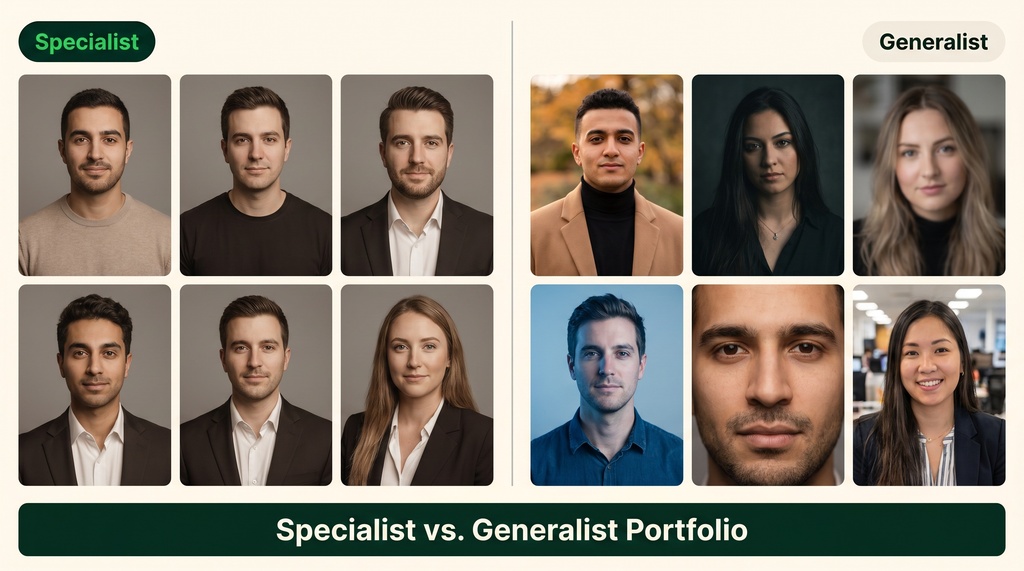
Here are the red flags I'd watch for, based on photographer comparison guidance:
- Inconsistent portfolio: Photos out of focus or with different color tones suggest unreliable results.
- Very low prices: Often signal a rushed "conveyor" process.
- No posing guidance: A specialist directs your expression and posture. A generalist just points the camera.
- Awards as the main pitch: Accolades don't guarantee fit for your needs.
One signal I genuinely trust: a specialist who turns down misaligned work. LA photographer Vanie Poyey declined a client because her whole brand is built on a specific "types" approach. "I'm not the 'general' headshot photographer," she said. That focus is the point.
Before booking, ask these:
| Category | Key Question |
|---|---|
| Specialization | "What percentage of your work is headshots?" |
| Retouching | "What's included? Can I see before-and-after examples?" |
| Turnaround | "Typical delivery time? Is rush available?" |
| Consistency | "Can you replicate this style for future sessions?" |
| Fees | "What's included in the price? Any group discounts?" |
And if you book, prepare well. Solid colors, no loud patterns, decent sleep. I cover the full routine in this headshot prep guide.
When a Local Photographer Clearly Wins
I'm not anti-studio. For some jobs, the local pro is the only right answer.
The clearest case is team consistency. A Fortune 500 HR director used AI for her 200-person team. When she sent the results to photographer Henry David, 43 of 200 images needed manual fixes. Mismatched eyes, floating collars, teammates who looked like they were in different rooms.
The reason is structural. AI generates each image on its own. There's no shared lighting setup connecting one teammate to another. A photographer sets up one configuration and shoots everyone against it. Consistency by construction.
Local photographers also win for:
- C-suite and executive branding. Annual reports and investor decks need real authority and warmth.
- Environmental shots. A realtor at a property, a doctor in a clinic, a chef in a kitchen. AI only makes generic backgrounds.
- Deep personal branding. Coaches, therapists, and consultants need genuine expression a photographer can draw out.
- High-stakes press. Book jackets and keynote slides demand authenticity and resolution.
As DC photographer Lisa Maco put it, a real photographer can "capture a person's personality, character, and unique features in a way that an AI program cannot." For high-stakes work, I agree. The stakes justify the cost and the wait.
When You Should Skip the Studio Entirely
Now the other side. For everyday professional photos, the studio is often the slowest, most expensive option you could pick out of habit.
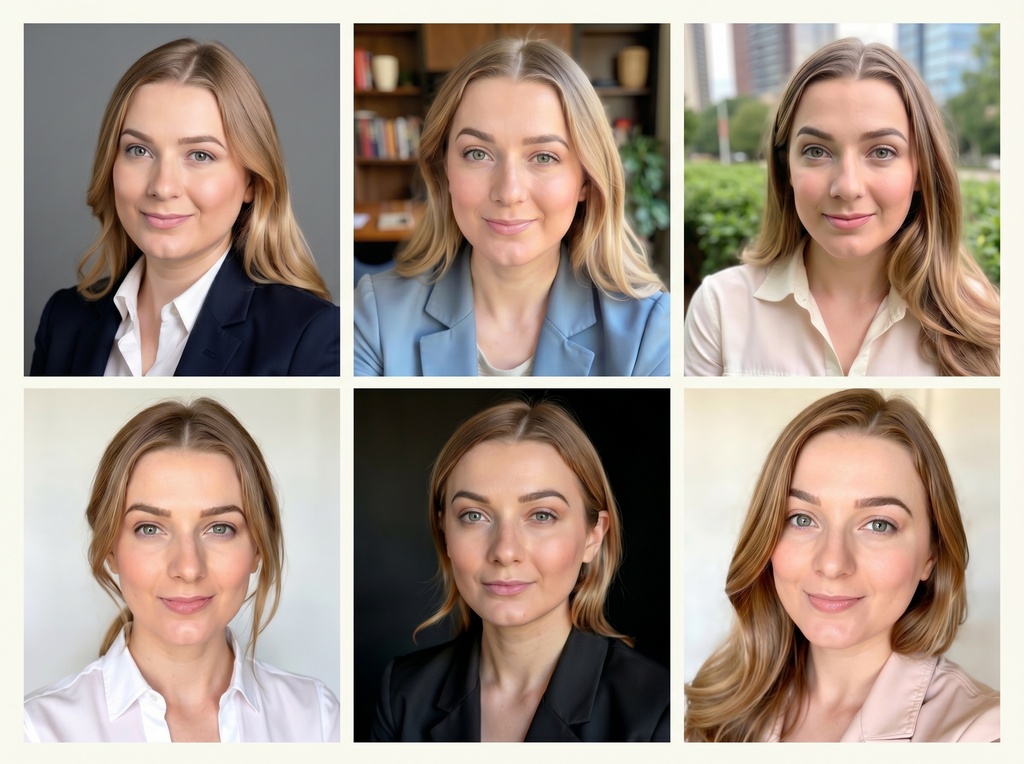
AI headshot tools deliver 40 to 200 images in 15 to 90 minutes. No appointment. No travel. The cost runs $49 to $69 versus $250+ for a few studio shots.
Do the math on cost-per-usable-photo. Even if only half your AI images are great, that's still 20 to 100 usable options at well under $1.25 each. The studio gives you 2 to 3 at $83 to $125 each.
Here's the part people overlook. The biggest professional risk isn't a slightly imperfect AI photo. It's having no headshot at all. LinkedIn's own data shows profiles with photos get 21 times more views and 36 times more messages. Professional photos get 14 times more views than casual selfies.
That 14x gap between professional and selfie dwarfs any quality difference between a studio and an AI tool. A headshot that exists today beats a theoretically better one you keep postponing.
I'll be honest about the trade-offs. AI sometimes produces a "looks better than you but not quite like you" effect. Reddit users report about a 50% usable hit rate. Some images show odd eyes or expressions you don't make. But with 50 photos, volume covers the misses.
Tools like Headshots by Magic Studio sit in this lane. You upload 10 selfies, the AI builds a model of your face, and it generates HD headshots across styles. You see all 50 before paying, and packs start at $49: a starter pack of 3, all 50 for $59, or all 50 in print-ready high resolution for $69. There's a pay-after-preview model and a money-back guarantee, which removes the old "is this a gamble" worry. It's built for founders, freelancers, and remote workers, not editorial or high-fashion shoots.
I walk through the convenience-versus-control trade-off in more detail in this case for AI headshots.
Your Decision Framework
Let me make this simple. Match your need to the path.
The central tension is authenticity versus access. Local photographers produce more authentic images but create barriers: cost, scheduling, travel, time. AI lowers those barriers but trades some authenticity. The right choice depends on which barrier matters more for you.
One more thing worth knowing. Headshots should be updated every 1 to 3 years, with healthcare and C-suite needing annual refreshes. Many people go 5+ years. The friction of booking a studio is a big reason why. Lower the friction and you actually keep your photo current.
My Bottom Line
After all this research, here's where I landed. "Near me" is a habit, not a strategy.
The buck stops with you on this decision, so make it deliberately. Name your stakes. Check your timeline. Set your budget.
If you're an executive shooting for an annual report, or you need 30 teammates to match, book a vetted local specialist. Ask the 70% question. Check portfolio consistency. The cost is justified.
If you need a clean LinkedIn photo by Friday and you'd rather not pose for a stranger, skip the studio. An AI tool gets you dozens of options today for the price of one studio photo.
Both paths are legitimate. The wrong move is defaulting to the slowest, most expensive option just because it was the first search result. Leverage beats effort. Pick the path that fits the actual job.