
Headshot Poses for Men: Business Poses by Role, Plus Male Model Poses
The best headshot pose for men is a 30 to 45 degree turn, chin forward and down, hands with a job. Seven business poses by industry and 12 male model poses.

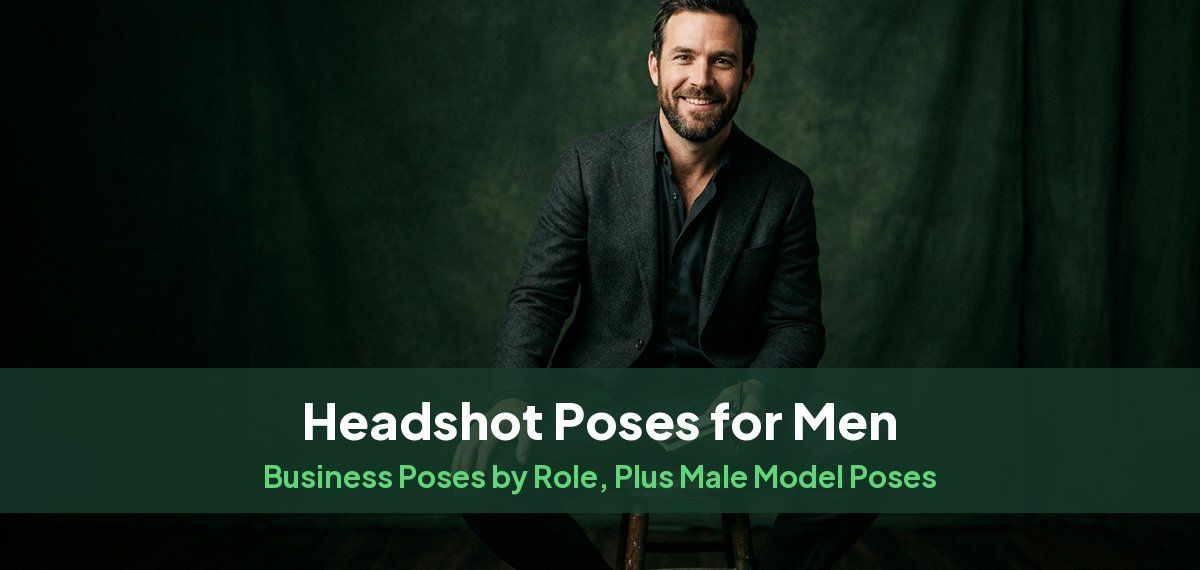
The headshot pose that works for most men is the conversational turn: body turned 30 to 45 degrees from the camera, face back to the lens, chin pushed forward and slightly down, shoulders dropped, and hands either out of frame or given a job. From there, you square up for more authority or lean in for more warmth, depending on your industry.
This guide covers men's headshot poses for business, by industry and role, and then a full section of male model poses for portfolio and fashion shoots. For the general poses, see our headshot poses guide, and for women, headshot poses for women. For a role-by-role corporate guide, see professional headshot poses.
Why the pose matters
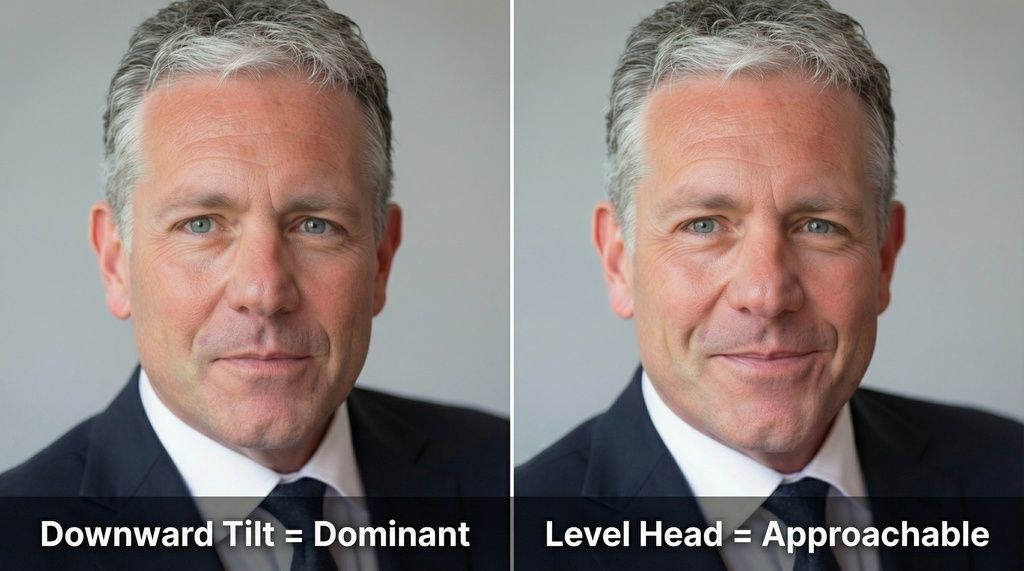
People judge how trustworthy and competent a face looks after seeing it for about 100 milliseconds. Small changes in head position move that judgment. In one set of studies, people photographed with their heads tilted down were rated as substantially more dominant than the same people with level heads, because the downward tilt makes the eyebrows look V-shaped, like a frown. That can help a litigator and hurt a therapist.
Men's headshot poses at a glance
| Pose | Body | Head | Hands | Best for |
|---|---|---|---|---|
| Executive squared | square to camera, shoulders back | level, chin slightly forward | at the waist or touching a lapel | C-suite, law partners, finance |
| Conversational turn | 30 to 45 degree turn | turned back to the lens, minimal tilt | relaxed at sides or one in a pocket | consultants, project managers, tech |
| Engaged lean | slight turn, leaning forward | level, direct eye contact | resting on a surface or clasped | sales leaders, founders, coaches |
| Relaxed crossed arms | 45 degree turn, shoulders dropped | straight, chin slightly forward | arms crossed, fingers visible | executives, speakers, lawyers |
| Creative asymmetry | stronger turn, weight on the back leg | subtle tilt, direct or off-camera gaze | adjusting a cuff or holding glasses | designers, marketers, artists |
| Warm clinician | slight turn, relaxed posture | level, direct gaze | visible and open | physicians, therapists, healthcare |
| Hands-in-frame adjust | angled torso | direct gaze, chin forward | holding a lapel or adjusting a cuff | entrepreneurs, personal branding |
The seven business poses, step by step
1. Executive squared
- Angle: square to the camera, or turned only slightly.
- Chin: level and pushed slightly forward.
- Shoulders: back and even, not raised.
- Hands: visible at the waist, or one hand lightly on a lapel.
- Expression: a closed-mouth smile or confident neutral with a squinch.
Who it suits: CEOs, partners, senior finance and law. Too severe for most junior roles.
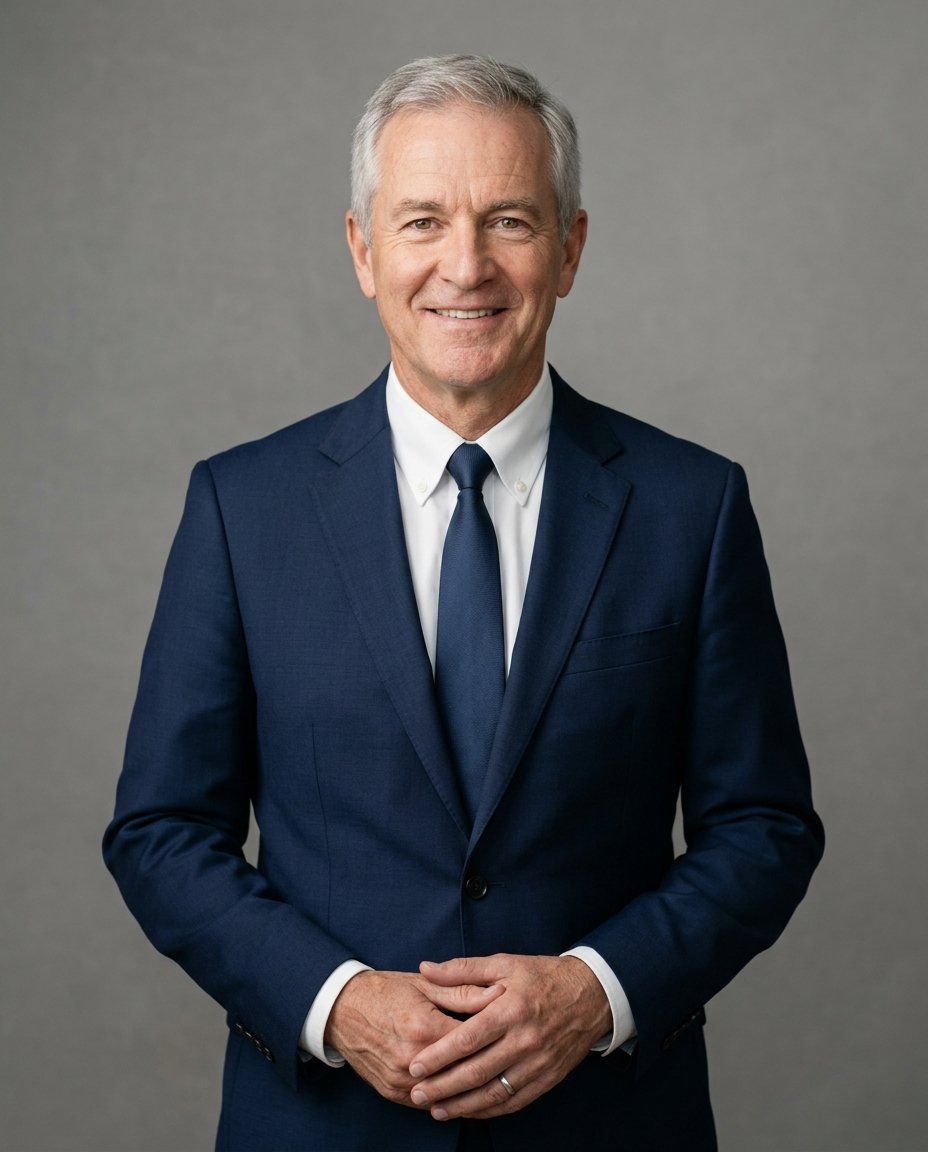
2. Conversational turn
- Angle: body turned 30 to 45 degrees, face back to the lens.
- Chin: forward and slightly down.
- Shoulders: relaxed, the near shoulder slightly lower.
- Hands: relaxed at your sides, or one in a pocket with the thumb out.
- Expression: an easy smile.
Who it suits: consultants, product managers, engineers, associates in law and finance who need to look approachable.
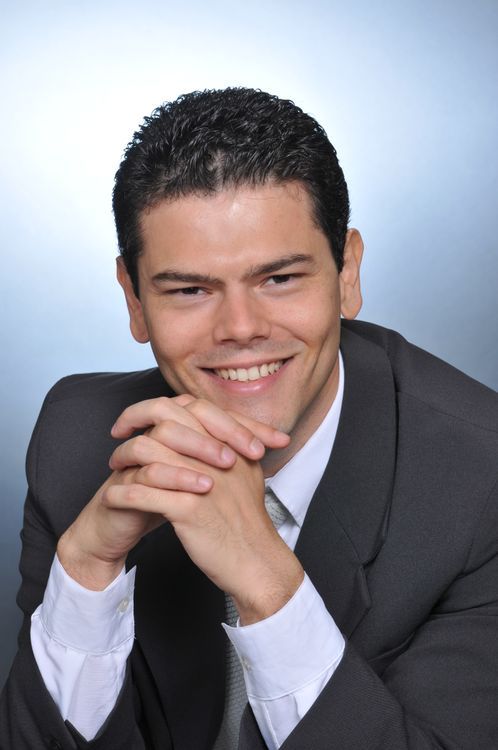
3. Engaged lean
- Angle: slight turn, leaning forward from the hips.
- Chin: level, eyes straight into the lens.
- Shoulders: relaxed, back straight.
- Hands: clasped loosely, or forearms resting on a desk.
- Expression: a full, warm smile.
Who it suits: founders, sales leaders, coaches, real estate agents.
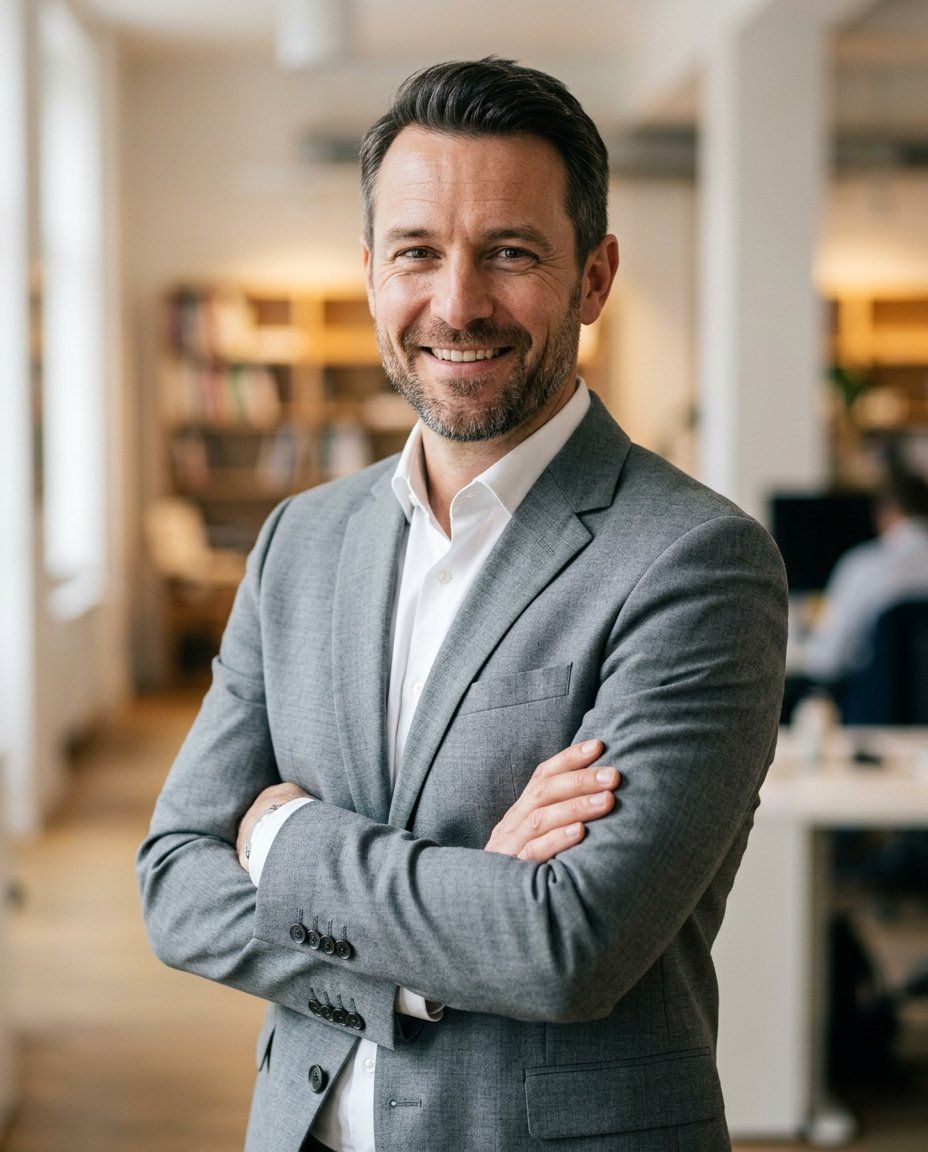
4. Relaxed crossed arms
Crossed arms can put a barrier between you and the viewer. To use them for authority, drop your shoulders low, keep your fingers visible rather than tucked into the armpits, and smile.
- Angle: about a 45 degree turn.
- Chin: straight, slightly forward.
- Shoulders: dropped.
- Hands: arms crossed at mid-forearm, fingers visible.
- Expression: a warm smile.
Who it suits: executives, speakers, lawyers, tech leads. For waist-up crops.
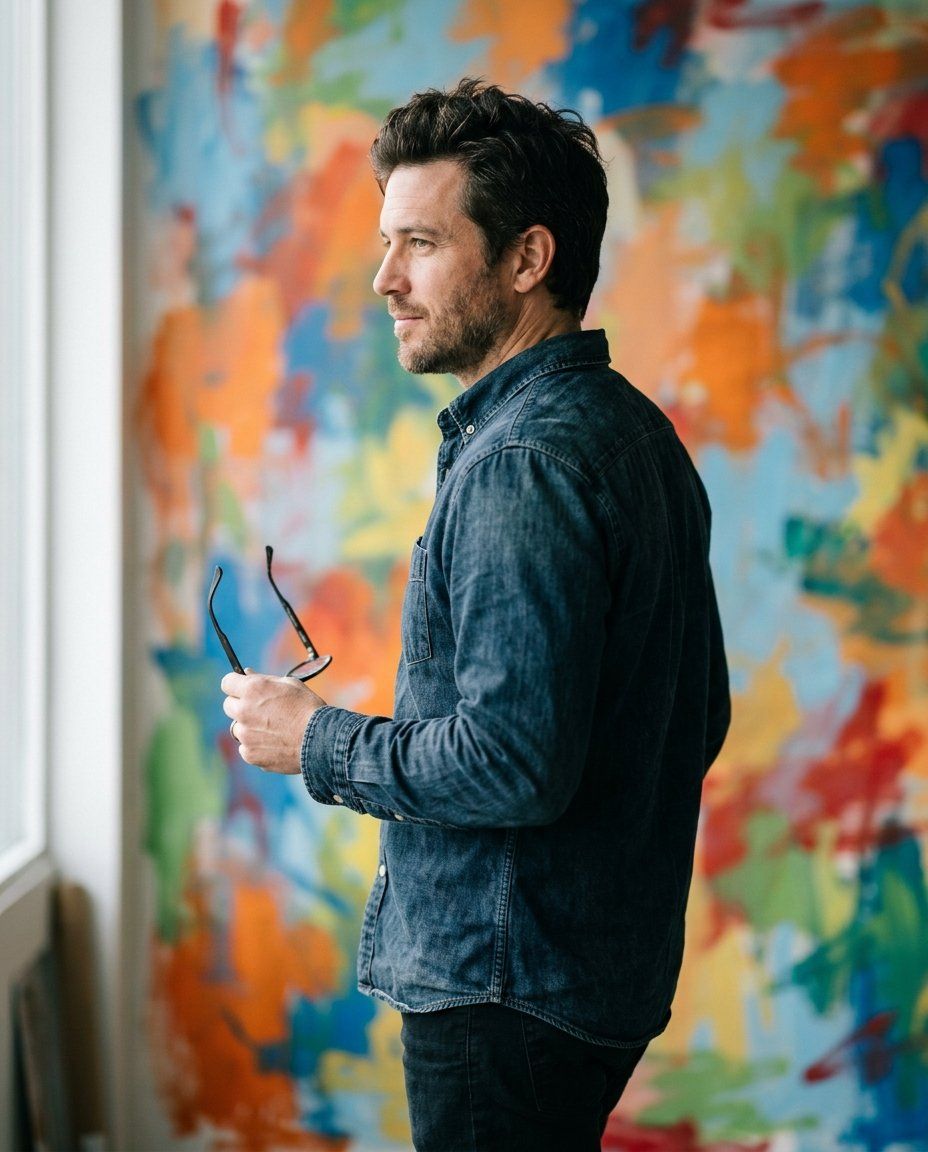
5. Creative asymmetry
- Angle: a stronger turn, weight on the back leg.
- Chin: a subtle tilt.
- Shoulders: uneven on purpose, one lower than the other.
- Hands: adjusting a cuff or holding glasses.
- Expression: relaxed, gaze direct or just off camera.
Who it suits: designers, marketers, artists, media professionals.
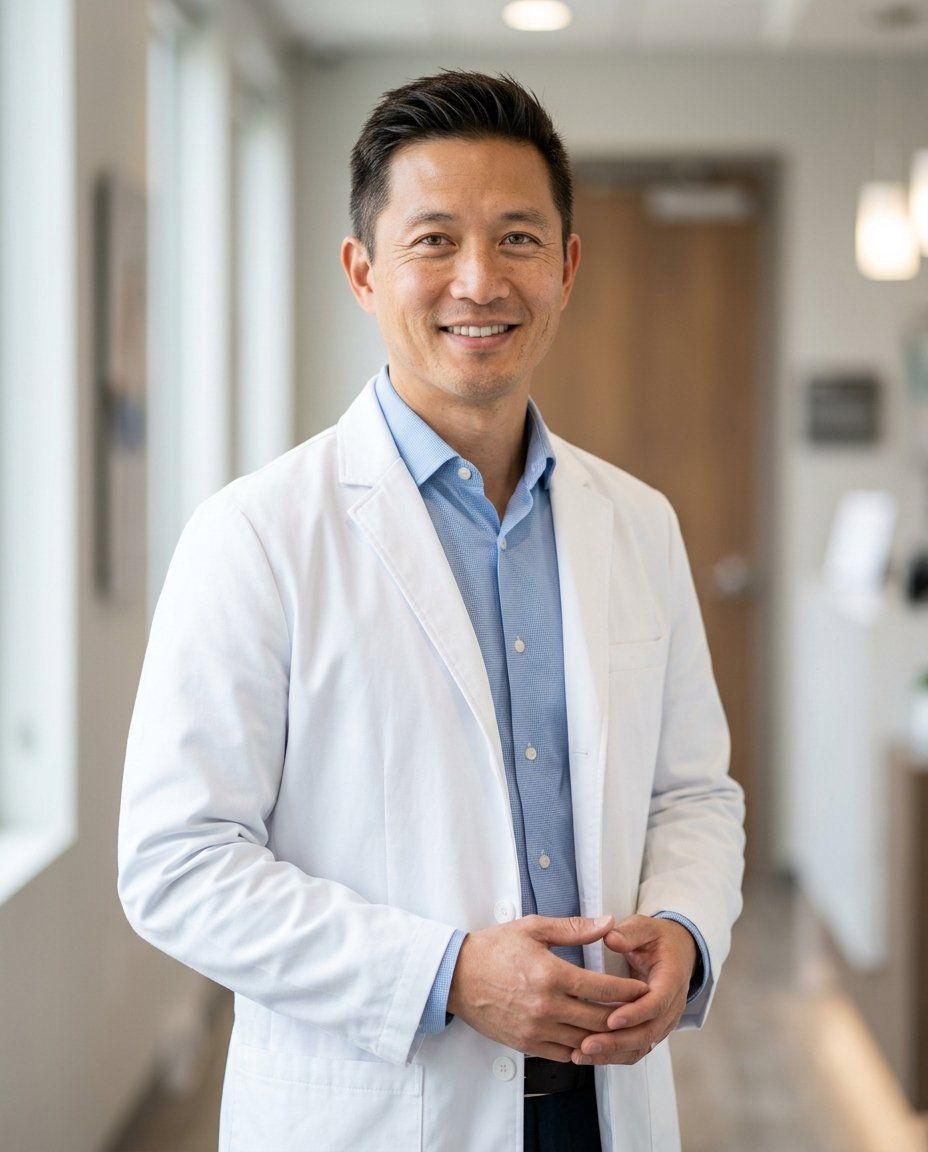
6. Warm clinician
Patients read visual cues to decide whether you will listen. Avoid crossed arms and downward head tilts, which can look dismissive.
- Angle: slight turn, relaxed posture.
- Chin: level, no tilt.
- Shoulders: relaxed.
- Hands: visible and open, or out of frame.
- Expression: a genuine smile that reaches the eyes.
Who it suits: physicians, dentists, therapists, nurses.
7. Hands-in-frame adjust
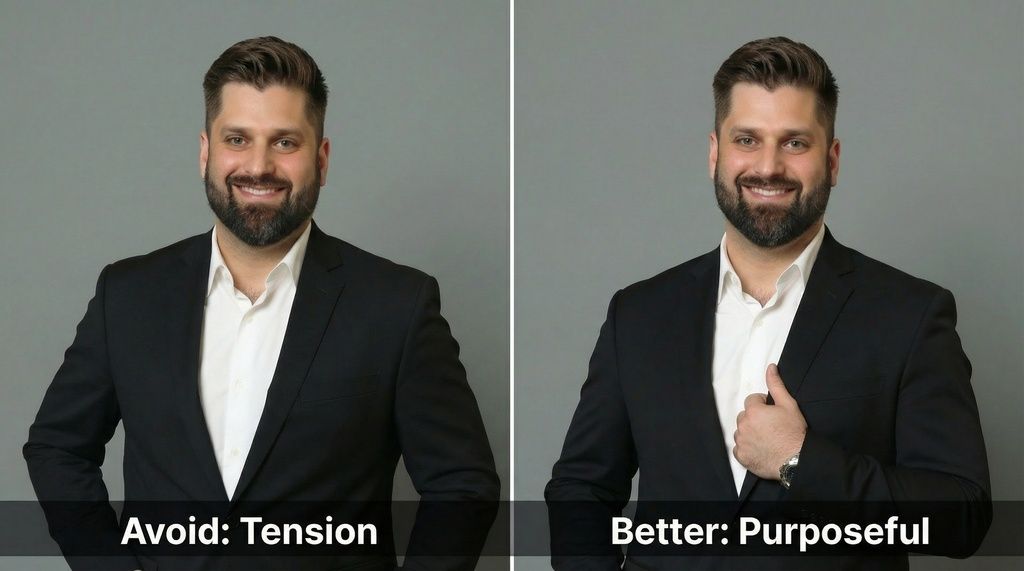
Giving your hands a small task, like holding a lapel or fixing a cuff, pulls the shoulders back and draws the eye to your face. One trick photographers use: imagine you are holding a large sandwich at waist height, which gives the hands purpose.
- Angle: torso angled from the camera.
- Chin: forward, eyes direct.
- Shoulders: pulled back by the hand position.
- Hands: one hand lightly grasping a jacket lapel or adjusting a cuff.
- Expression: confident, a closed-mouth or full smile.
Who it suits: entrepreneurs and personal-brand profiles.
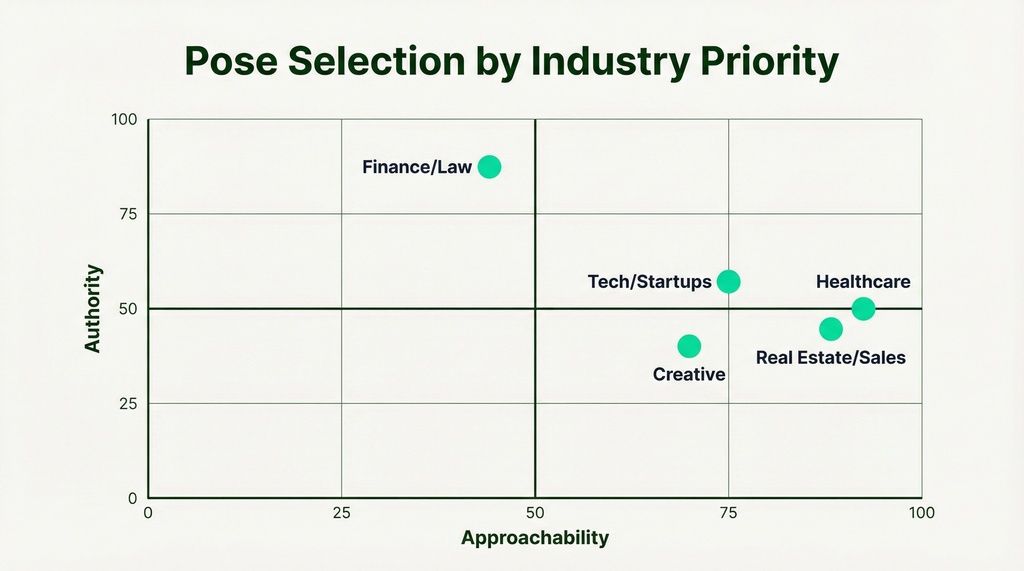
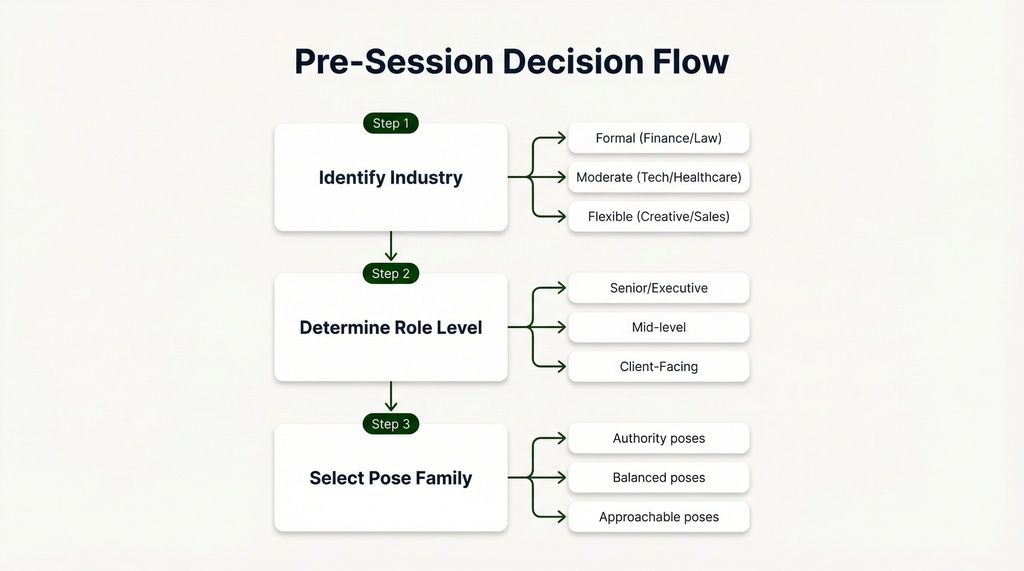
Which pose for your industry
| Industry | Pose | Expression | Avoid |
|---|---|---|---|
| Finance and law | executive squared or relaxed crossed arms for partners, conversational turn for associates | subtle closed-mouth smile or confident neutral | casual posing, big grins |
| Tech and startups | engaged lean for founders, conversational turn for engineers and PMs | natural smile | stiff corporate formality |
| Creative | creative asymmetry, hands-in-frame | varied, off-camera glances are fine | the generic corporate pose |
| Healthcare | warm clinician | genuine smile | crossed arms, downward tilt |
| Real estate and sales | conversational turn or engaged lean | full, natural smile | closed posture |

Head position and expression
- The squinch. Raise your lower eyelids slightly while keeping the upper lids steady. Photographer Peter Hurley, who named it, uses it to fix the wide-eyed look that reads as nervous on camera.
- The jawline push. To remove a double chin, push your chin toward the camera, then tilt it slightly down. It feels odd and photographs well.
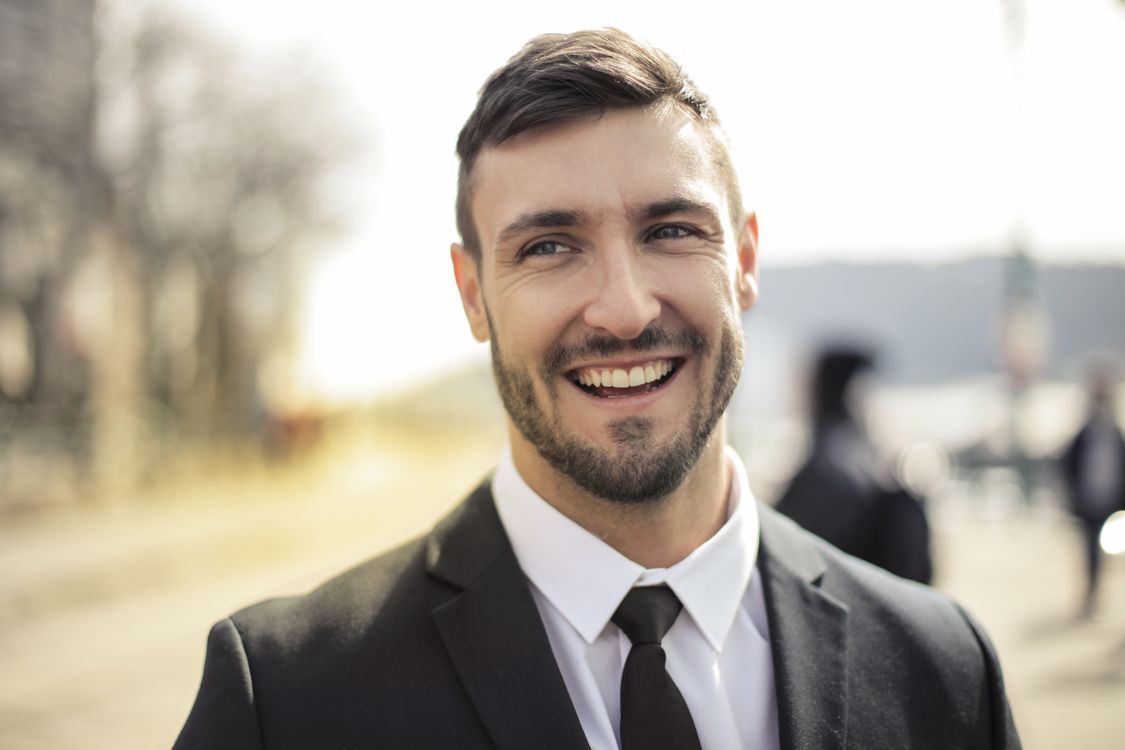
- Match the smile to the role. A genuine smile that reaches the eyes suits sales and healthcare. A subtle closed-mouth smile keeps authority for senior executives and lawyers. For more, see should you smile in a headshot.
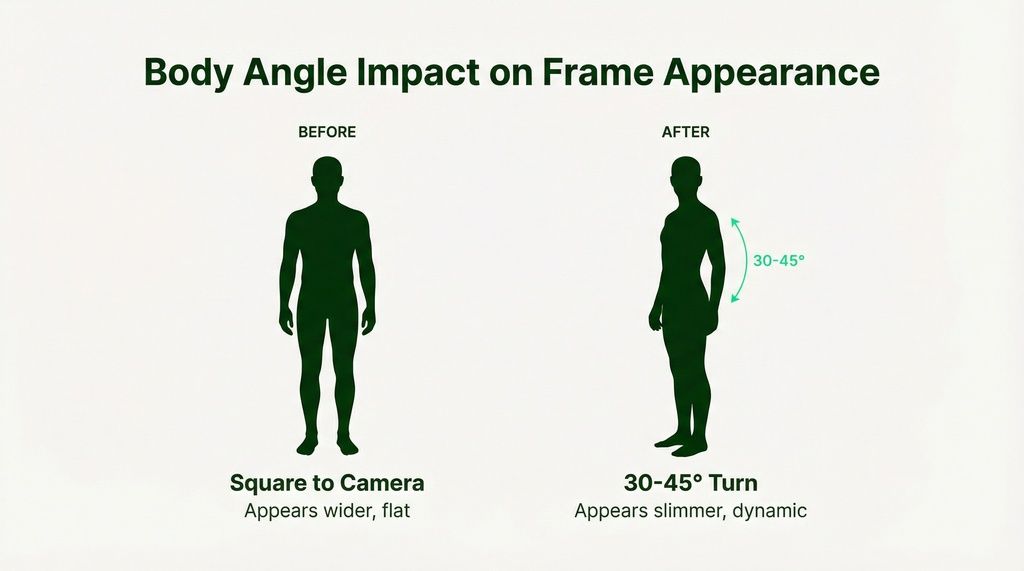
Body type matters less than people think. A straight-on pose makes anyone look wider, and the 30 to 45 degree turn slims everyone. Pressing your arms against your sides makes them look bigger; pushing the elbows slightly back leaves a gap that looks slimmer.
Common mistakes and fixes
| Problem | Why it happens | Fix |
|---|---|---|
| Deer in headlights | nerves open the eyes too wide | squinch the lower eyelids |
| Double chin | the head pulls back | chin forward, then slightly down |
| Stiff board | standing square with pinned arms | turn the torso 45 degrees, weight on the back foot |
| Arrogant glare | head tilted too far back | level the head, camera at or above eye level |
| Defensive wall | tight crossed arms, high shoulders | drop the shoulders, show the fingers, smile |
Male model poses
Modeling shoots, for a portfolio, a brand or social media, allow far more movement than a business headshot. The basics are the same: chest open, shoulders back and down, a 30 to 45 degree angle to the camera, hands relaxed and visible, and a relaxed face rather than a frozen smile. Shift your weight between your feet so the pose does not look planted.
The modeling headshot
For a model's headshot itself (the close-up an agency asks for), keep it simple.
- Angle: straight on or a slight turn.
- Chin: level, slightly forward.
- Shoulders: relaxed and even.
- Hands: out of frame.
- Expression: neutral or a slight smile, with engaged eyes. Grooming should match the look you are booking for.
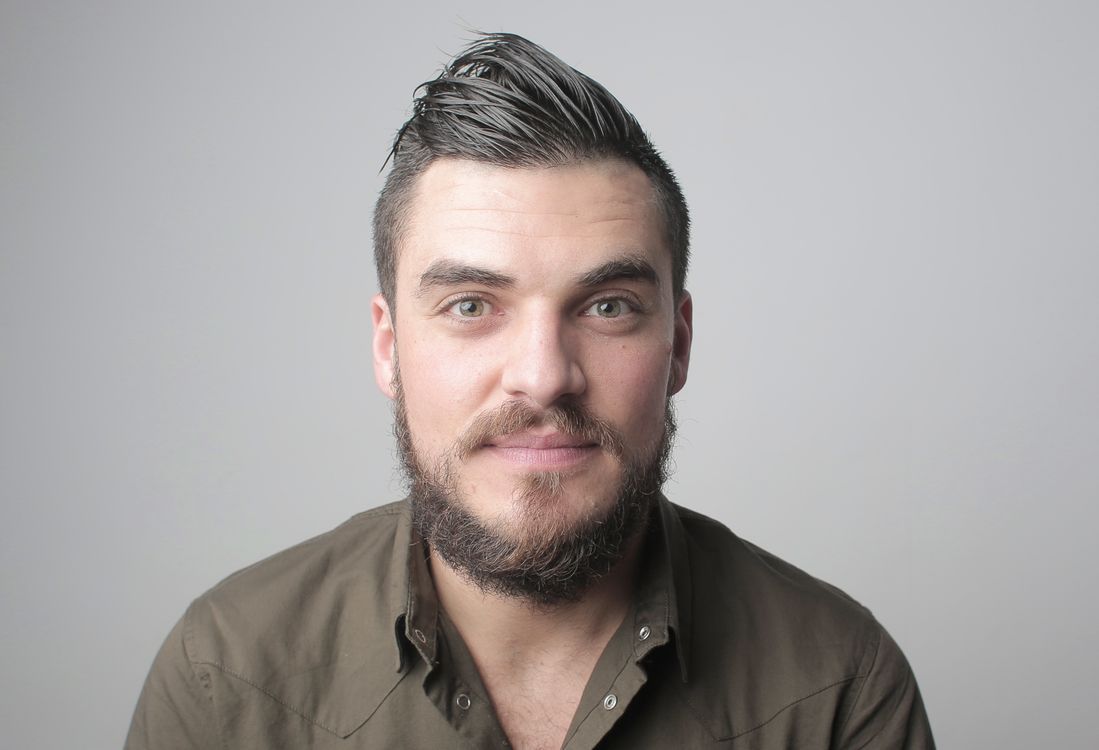
More on agency headshots is in men modeling headshots and the complete guide to modeling headshots.
Standing poses
Shoulder-width stance. Feet shoulder-width apart, standing tall. Symmetrical and bold.
- Turn the torso slightly so the shot is not flat.
- Keep the chin level.
- Shoulders back and down.
- Put one hand in a pocket, or let both hang loose.
- A calm, confident expression.
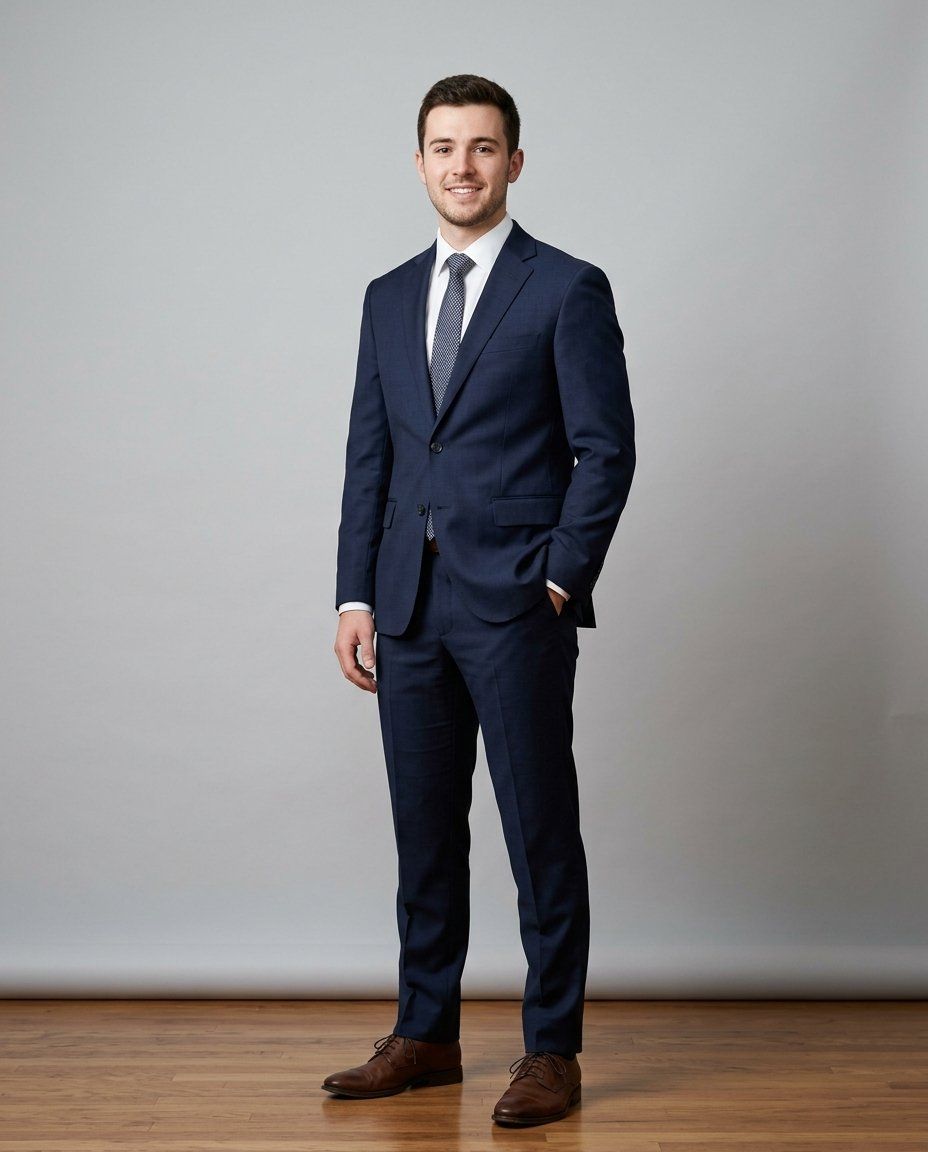
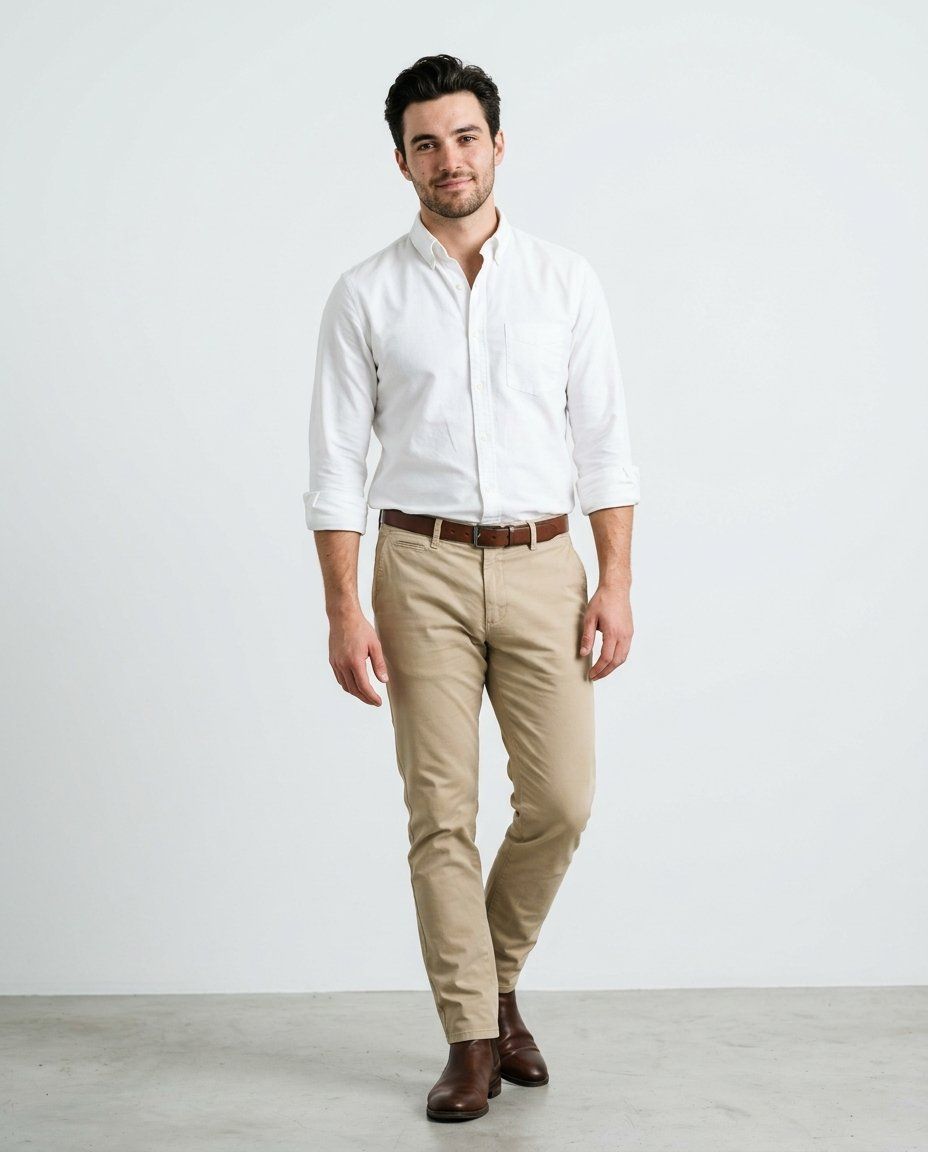
Contrapposto. Weight on one leg, the other knee slightly bent. Relaxed and natural, and one of the most used male poses.
- Turn 30 to 45 degrees to the camera.
- Chin level.
- Relax the shoulders so the weight shift does not look exaggerated.
- Hands loose at the sides or one in a pocket.
- A relaxed expression.
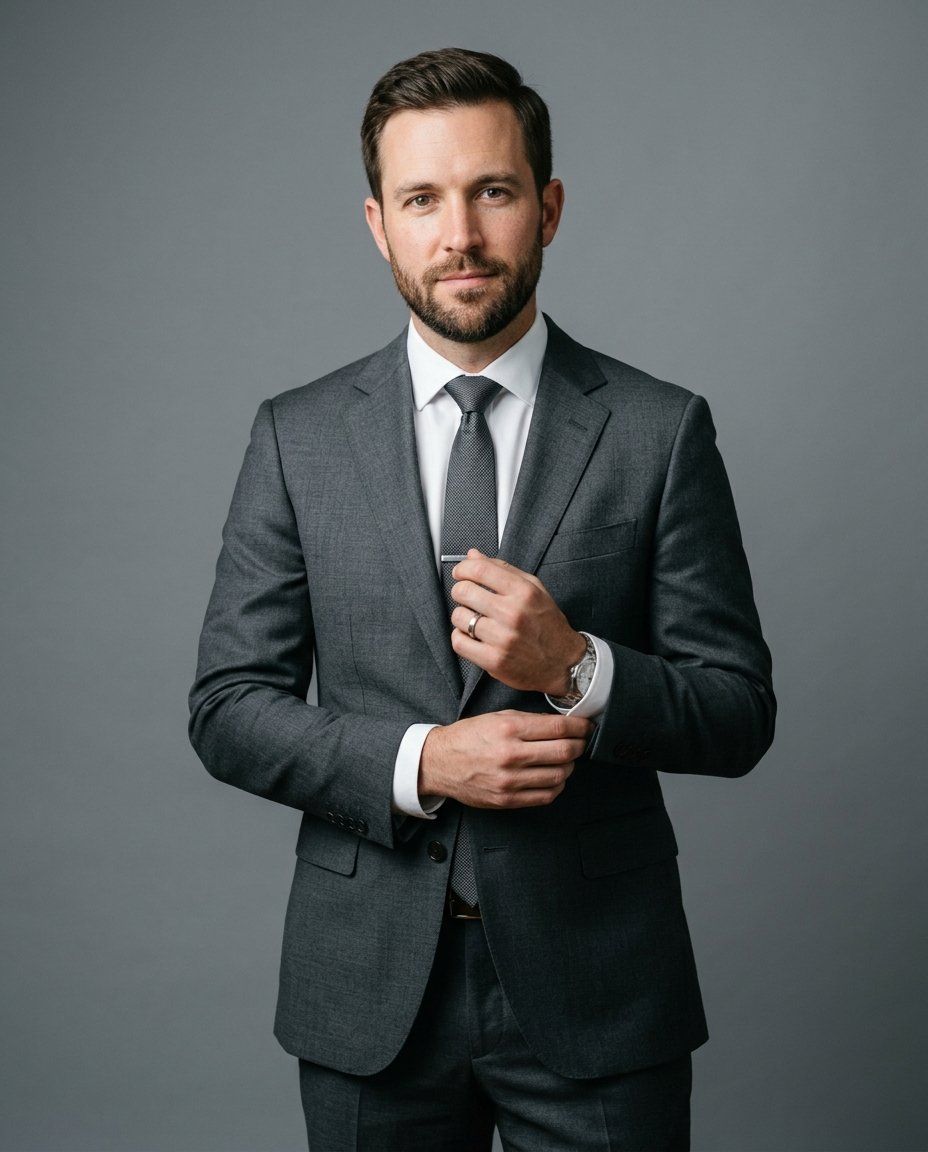
Arms crossed or adjusting a cuff. Cross the arms loosely, or, in a suit, gently adjust a sleeve cuff for some movement.
- A slight turn to the camera.
- Chin forward.
- Shoulders open, which makes them look broader.
- Arms crossed loosely, never tight.
- Composed expression.
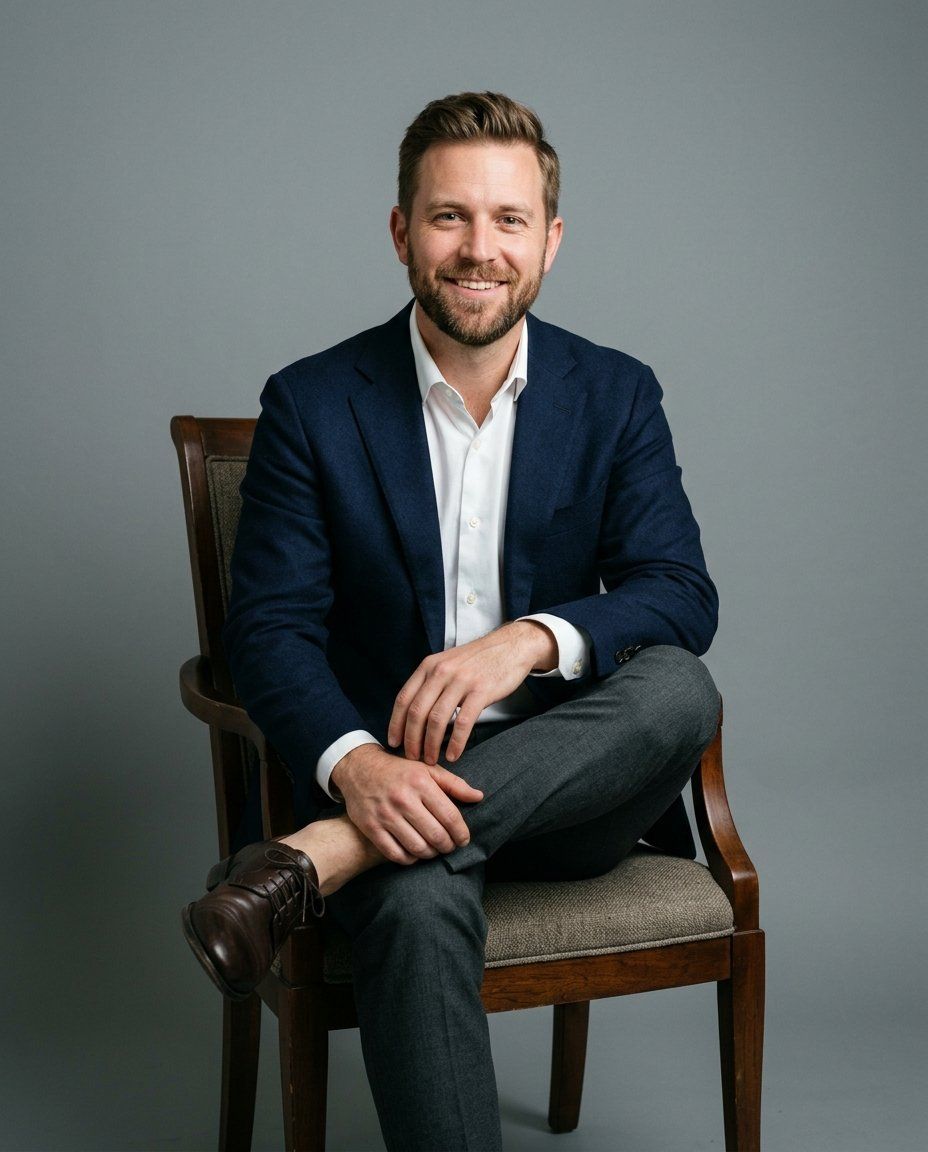
Sitting and leaning poses
Ankle over knee. Rest the ankle of one leg on the other knee instead of crossing the legs fully, which can look closed.
- Sit near the edge of the seat, angled to the camera.
- Chin level.
- Spine straight, leaning slightly forward.
- Hands resting on the raised knee or the chair arms.
- An open, engaged expression.
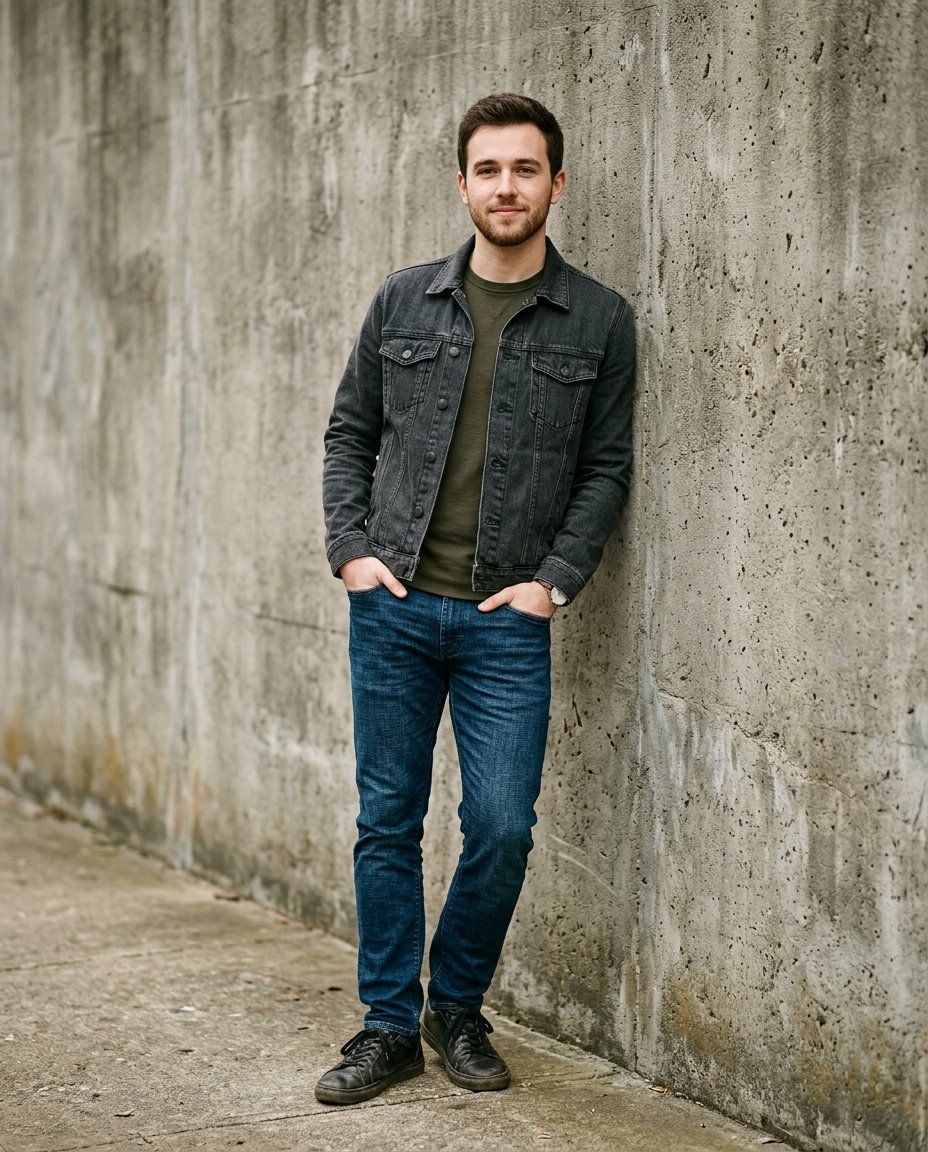
Leaning against a wall. Lean back gently, without putting all your weight on the wall.
- Turn slightly to the camera.
- Chin level or slightly down.
- Shoulders relaxed against the wall.
- Hands in the pockets of your trousers or jacket.
- A casual, confident expression.
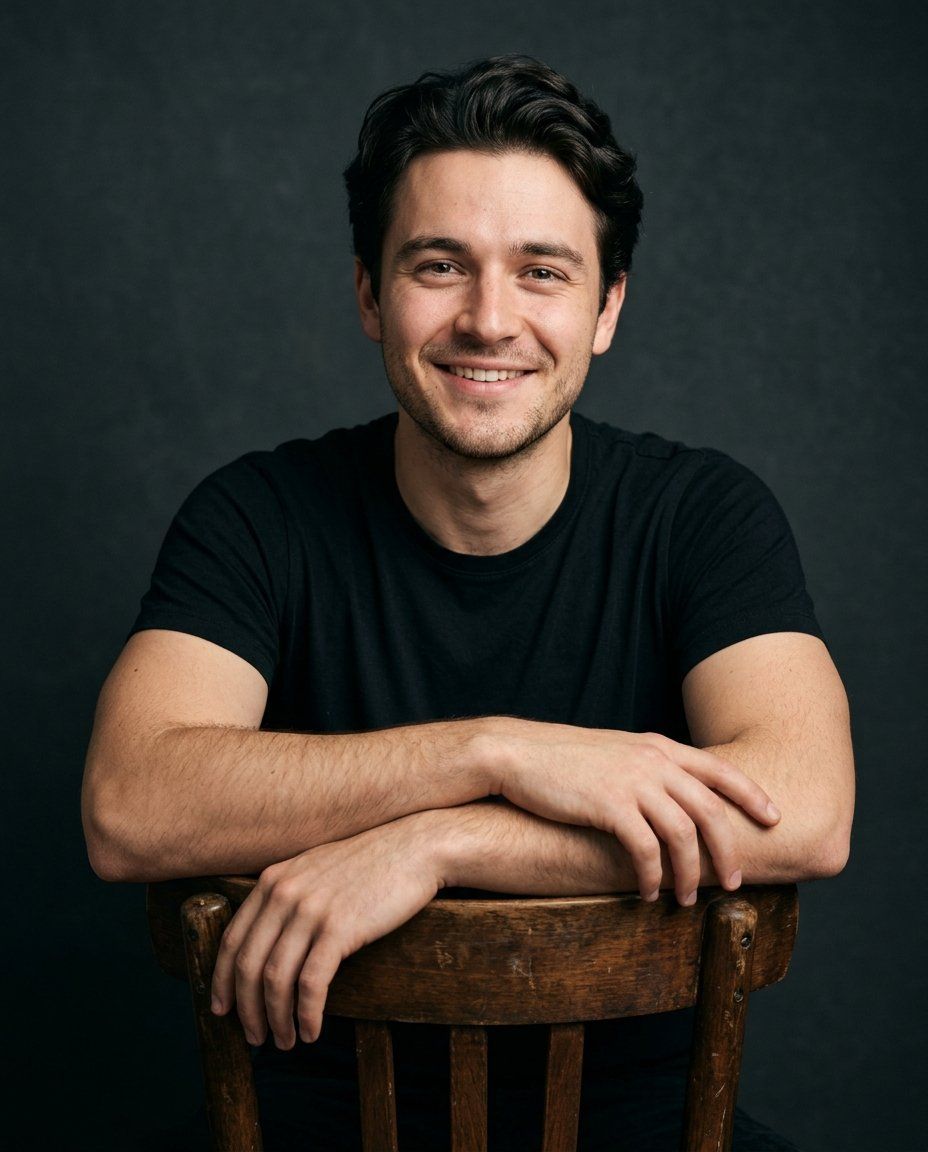
The chair-back pose. Sit backwards on a chair for a more creative look.
- Chair turned slightly to the camera.
- Chin forward.
- Shoulders relaxed, not hunched over the backrest.
- Forearms resting lightly on the backrest.
- A relaxed smile.
Hand and arm placement
Hands in or near pockets. Both hands in, one hand, or hands partly in. Watch that the shoulders do not round forward.
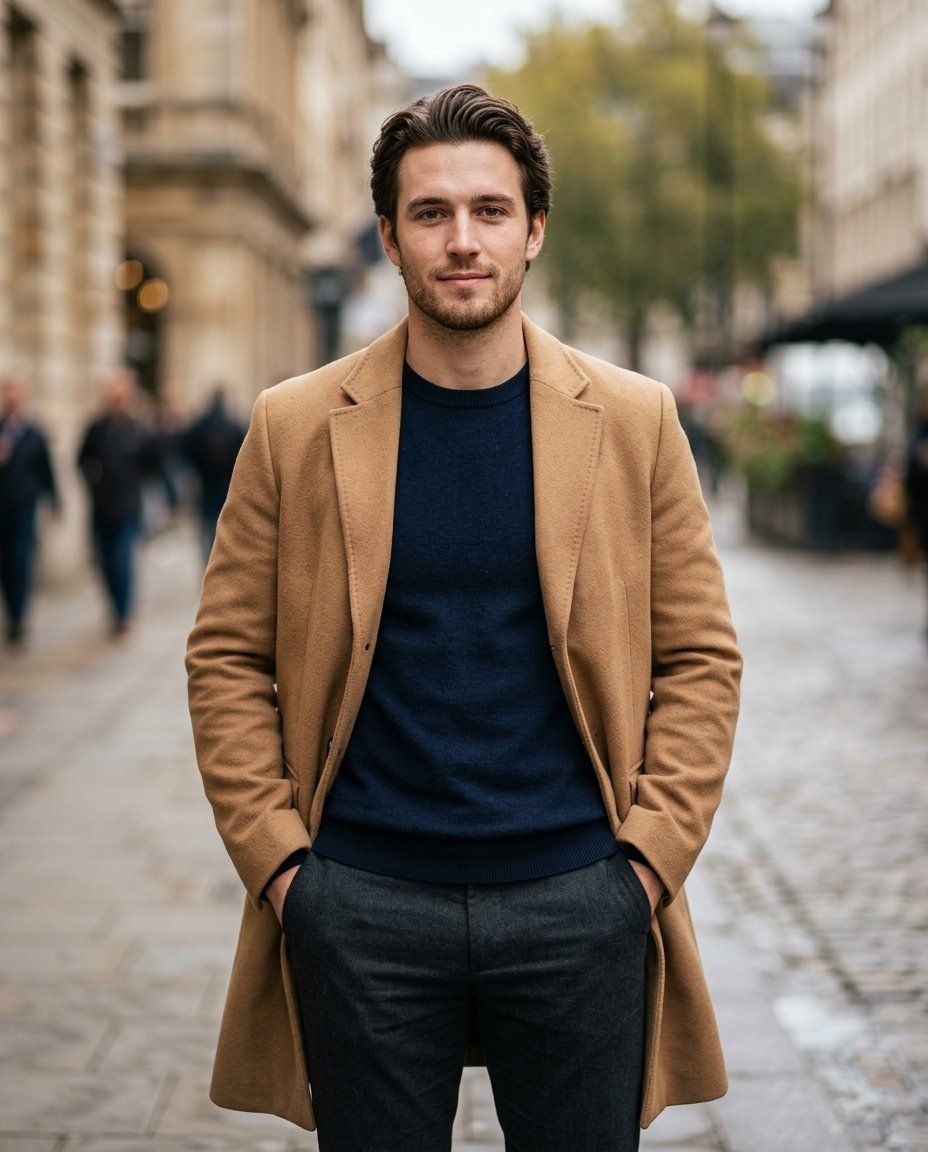
Hands on hips or waistband. Many men have shoulders wider than their hips. Hands at the hips balance that width so the frame looks more even.
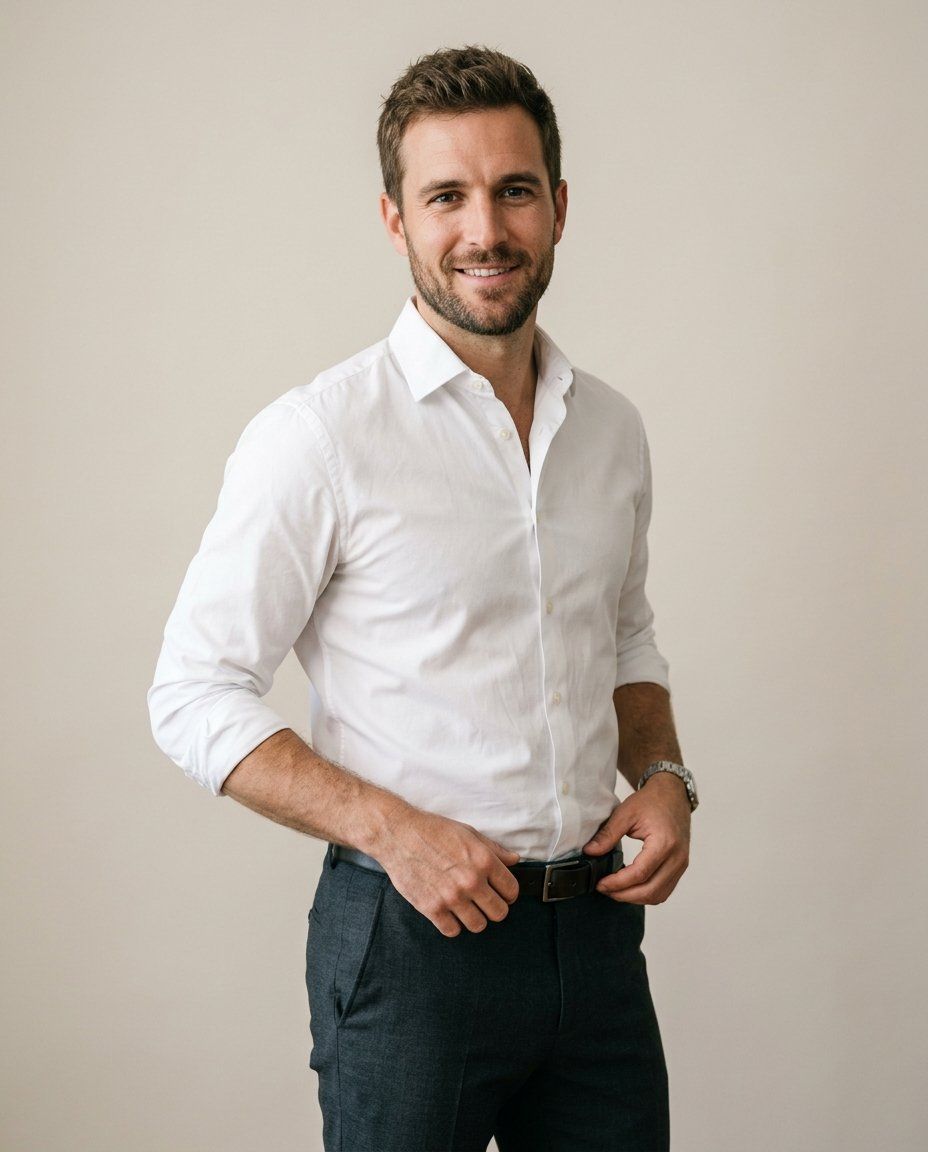
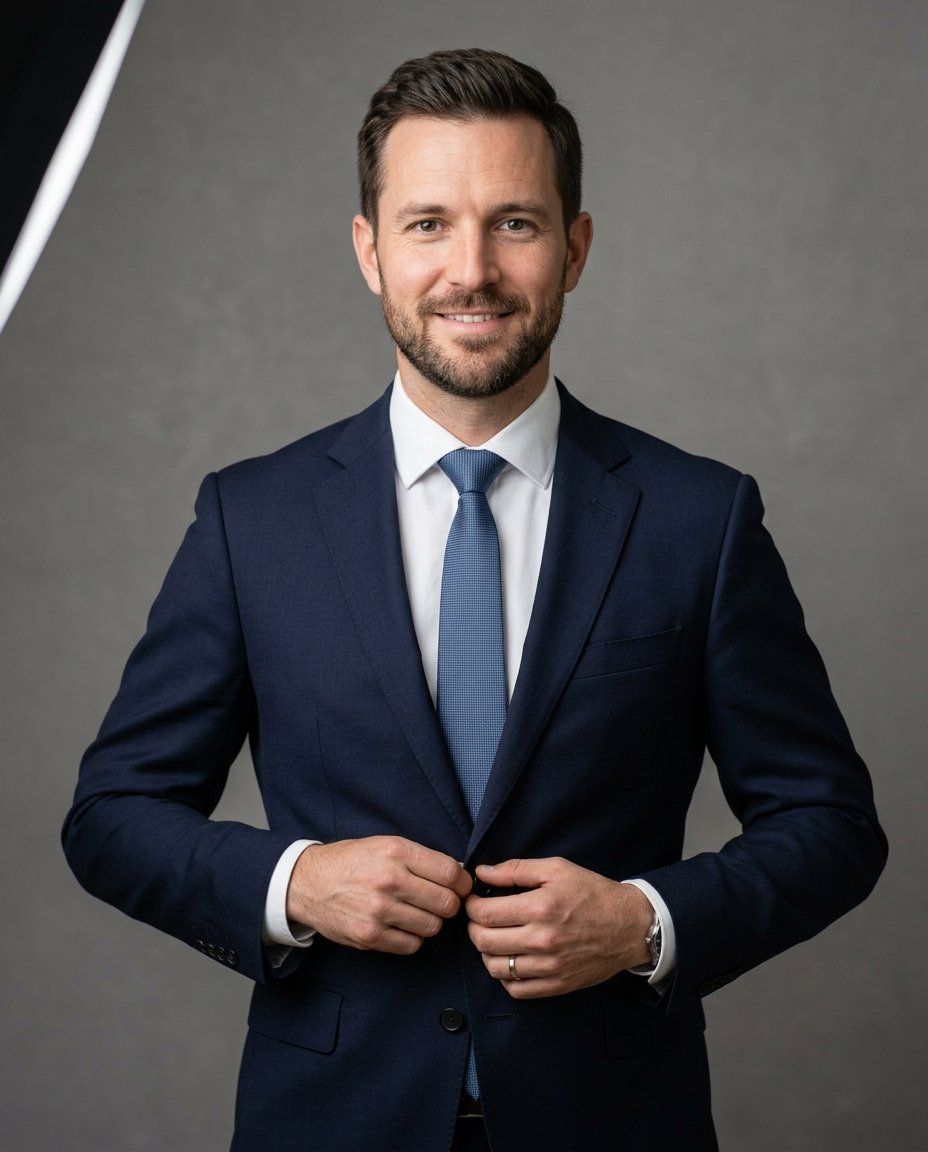
Adjusting clothing. Buttoning a jacket, fixing a cuff or adjusting a tie adds a little movement. Keep it subtle, and keep your eyes on the camera.
Movement and walking poses
These suit casual shoots outdoors or in a large room.
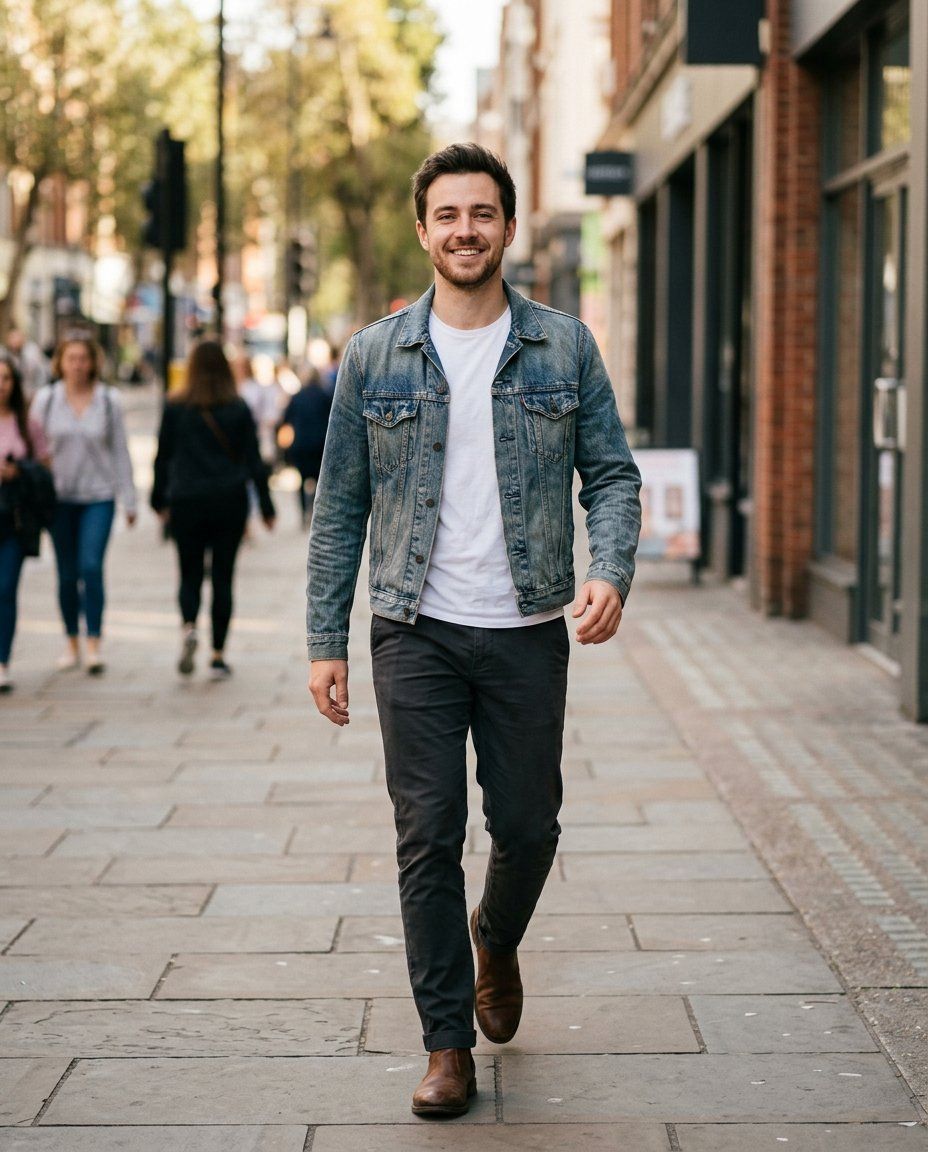
Mid-stride walk. Take a slow step toward the camera with arms loose. Shake out your hands first, and breathe as you walk.
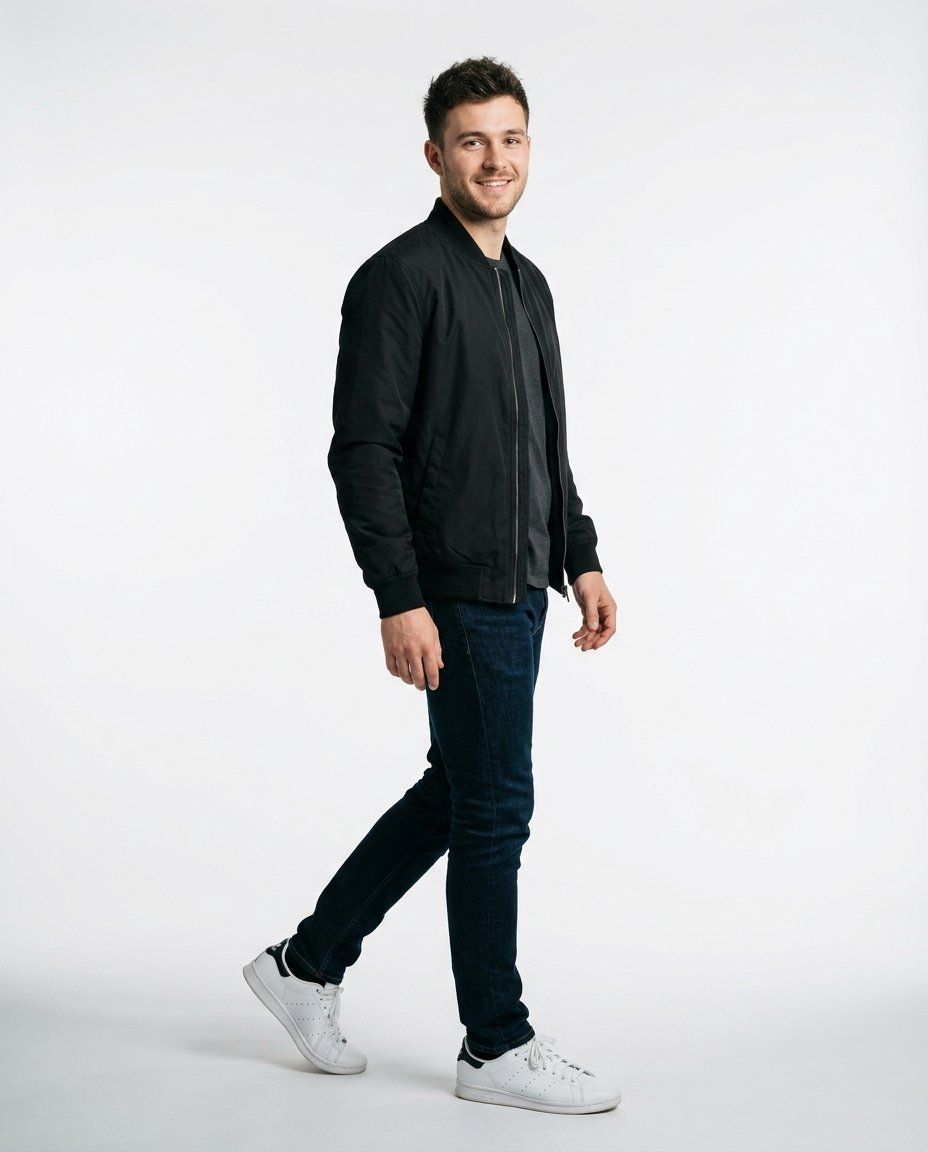
Turned-head side step. Start side-on to the camera, step sideways, and turn your head and torso toward the lens.
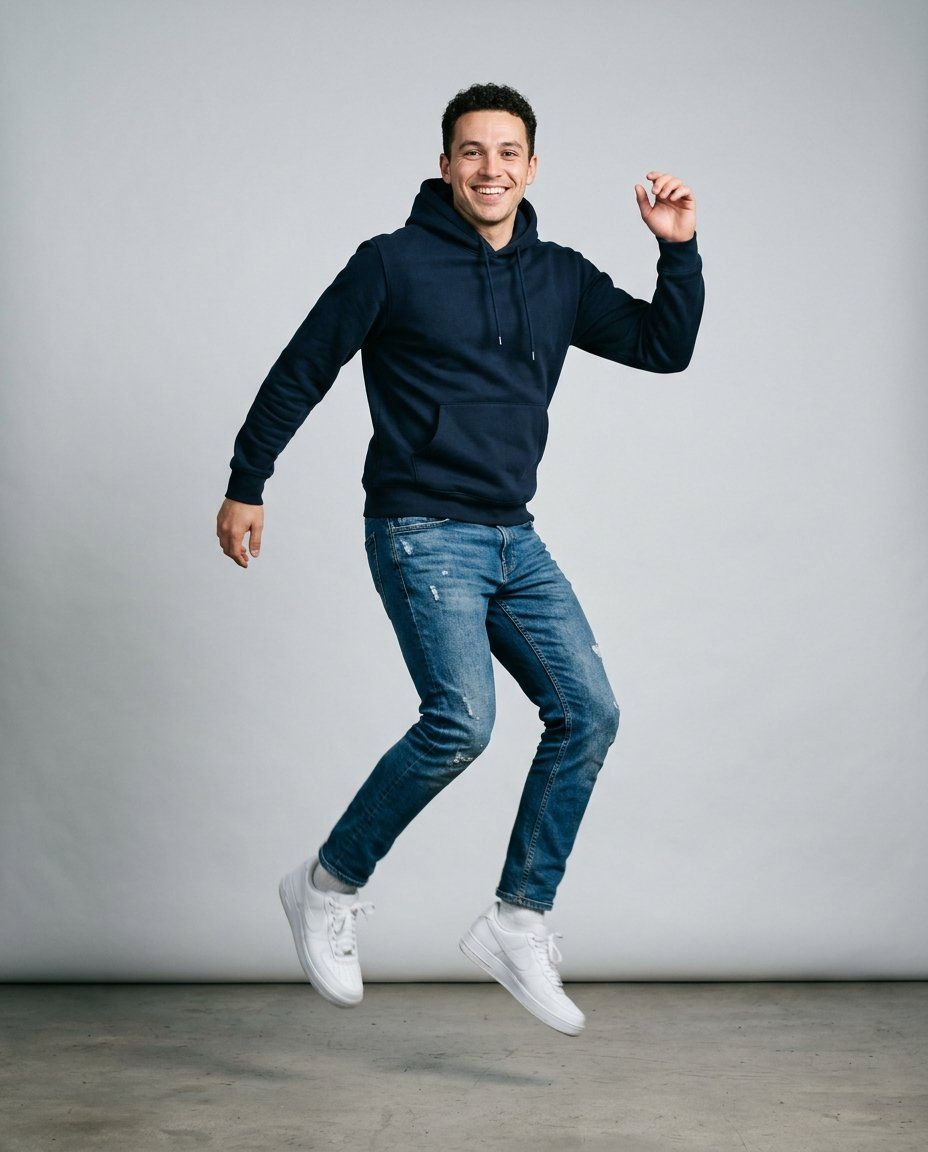
Small jump or weight shift. Shift your weight between feet, or add a small hop, while keeping your posture and staying in frame.
| Category | Poses | What it projects |
|---|---|---|
| Standing | shoulder-width stance, contrapposto, arms crossed or adjusting a cuff | strength, balance, relaxed confidence |
| Sitting and leaning | ankle over knee, leaning on a wall, chair-back | approachability, composure |
| Hands and arms | in or near pockets, on hips, adjusting clothing | polish, natural movement |
| Movement | mid-stride walk, turned-head side step, small hop | energy, personality |
Height does not limit any of these. Shorter men can be shot from a slightly lower angle, and taller men can lean into full-length shots.
How to practice
- Mirror and self-timer. Ten minutes a day trying angles and expressions, ideally in natural light, since overhead light casts harsh shadows that hide what is working.
- With friends. Take turns in front of and behind the camera to learn framing.
- Plan before the session. Know your industry, your role, two or three poses from the table above, and what your hands will do.
If you want to see yourself in several poses without a shoot, Headshots by Magic Studio makes 50 headshots across 5 looks from about ten of your own photos in around 15 minutes. You see them before paying, and packs start at $49: a starter pack of 3, all 50 for $59, or all 50 in print-ready high resolution for $69. When you review them, ask someone else for an opinion: you are used to your mirrored selfie face, so an un-mirrored photo can look wrong to you and right to everyone else. For outfits, see what to wear for professional headshots for males.
Common questions
How should a man pose for a headshot?
Turn your body 30 to 45 degrees from the camera and face the lens, push your chin slightly forward and down, drop your shoulders, and give your hands a job or keep them out of frame. Square up more to the camera for authority in finance or law, and lean in with a fuller smile for sales, healthcare or client-facing work.
What is the best male headshot pose for LinkedIn?
The conversational turn in a head-and-shoulders crop: body angled 30 to 45 degrees, face to the lens, a relaxed smile and a slight lift of the lower eyelids. LinkedIn shows the photo small, so expression matters more than hands or body.
Should men cross their arms in a headshot?
It can work for executives, speakers and lawyers if the arms are loosely crossed at mid-forearm, the shoulders are dropped, the fingers are visible and you smile. Tightly crossed arms with high shoulders look defensive, and crossed arms are best avoided in healthcare headshots.
How do you pose for modeling photos as a man?
Start with good posture, chest open and shoulders back and down, and turn 30 to 45 degrees to the camera. Then use standard model poses: a shoulder-width stance, contrapposto with your weight on one leg, leaning on a wall, ankle over knee when seated, hands in pockets or at the hips, and a slow mid-stride walk toward the camera.
What is the contrapposto pose?
Contrapposto means standing with your weight on one leg and the other knee slightly bent. It makes a standing pose look relaxed and natural rather than stiff, and it is one of the most common male model poses. Keep the shoulders relaxed so the weight shift does not look exaggerated.
Should men smile in headshots?
Usually, yes. A natural smile suits most roles, especially client-facing and healthcare. Senior executives and lawyers often use a subtle closed-mouth smile to keep an air of authority, and model headshots tend toward a neutral expression with engaged eyes.