
Headshot Poses That Work: 10 Core Poses and Which Suit Your Job
The best headshot pose is a 30 to 45 degree body turn with the face back to the lens. Ten core poses, how to set each up, and which suit your job.

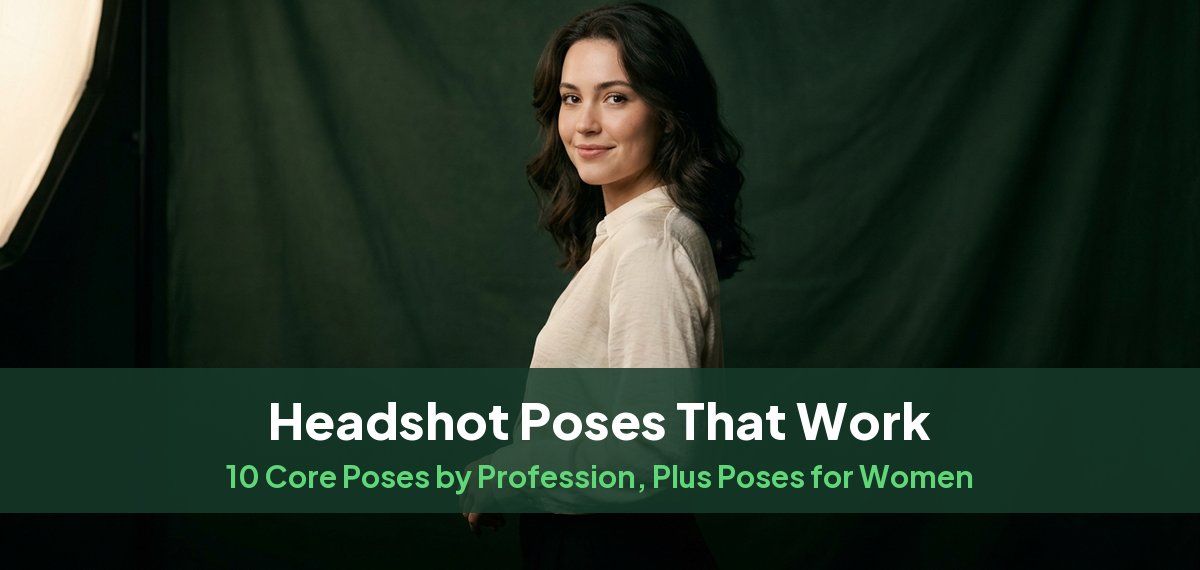
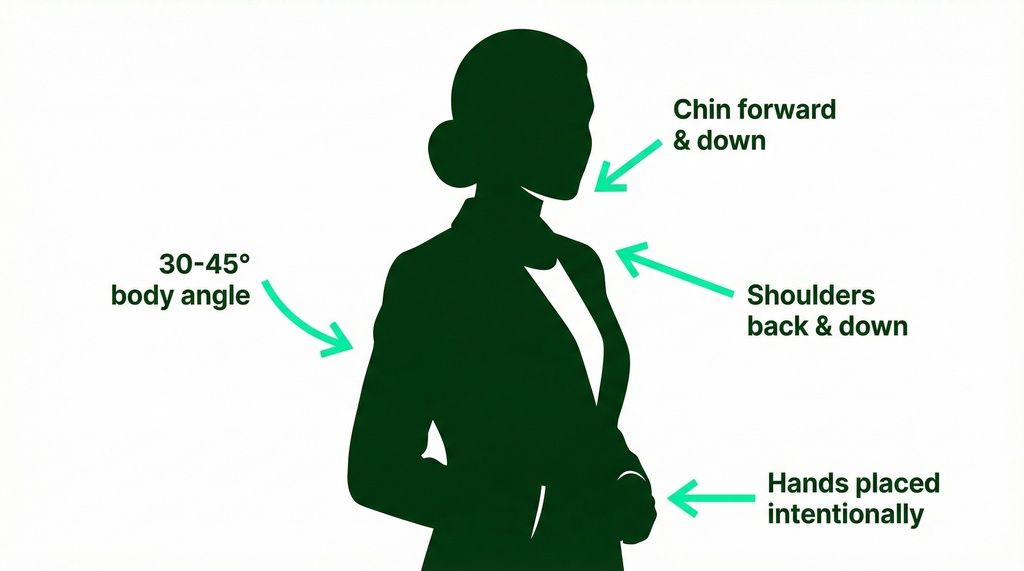
The headshot pose that works for almost everyone is the three-quarter turn: turn your body 30 to 45 degrees away from the camera, bring your face back to the lens, push your chin slightly forward and down, and let your shoulders drop. Every other pose in this guide is a variation on that base.
What changes between poses is how much authority or warmth you want to show. A law partner and a real estate agent can use the same base and still need different shoulders, hands and expressions. Below are the ten core poses, how to set each one up and who each suits.
If you need poses for a specific business role, see our guide to professional headshot poses. For women, see headshot poses for women, and for men, including modeling poses, headshot poses for men.
The three adjustments behind every pose
Three small changes separate a stiff headshot from a natural one. Learn them first, because every pose below assumes them.
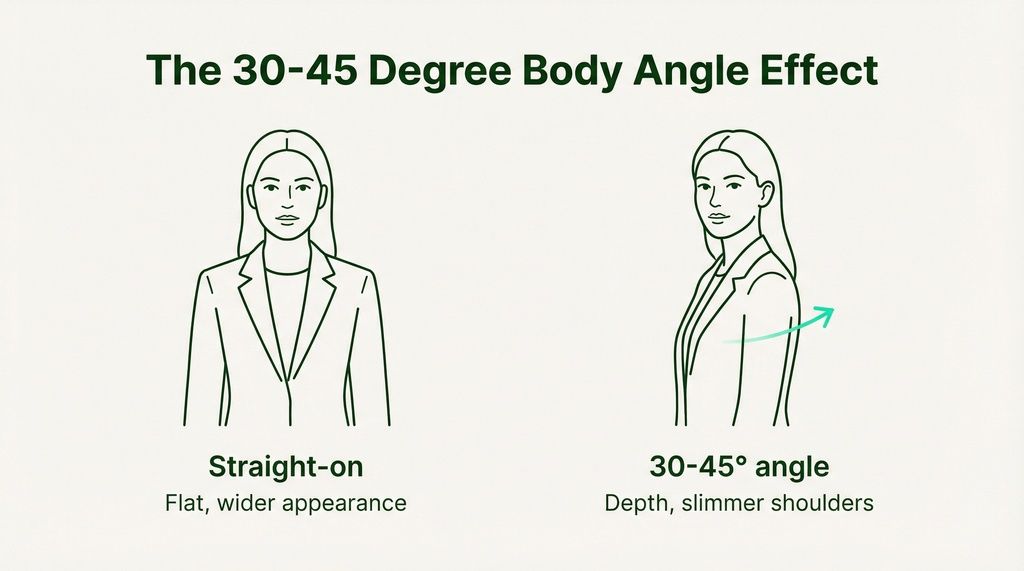
- Body angle. Facing the camera straight on makes your shoulders look wider and the picture look flat. A 30 to 45 degree turn adds depth and narrows the shoulder line.
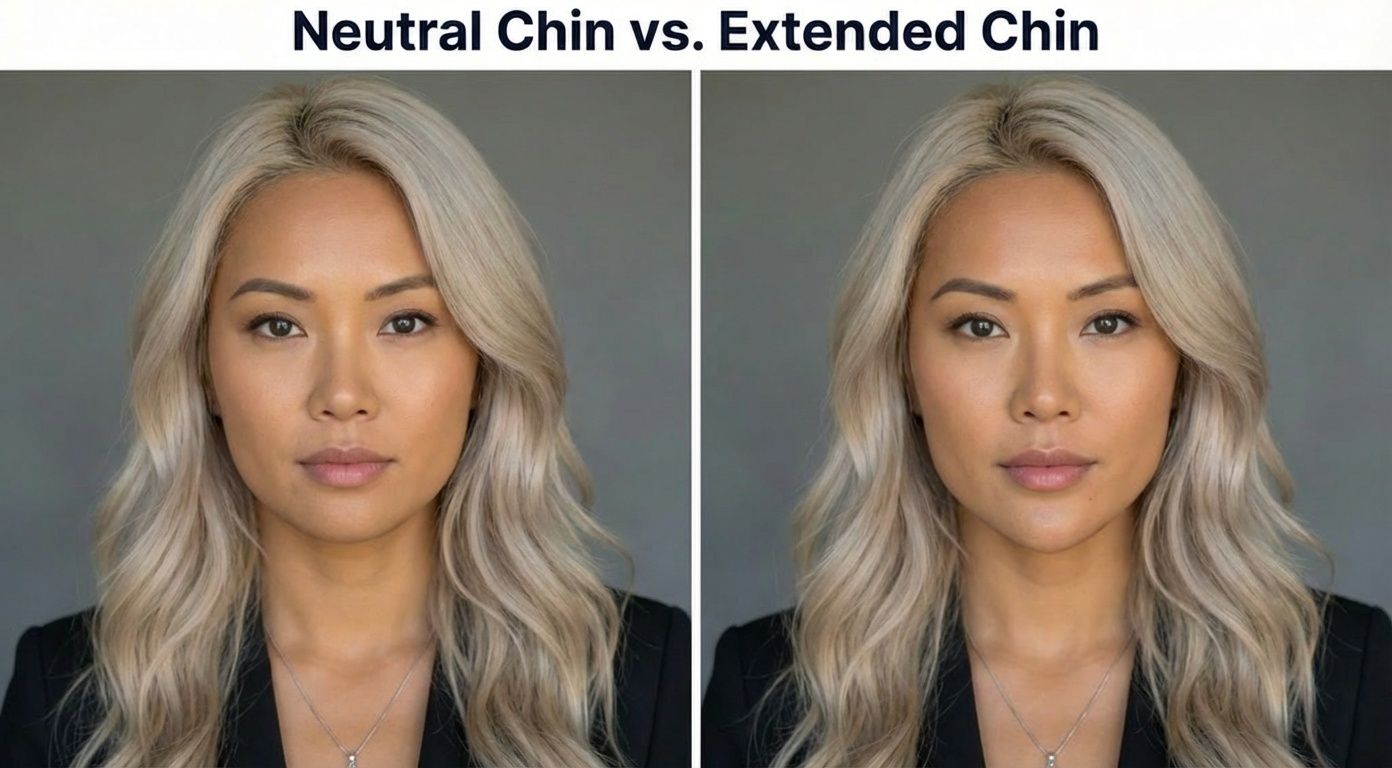
- Chin forward and down. Push your chin about an inch toward the camera, then tilt it slightly down. This sharpens the jawline and separates your face from your neck. Portrait photographer Sue Bryce calls it the "turtle". Tilting the chin up does the opposite and shows your nostrils.
- The squinch. Raise your lower eyelids slightly while keeping the upper lids steady. Photographer Peter Hurley, who named it, describes it as the fix for the wide-eyed, deer-in-the-headlights look that reads as nervous on camera.
People form a view of how trustworthy and competent a face looks after seeing it for about 100 milliseconds, so these details are doing work before anyone reads your name.
The 10 core headshot poses
1. The three-quarter turn (classic)
The default headshot pose and the one to start every session with. It suits LinkedIn, company websites and business cards.
- Angle: body turned 30 to 45 degrees from the camera, face turned back to the lens.
- Chin: forward and slightly down.
- Shoulders: relaxed, pulled down and back.
- Hands: out of frame for a head-and-shoulders crop, or resting by your sides.
- Expression: a gentle smile or a relaxed neutral look with a light squinch.
Who it suits: nearly everyone, from consultants and managers to creatives updating an old photo.
2. The squared-on stance (authoritative)
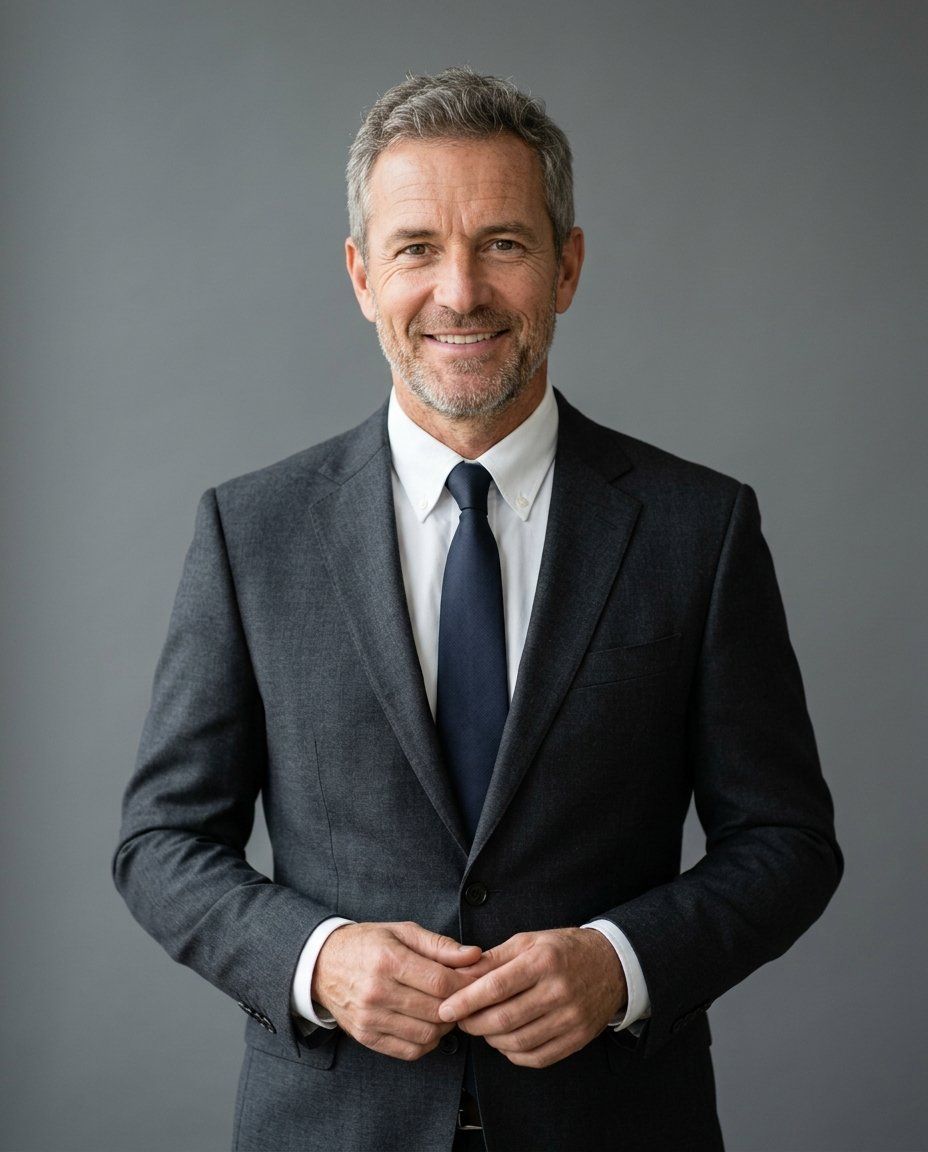
Shoulders face the camera directly, or nearly so. It reads as stable and in command, which is why so many executive and law-firm bio pages use it.
- Angle: body square to the camera, or turned only slightly.
- Chin: level and slightly forward. Do not lift it.
- Shoulders: back and even, without hunching up toward the ears.
- Hands: at your sides or lightly clasped at the waist.
- Expression: composed, with a closed-mouth smile or confident neutral and a squinch.
Who it suits: senior executives, law partners, finance leaders. On someone early in their career it can tip into looking cold, so they are better served by the three-quarter turn.
3. The lean-in
A small forward lean of about an inch from the hips, which signals that you are engaged and listening. Leaning back reads as guarded or disinterested.
- Angle: three-quarter turn.
- Chin: forward and slightly down.
- Shoulders: open, with the lean coming from the hips so your back stays straight.
- Hands: relaxed in front, or resting on a desk if you are seated.
- Expression: a warm, natural smile.
Who it suits: client-facing roles, coaches, consultants, founders.

4. The slight head tilt
A tilt of 5 to 10 degrees toward the higher shoulder softens the face and reads as friendly. Past about 15 degrees it starts to look confused.
- Angle: three-quarter turn.
- Chin: level, then tilt the head a few degrees toward your higher shoulder.
- Shoulders: relaxed and dropped.
- Hands: out of frame.
- Expression: a soft smile that reaches the eyes.
Who it suits: healthcare, education, therapy, consulting and creative roles, anywhere approachability matters most.

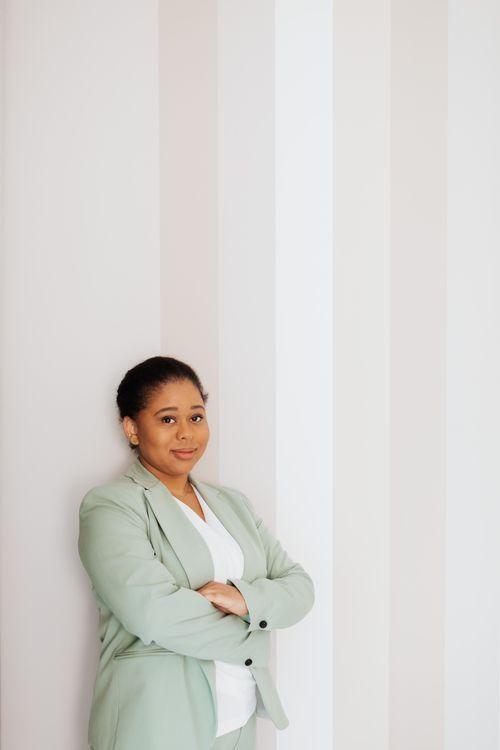
5. Loose crossed arms
Crossed arms project confidence when they are loose: forearms resting on each other, fingers visible. Gripped tightly, with hands clutching the biceps, the same pose looks defensive.
- Angle: three-quarter turn, or squared for a more formal look.
- Chin: forward and slightly down.
- Shoulders: dropped. Raised shoulders are what make crossed arms look tense.
- Hands: arms crossed at mid-forearm, fingers relaxed and visible.
- Expression: a warm smile, which offsets the closed shape of the arms.
Who it suits: executives, speakers, tech and creative professionals. For waist-up crops only.
6. One hand in a pocket
Puts one hand somewhere natural, so it does not hang. Hook the thumb on the edge of the pocket rather than burying the whole hand.
- Angle: three-quarter turn, weight on the back foot.
- Chin: forward and slightly down.
- Shoulders: level. Watch that the pocket side does not drop or round forward.
- Hands: one hand in a trouser pocket with the thumb out, the other relaxed at your side.
- Expression: relaxed, a light smile.
Who it suits: tech, startups and creative fields. It can look too casual for strict corporate settings.

7. Clasped hands in front
Hands brought together at the waist give them a job and create a V shape down the body, which looks slimmer. Hold them loosely, or it reads as nervous.
- Angle: three-quarter turn or squared.
- Chin: forward and slightly down.
- Shoulders: down and back.
- Hands: fingers loosely laced or one hand resting in the other at waist height.
- Expression: a gentle smile.
Who it suits: corporate and team pages, educators, healthcare.
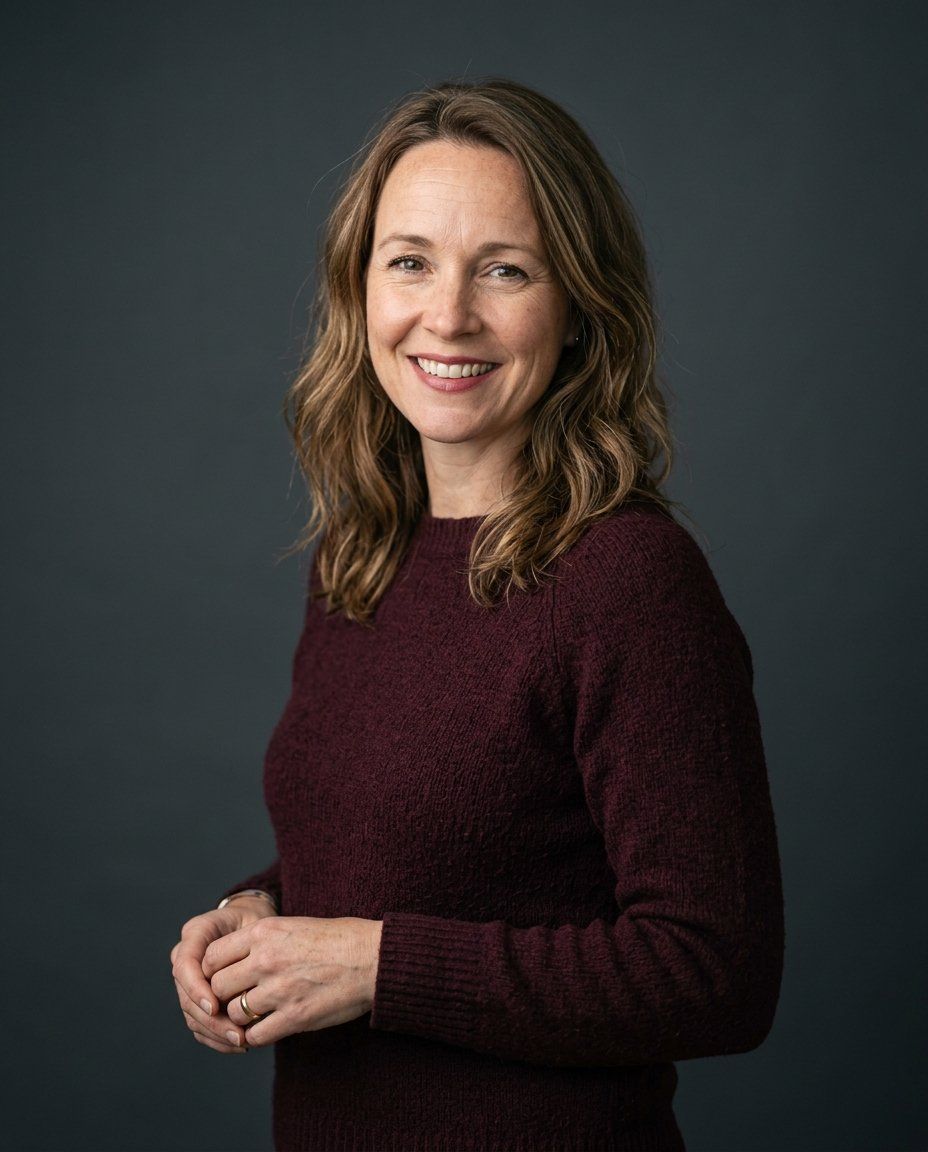
8. The over-the-shoulder look
Turn your body well away from the camera and look back at the lens over your near shoulder. It adds energy and personality.
- Angle: body turned well away from the camera, close to side-on.
- Chin: brought toward the near shoulder, slightly down.
- Shoulders: back and open, so the pose does not hunch.
- Hands: out of frame or resting on a rail or chair.
- Expression: eyes directly on the lens. Looking past it feels detached.
Who it suits: entrepreneurs, designers, actors and models. Too informal for most finance and law profiles.
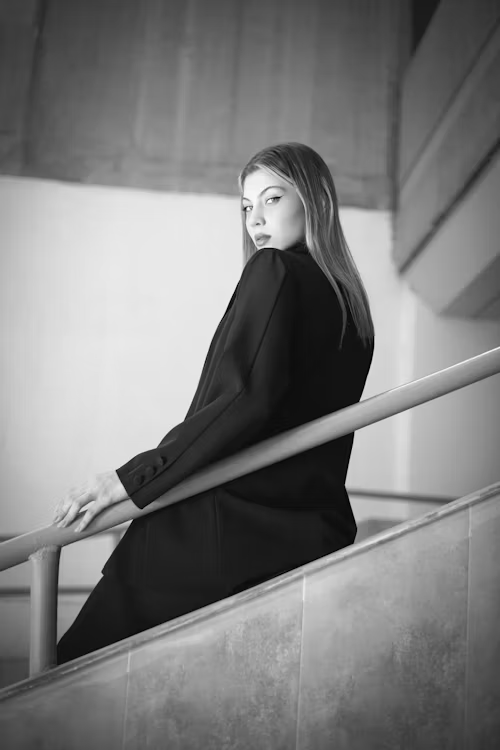
9. The thoughtful pose
A slight head tilt with a more serious expression, and sometimes a hand lightly at the chin. It suggests concentration rather than warmth.
- Angle: three-quarter turn, leaning slightly forward.
- Chin: slightly down. If a hand is at the chin, let it rest, do not prop the face on it.
- Shoulders: relaxed, back straight.
- Hands: out of frame, or one hand loosely near the jaw.
- Expression: neutral or slightly serious, with an engaged gaze rather than a blank stare.
Who it suits: writers, strategists, researchers, artists.
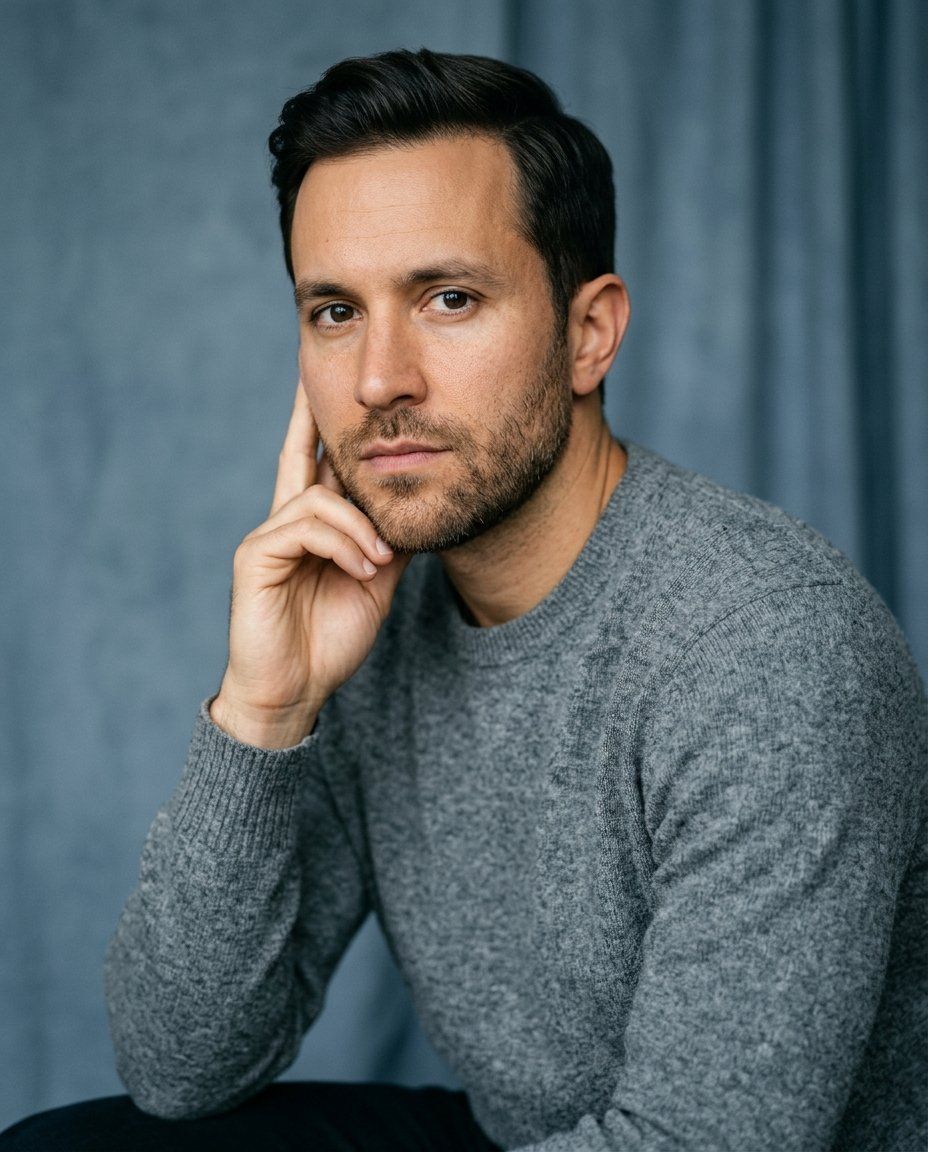
10. The relaxed, open pose
Shoulders dropped, arms loose, a full natural smile. The most approachable of the ten.
- Angle: a soft three-quarter turn.
- Chin: forward and slightly down.
- Shoulders: dropped, with no tension in the neck.
- Hands: loose at your sides or out of frame. Avoid crossing the arms.
- Expression: a genuine smile that reaches the eyes. Reset between frames so it does not freeze.
Who it suits: real estate, customer service, hospitality, teachers and healthcare.

Which pose suits your profession
| Profession | Best poses | Expression | Avoid |
|---|---|---|---|
| Finance and law | squared-on stance, three-quarter turn with squared shoulders | closed-mouth smile or squinch | big grins, casual posing |
| Healthcare | three-quarter turn, slight head tilt, lean-in | warm, genuine smile | stiff stare, crossed arms |
| Tech and startups | one hand in pocket, loose crossed arms, relaxed three-quarter turn | natural smile | over-formal stiffness |
| Real estate and sales | relaxed open pose, lean-in, wider crop | full smile | closed posture |
| Creative fields | over-the-shoulder look, thoughtful pose | varies, from soft smile to serious | the generic corporate look |
| Teachers and therapists | slight head tilt, relaxed open pose | soft smile | squared, dominant stance |
| Senior executives | squared-on stance, loose crossed arms | composed | an extreme head tilt |

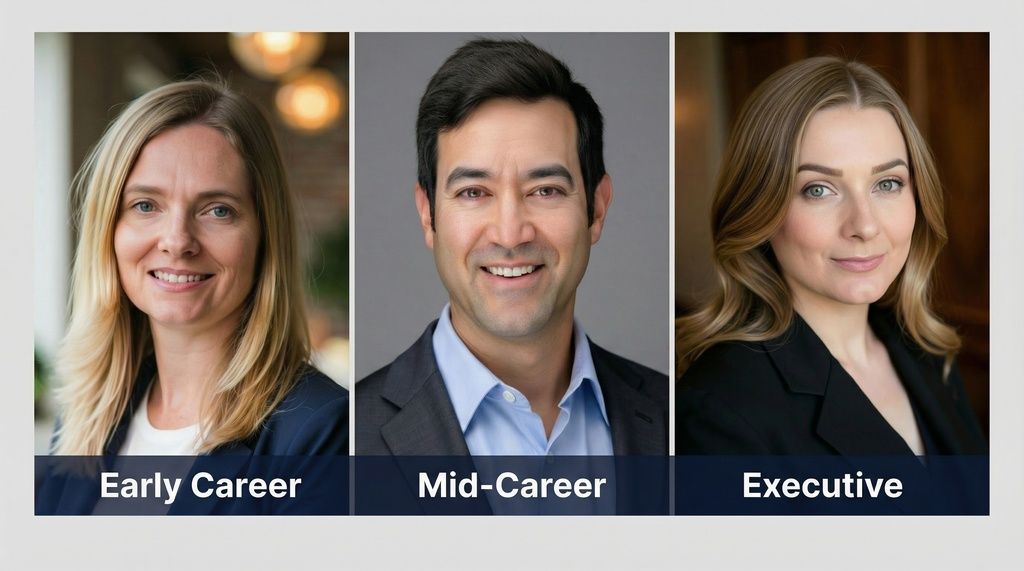
Seniority shifts the choice too. Early in a career, the three-quarter turn and a genuine smile work best, because a squared-off stare can read as unearned. Mid-career, you can bring in squarer shoulders and a more serious expression. At executive level, a straight-on or barely angled stance signals stability.
Headshot poses for women
The poses above work for anyone, because posing comes down to geometry, not gender: bone structure, shoulder width and neck length. What women ask about most is which poses to use, such as the power pose, an angled stance with a hand at the hip, the seated lean or the hand on the chin, and how much authority or warmth to show. Each is set up step by step, with photos, in our guide to headshot poses for women, along with which suit which roles and a section of model poses.
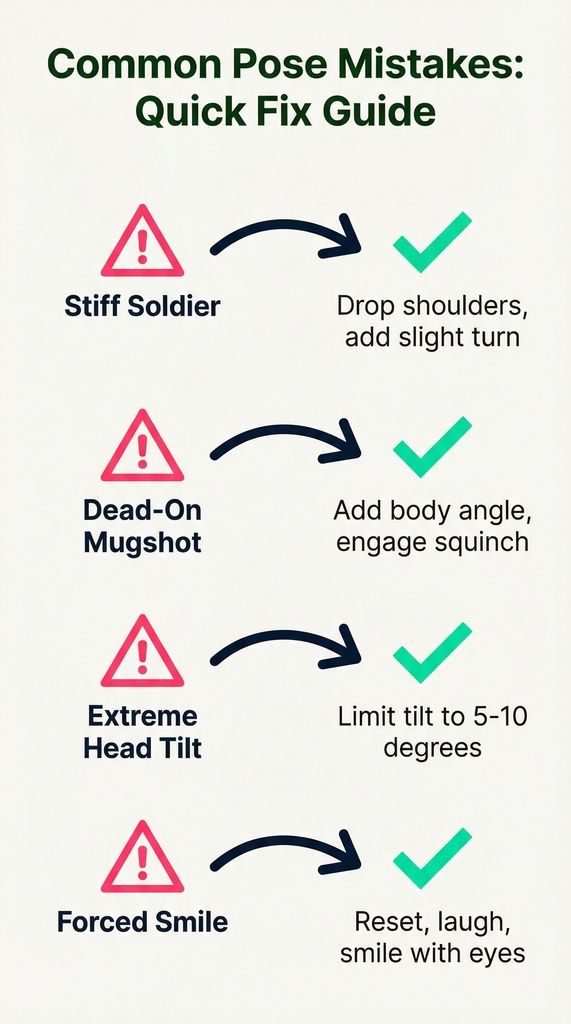
Common pose mistakes and quick fixes
| Mistake | What it looks like | Fix |
|---|---|---|
| Stiff soldier | arms pinned, shoulders up by the ears | pull shoulders down and back, add a slight turn |
| Dead-on mugshot | squared shoulders, wide eyes, no expression | add a body angle and a squinch |
| Extreme head tilt | 15 degrees or more | keep tilts to 5 to 10 degrees |
| Forced smile | the mouth smiles, the eyes do not | reset between frames, laugh, think of something that made you smile |
| Chin up | nostrils visible, looks condescending | chin forward and slightly down |
A pre-session checklist
- Look at headshots of people doing well in your field, and note how they stand.
- Decide how much authority or approachability your role needs.
- Start with the three-quarter turn. Square up for finance and law, angle more for creative and healthcare.
- Chin forward and slightly down.
- Decide what your hands will do if they are in frame.
- Practice the squinch in a mirror.
If a studio session feels like too much posing, Headshots by Magic Studio makes 50 headshots across 5 looks from about ten of your own photos in about 15 minutes. You see them before paying, and packs start at $49: a starter pack of 3, all 50 for $59, or all 50 in print-ready high resolution for $69. The same pose rules apply when you pick which images to keep. For more on getting ready, see how to prepare for a professional headshot session.
Common questions
What is the best pose for a headshot?
The three-quarter turn is the best pose for most people: turn your body 30 to 45 degrees away from the camera, bring your face back to the lens, push your chin slightly forward and down, and relax your shoulders. It adds depth, narrows the shoulders and works for almost every profession.
What are the best headshot poses for women?
The most used headshot poses for women are the three-quarter turn, the power pose with squared shoulders and loosely crossed arms, an angled stance with one hand at the hip, a seated lean with hands in the lap, and a slight head tilt. Choose a squarer, more composed pose for finance, law or management, and a softer angle with a smile for creative, healthcare or client-facing roles.
Should you tilt your head in a headshot?
A small tilt of 5 to 10 degrees toward your higher shoulder softens the face and reads as friendly. Tilting 15 degrees or more starts to look confused, and tilting the chin up shows the nostrils and can look condescending.
Where do you put your hands in a headshot?
In a head-and-shoulders crop, keep your hands out of frame. In a waist-up shot, give them a job: loosely crossed arms with fingers visible, one hand in a pocket with the thumb out, or hands lightly clasped at the waist. Hands hanging at your sides or gripping your arms look tense.
How do you avoid a double chin in a headshot?
Push your chin about an inch toward the camera, then tilt it slightly down. It feels unnatural, but it tightens the jawline and separates your face from your neck. Pulling the head back or lifting the chin makes a double chin more likely.
How do you look confident in a headshot without looking stiff?
Drop your shoulders before every frame, add a slight body turn, and use a squinch, a small lift of the lower eyelids, instead of opening your eyes wide. Reset your face between shots so the expression does not freeze.