
Real Estate Headshots: What Actually Wins Clients (Data Analysis)
I analyzed the data on real estate headshots. The results surprised me: warmth beats formality, and your ROI is higher than you think. Here's what works.

I went down a rabbit hole on real estate headshots last month, and the data surprised me.
Here's what started it: a friend who's a residential agent asked me to look at her marketing spend. She'd dropped $450 on a studio session and got five photos that looked like corporate mugshots. Meanwhile, the top producer in her office uses what looks like a casual outdoor shot with a blurred skyline behind her.
So I pulled the research. I looked at conversion psychology, pricing data, and what actually drives client trust. The conventional wisdom (formal attire, neutral studio backdrop, serious expression) is wrong for most real estate agents.
The agents winning listings aren't the ones who look most corporate. They're the ones who look most trustworthy to their specific target clients. And there's a measurable difference.
Whether you're trying to justify a headshot investment or figure out what choices actually matter, I've got the breakdown. Here's what the data says about realtor headshots that actually convert.
The 100-Millisecond Problem (And Why It Matters More Than You Think)
Let me give you the number that changed how I think about this: potential clients form judgments about your trustworthiness within 100 milliseconds of seeing your face.
That's not a typo. One-tenth of a second.
Here's the part that surprised me: these snap judgments rarely change with more exposure. Additional viewing time just makes people more confident in their initial gut reaction.
Now layer on this stat: 36% of sellers find their agents through online channels (more than double the rate from 2018). And 47% of buyers and 59% of sellers hire the first agent they speak with.
Do the math. Your headshot is the gatekeeper to most of your new business. Before anyone reads your bio, checks your sales history, or hears your pitch, they've already decided if they trust you based on a photo.
The parallel to listing photography is useful here. Listings with professional photos sell 32% faster and for significantly higher prices. The psychology is identical: high-quality visuals reduce perceived risk.
You wouldn't market a million-dollar home with a blurry iPhone photo. Same logic applies to marketing yourself.
What "Professional" Actually Means for Real Estate (Hint: Not Corporate)
Okay, but here's where it gets interesting.
I was skeptical too, until I looked at the psychology research. There's a framework called the warmth-competence model that explains how we judge people's faces. You need both dimensions, but they're weighted differently by industry.
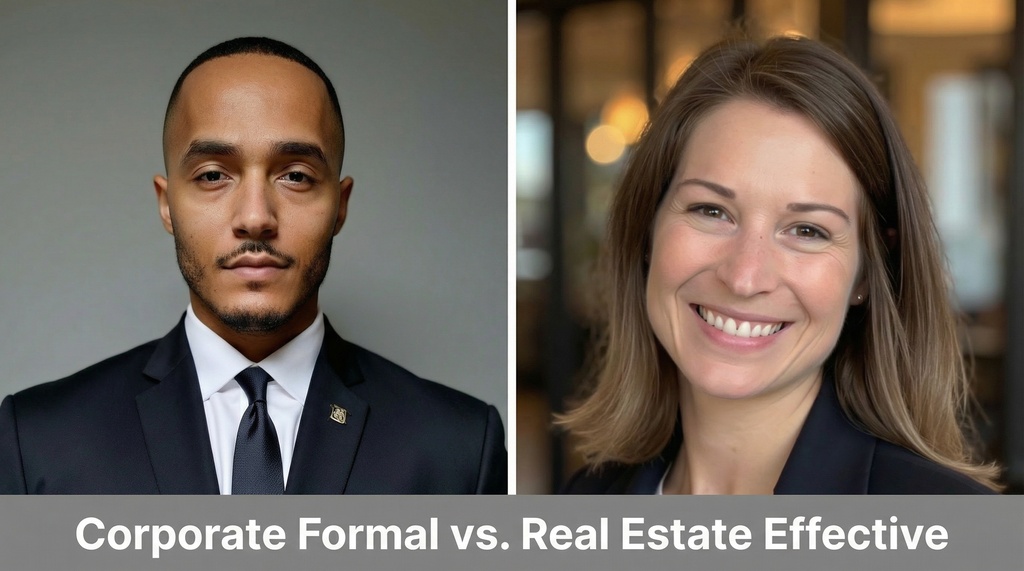
For residential real estate, warmth (your intent to help) matters more than competence signals (your ability to help). Why? Because you're asking people to trust you with the biggest financial decision of their lives. They need to feel like you're on their side first.
The primary driver of perceived warmth? A genuine smile. Specifically what researchers call a Duchenne smile, where the muscles around your eyes engage (the crinkles). A polite "say cheese" smile doesn't cut it.
Here's the technical breakdown of what builds trust:
| Feature | What It Signals | The Move |
|---|---|---|
| Eye contact | Connection and honesty | Look directly at the lens |
| Camera angle | Power dynamics | Shoot at eye level (not above or below) |
| Lighting | Openness | Soft, directional light (harsh shadows read as unapproachable) |
| Head tilt | Empathy | Slight tilt (10-15 degrees) signals you're listening |
| Expression | Trustworthiness | Genuine smile with eye engagement |
The conventional wisdom says "look professional, look serious." The data says warm and approachable beats formal and corporate for residential agents.
Commercial real estate is different. Those clients prioritize stability and data over relatability. Full suits and structured formality make more sense there.
The Outfit and Background Decisions That Actually Matter
I'll be honest: I thought background was mostly about "not being distracting." I was wrong.
Your background is a context cue. It tells potential clients what you specialize in before they read a word. The most effective approach in 2026 is what photographers call contextual blur: shallow depth of field that keeps focus on your face while providing recognizable context behind you.

Urban agents with city skylines signal metro market knowledge. Luxury agents with architectural details or manicured gardens signal access to exclusive inventory. Coastal agents with ocean backdrops immediately categorize their specialty.
A generic gray studio background? It says nothing. You're competing against agents whose photos actively communicate their niche.
For outfits, the general rule is dress one level above your target client. The breakdown by segment:
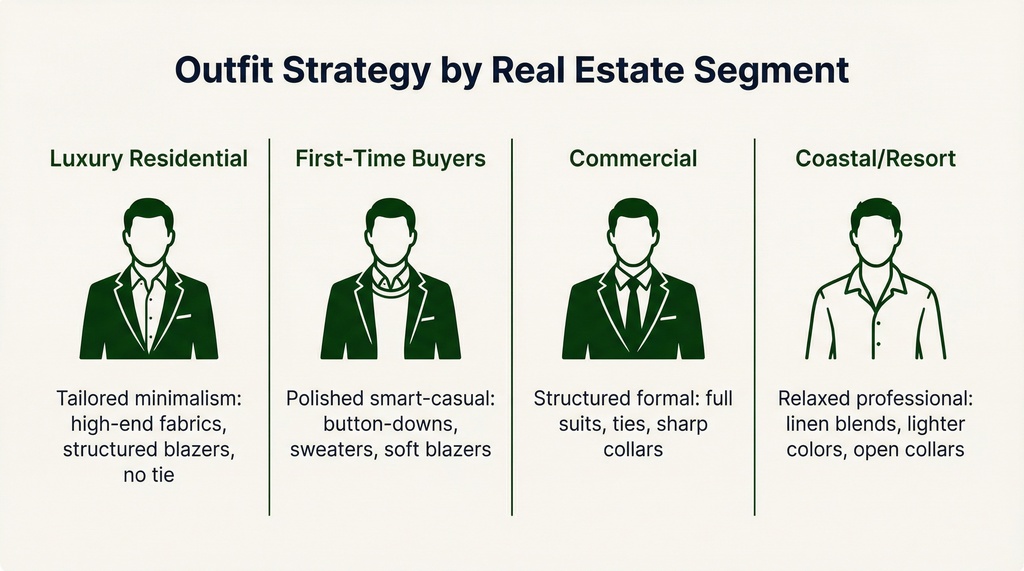
On color: navy blue is the gold standard for trust. Studies consistently rank it as the color most associated with trustworthiness. Charcoal gray is a safe alternative. Jewel tones (emerald, burgundy, plum) can differentiate your personal brand in crowded markets.
Avoid busy patterns (they cause distortion on screens) and pure white (washes out skin tones under studio lighting).
The Real Cost Breakdown (And Why ROI Math Favors Investment)
Let me nerd out on the numbers for a second.
I pulled pricing data across solution types, and the range is wider than most agents realize:
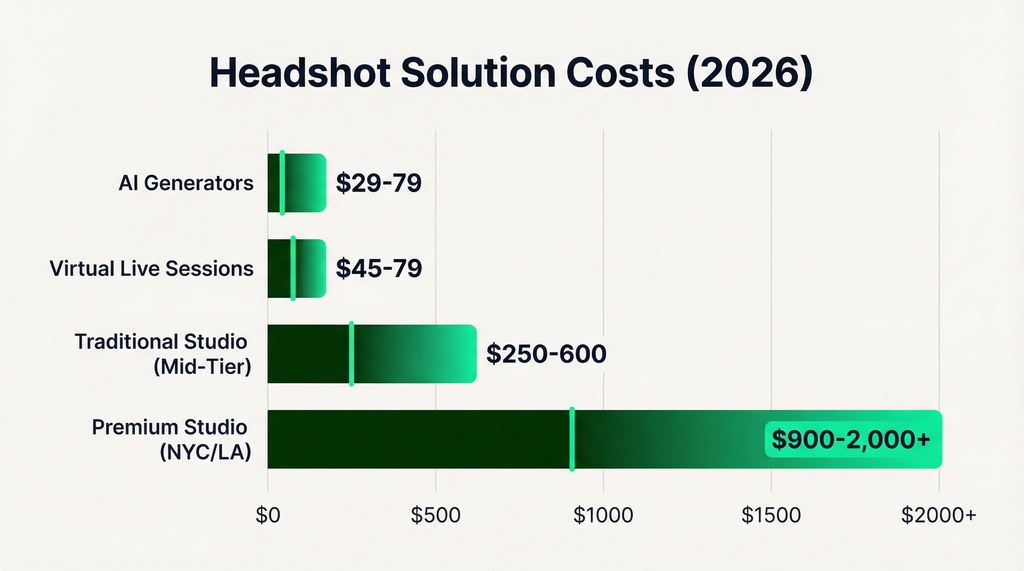
The traditional studio route at $250-600 gets you professional quality with full control. Premium markets (New York, LA) push $900 or higher. AI headshot tools run $29-79 with turnaround in 15 minutes to a few hours.
Here's the ROI calculation that shifted my thinking:
The median REALTOR gross income is around $58,100 (roughly 10 transactions). Your average commission per deal is approximately $5,800.
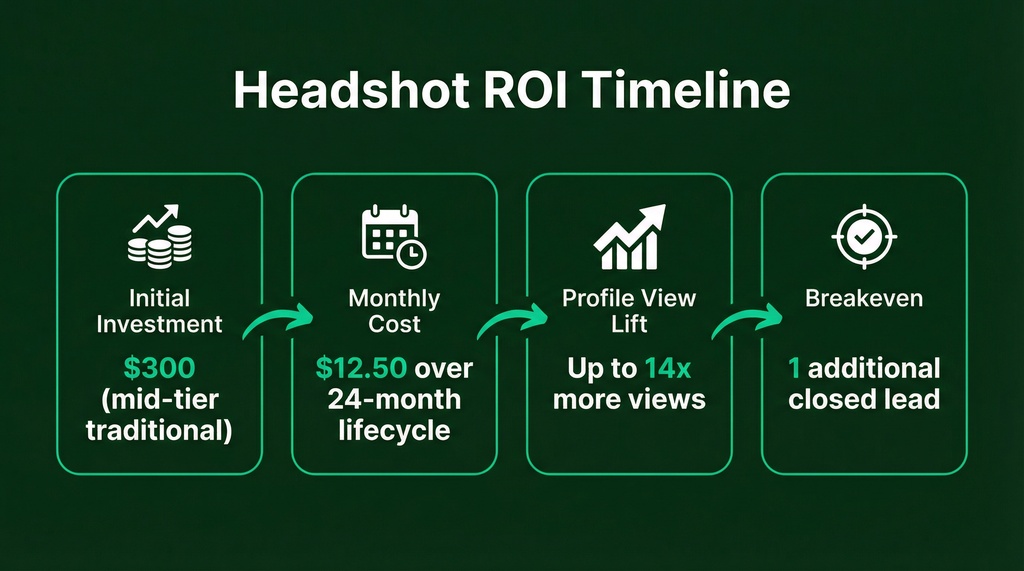
A mid-tier headshot costs about $300. Over a 24-month lifecycle, that's $12.50 per month.
Now consider this: profiles with professional photos receive 14x more views on LinkedIn. Listings with professional visuals drive 61-118% more online views.
The breakeven math: if a professional headshot increases your profile click-through rate by even 10%, the investment pays for itself if it generates one single extra lead that closes over two years.
Given that 36% of sellers find agents online, the probability of that lift is high. This isn't a vanity expense. It's one of the highest-ROI marketing investments you can make.
AI Headshots: When They Work (And When They Don't)
I get asked about AI headshot tools constantly now. Here's my honest take after digging into the data.
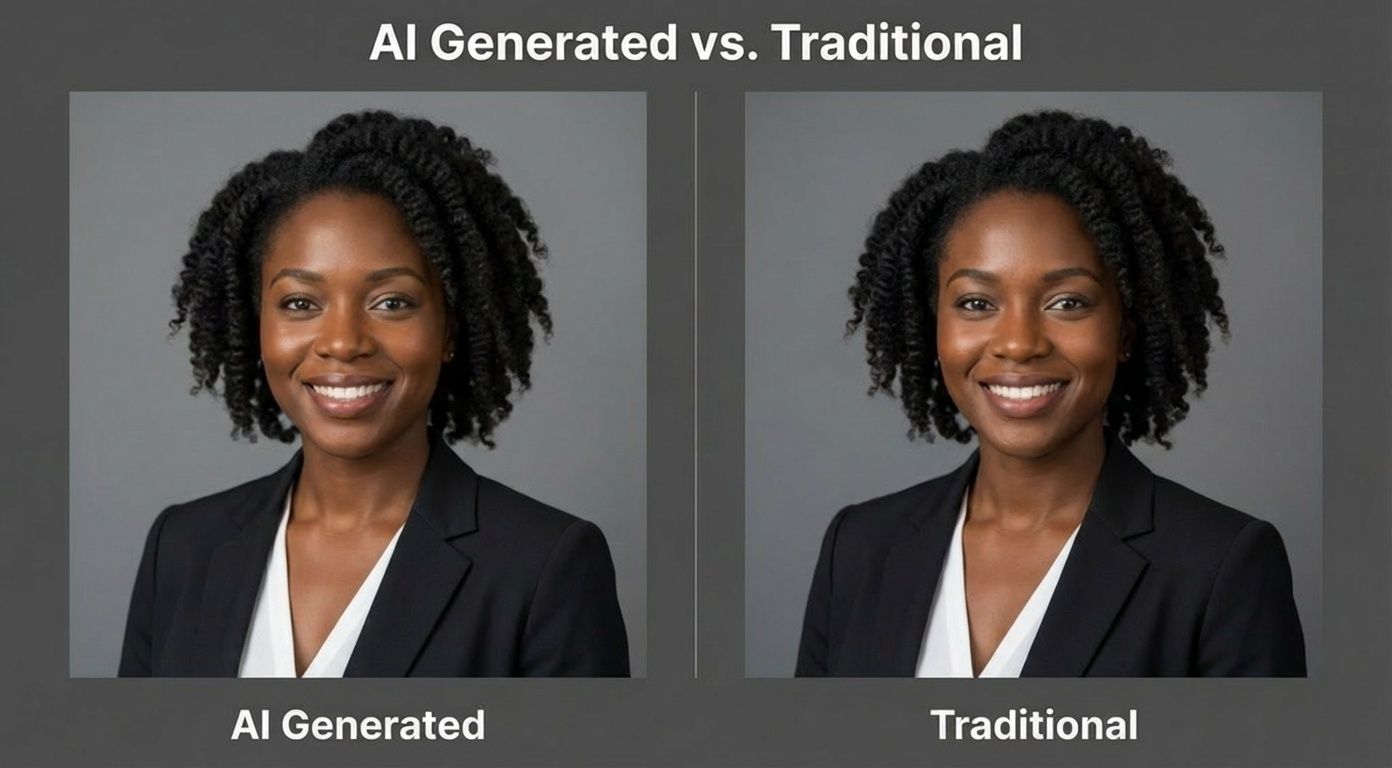
The pros: AI tools like InstaHeadshots deliver dozens of options in minutes for $49-69. You get variety (different backgrounds, outfits, expressions) that traditional sessions can't match without multiple bookings. For social media content where volume matters, the economics make sense.
The cons: the usability rate is lower. Research suggests 10-20% of AI-generated images end up being ones you'd actually use. And about 38% of viewers describe AI images as having a "soulless" quality, missing the micro-expressions that signal authenticity.
My recommendation: use a hybrid approach. Invest in one high-quality traditional or virtual session for your flagship assets (Zillow profile, email signature, business cards). Use AI tools to generate seasonal or lifestyle variations for social media where volume matters more than perfection.
The worst mistake I see? Using an AI headshot as your primary photo when it doesn't quite capture your actual appearance. There's a "catfish effect" when clients meet you in person and you look different from your photo. That trust gap can kill a deal in the first minute.
The Mistakes That Undercut Everything Else
Let me run through the patterns I see that sabotage otherwise solid headshots:
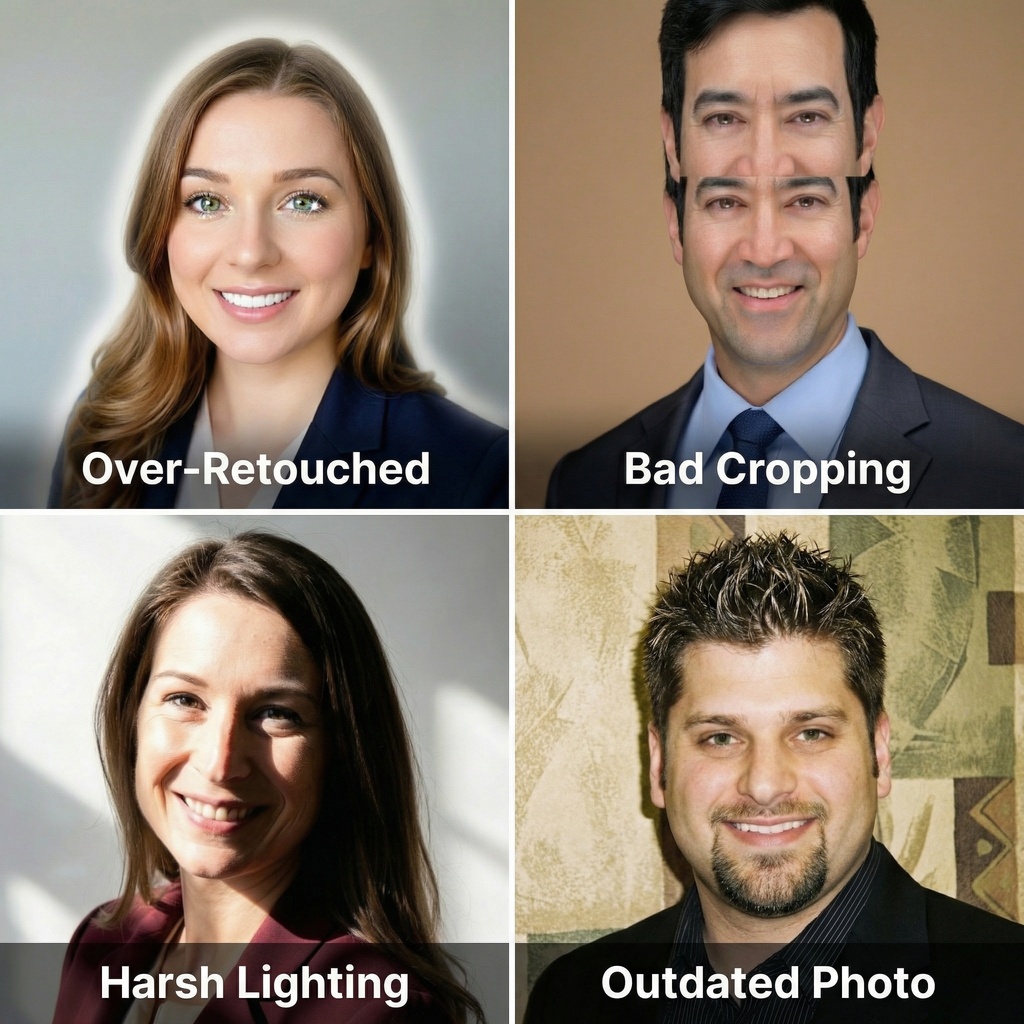
The dated photo problem. Using a headshot from 5+ years ago (or one that's heavily retouched to the point of looking plastic) creates immediate distrust when clients meet you. Authenticity beats perfection. Update every 12-24 months or immediately after significant appearance changes.
The crop disaster. Cropping off your chin or the top of your head looks amateur. Leave negative space around your face to allow for different aspect ratios across platforms. LinkedIn, Zillow, and Instagram all crop differently.
The eye-contact killer. Sunglasses, hats that shadow your eyes, or looking away from camera all break the biological signal for trust. Unless you're specifically branding for ranch sales with a cowboy hat, keep your eyes visible and directed at the lens.
The platform mismatch. Different platforms require different specs. On LinkedIn, your face should fill about 60% of the frame. On Zillow, ensure your background doesn't blend into the white page. Instagram feed posts work best at 4:5 vertical. One photo doesn't optimize for everything.
What I'd Do If I Were Starting Fresh
Here's the practical playbook based on everything I've analyzed:
Step 1: Define your brand archetype first. Are you the "Trusted Neighbor" (warm, casual, outdoor background)? The "Luxury Expert" (polished, formal, architectural background)? The "Commercial Powerhouse" (suit, studio background)? This decision drives every other choice.
Step 2: Prepare strategically for your shoot. Bring 3-4 outfit options in solid colors (navy, charcoal, jewel tones). No busy patterns. Use eye drops to reduce redness. Avoid SPF makeup (it causes flashback). Practice pushing your face slightly forward to define your jawline.
Step 3: Choose your solution based on use case. Need one flagship image for your primary marketing? Traditional photography is worth the investment. Need volume for social media content? AI tools deliver better economics. Need both? Hybrid approach.
Step 4: Optimize per platform. Don't use the same crop everywhere. Adjust for each platform's specs and ensure your background works against the site's design.
Step 5: Schedule your refresh. Put a reminder in your calendar for 18 months out. Most agents wait until their photo looks obviously dated. By then, you've already lost impressions.
The Bottom Line
The data here is actually fascinating when you step back.
The conventional wisdom (look corporate, hire an expensive photographer, use a neutral background) misses what actually drives client trust in real estate. Warmth beats formality for residential agents. Context beats neutrality for backgrounds. And the ROI math heavily favors investment when you run the numbers.
Your face is your brand in this industry. Buyers and sellers choose agents they feel they can trust with their biggest financial decision. An effective headshot directly correlates with lead generation and listing conversions.
The agents I see winning aren't the ones with the most expensive photos. They're the ones who understand their target client and create visuals that signal trustworthiness to that specific audience.
That's something you can test and measure. And if there's anything I've learned from years of staring at conversion data, it's that the numbers rarely lie.