
Attorney Headshots: Why Looking Approachable Wins You Clients
Attorney headshots don't have to look cold to seem credible. Here's how to signal competence and approachability so anxious clients actually call you.

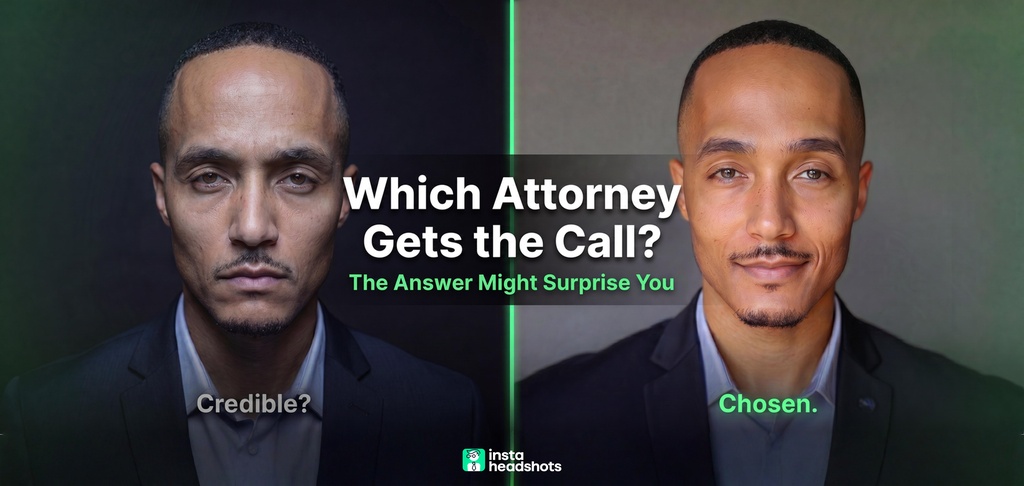
I spent two weeks digging through the research on attorney headshots. What I found surprised me.
Most lawyers believe a credible headshot must look serious, formal, and a little stern. Dark suit. No smile. The classic "I will crush your enemies" stare. The thinking goes: gravity equals competence.
The data says the opposite. The stone-faced photo doesn't make you look more capable. It makes you look distant. And distance loses clients who are picking between several equally qualified attorneys based on one thing: who they'd feel safe calling.
Here's the part most lawyers miss. Competence and approachability aren't a tradeoff. Warmth is actually the gate competence has to pass through first. I'll show you exactly how to build a headshot that signals both. This is a systems issue, and like most growth problems, it's structural. We can fix it.
The Quick Answer: Conservative Styling, Unmistakably Human
Let me give you the takeaway before you scroll.
The most effective attorney headshot is conservatively styled but clearly human. Navy or charcoal suit. Neutral background. Professional lighting. Then you layer in warmth: a genuine slight smile, direct eye contact, and a slight forward lean.
That's it. You don't abandon formality. You add humanity on top of it.
Here's why this works. A prospective client can't judge your legal skill. They aren't lawyers. So they judge proxies: do you seem trustworthy, and do you seem capable? The research shows they decide on trust first, almost instantly, and competence second.
The maximum-formality photo fails the first test. It reads as capable but cold. And cold loses.
You Have 100 Milliseconds. Use Them Well.
This stat reframed everything for me.
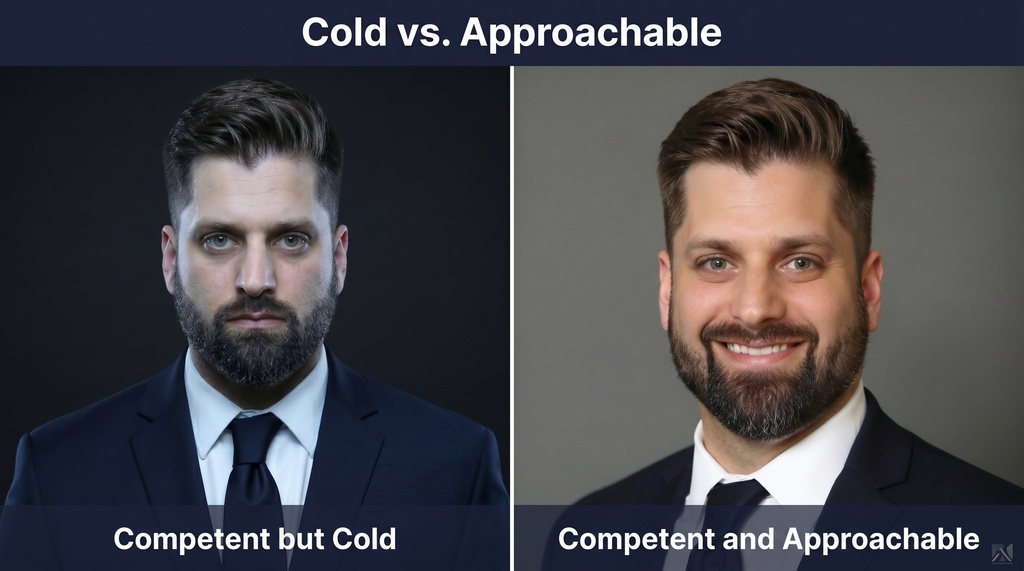
Princeton researchers Willis and Todorov found that people form trait judgments from a face in just 100 milliseconds. After a tenth of a second, your viewer has basically made up their mind. More time barely changes it.
Here's the detail that matters most. At 100ms, trustworthiness ratings correlated at r=.96 with unlimited viewing time. Competence came in lower, at r=.73. As Todorov told Princeton, "people respond intuitively to faces so rapidly that our reasoning minds may not have time to influence the reaction."
Translate that. People lock in trust faster and harder than competence. Your headshot isn't a slow read. It's a snap verdict. Every detail has to earn its place.
When I scaled SEO engines, I learned the same lesson about landing pages. You don't get a second look. The first impression is the only impression that compounds.
Why Warmth Is the Gatekeeper for Competence
This is the mechanism behind the whole thing.
The Stereotype Content Model, built by Fiske, Cuddy, and Glick in 2002, says we judge people on two dimensions: warmth and competence. And we check warmth first. The model is built on an evolutionary logic: we first ask if a stranger means to help or harm us, then ask if they're capable.
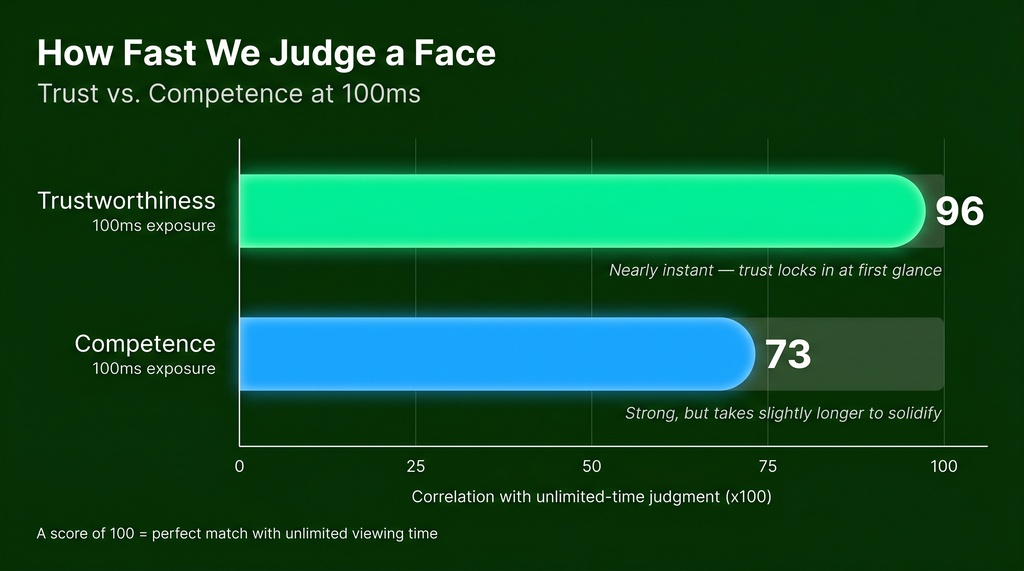
Here's the kicker. Without warmth, competence isn't read neutrally. It gets reframed as a threat.
People seen as highly competent but cold get envied, not admired. The brain doesn't think "capable." It thinks "capable and possibly not on my side." For an attorney, that's the worst signal you can send to a scared client.
The folks at MagicStudio break this down well in their female headshots guide, which digs into how warmth and competence interact instead of trading off cleanly.
Now add the trust deficit lawyers already carry. The Florida Bar reported that only 22% of respondents find lawyers trustworthy, while 34% find them untrustworthy. You don't start at neutral. You start in a hole. Warmth signals aren't a nice-to-have. They're how you climb out.
The Slight Smile Solves the Tradeoff
Here's where lawyers usually object. "If I smile, won't I look less serious?"
Fair concern. And the research has a precise answer.
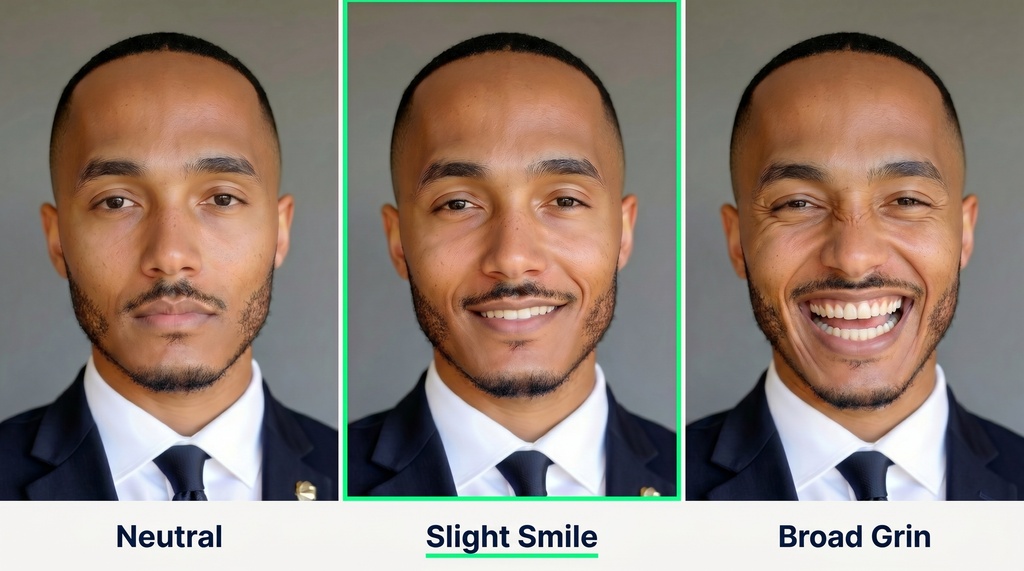
A 2017 study by Wang and colleagues found that broad smiles boost warmth but reduce perceived competence. Neutral expressions protect competence but kill warmth. So both extremes cost you something.
The fix is the middle. A slight, genuine smile raises warmth without eroding competence. Photographers call it a Duchenne micro-smile. The mouth curves slightly. The eyes engage. It reads as real.
The key word is genuine. A forced smile reads as fake and lowers credibility fast. The eyes give it away. If you smile with your mouth but your eyes stay flat, viewers feel the disconnect even if they can't name it.
Your Bio Photo Is the First Meeting
Let's connect this to dollars.
Most legal clients now find you online before they ever talk to you. Martindale-Avvo data shows 92.4% of legal consumers research attorneys online before making contact. A 2025 survey found 97% start on Google.
So your bio photo is the first meeting. Not the consult. The photo.
And it's a comparative process. A client searching "divorce attorney [city]" lands on three bio pages. They scan three faces. They make a fast, gut-level call about who to phone.
The broader conversion data backs this up. Research shows professional images convert at 2-3x the rate of amateur ones, and 93% of consumers cite visual appearance as a top factor in online decisions. The headshot isn't a compliance checkbox. It's a conversion tool on your most-viewed page.
This is where I see the biggest miss. Lawyers treat the headshot as a box to check. It's actually an acquisition asset. Leverage beats effort, and this is leverage sitting in plain sight.
Style by Practice Area, Not by Habit
There is no single "lawyer headshot." The right style depends on who your client is and what state they're in when they find you.
A corporate client signing a deal wants gravitas. A frightened immigration client wants reassurance. Same profession, different emotional context, different calibration.
The principle: corporate and appellate work leans toward the competence axis. Consumer-facing practices like family law, criminal defense, and immigration lean toward warmth. But no practice area wins at the extreme of either dimension.
If you handle family law and your photo looks like a hostile witness, you're telling a person in crisis you won't listen. That's a structural mismatch.
The Conservative-But-Human Formula
Here's the practical build. Each choice has a competence anchor and a warmth accent.
Expression: Duchenne micro-smile. Slight mouth curve, engaged eyes. Not neutral, not a grin.
Eye contact: Look straight into the lens. Looking away reads as distracted or evasive.
Pose: Square your shoulders for authority. Then add a slight forward lean of about an inch and a small head tilt. Forward leans signal engagement. Leaning back reads as guarded. Use a three-quarter body turn, head back to camera, to avoid the flat mugshot look.
Attire: Start with a navy or charcoal suit. Then warm it up. A light blue shirt instead of stark white. A subtly textured fabric. A tie in muted gold or deep burgundy instead of the standard power red.
Background: Neutral gray is the safe, versatile default. White reads modern and open. An office background adds context for litigators.
Lighting: Warm fill light adds vitality. Corporate can lean slightly cooler. Consumer-facing should lean warmer.
Color over black-and-white: Color enhances warmth and accessibility. Black-and-white can add gravitas for appellate or corporate brands, but for most attorneys it risks emotional distance.
| Element | Competence Anchor | Warmth Accent | Combined Move |
|---|---|---|---|
| Expression | Composed | Smile | Duchenne micro-smile |
| Attire | Dark suit | Lighter, softer | Navy suit, light blue shirt |
| Background | Dark gray | White/light | Neutral gray |
| Lighting | Cool | Warm | Neutral with warm fill |
| Crop | Wide torso | Tight head | Head-and-shoulders |
| Color | B&W | Color | Color (default) |
One fitness analogy, since I can't help myself. You build a heavy base first, then add the accessory work. Same here. Conservative foundation, then warmth accents. Don't skip the base, and don't skip the accents.
Photographer or AI: How to Decide
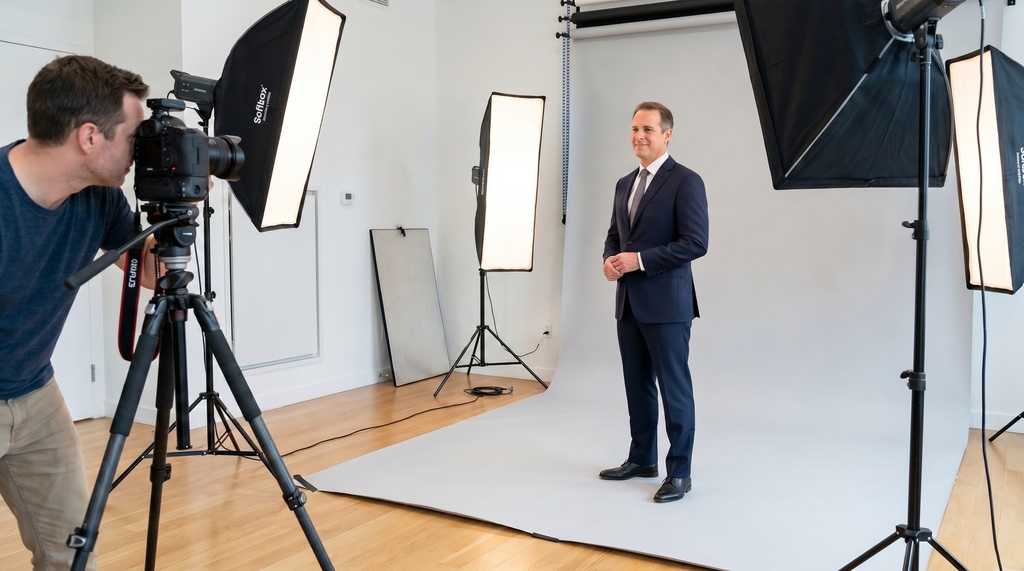
Let's talk production. The cost gap is large.
A traditional photographer runs $200 to $500 or more, with a 2-4 week turnaround. AI headshot tools run roughly $15 to $69 and deliver in a couple of hours. That's a 75-95% savings.
But there's a real tradeoff, and I won't pretend otherwise. The genuine micro-expressions that build trust, the slight asymmetry of a real Duchenne smile, are exactly what AI tools can struggle to capture. A skilled photographer catches a fleeting, real moment.
Here's how I'd choose:
- BigLaw or firm-directed shoots: Use the firm photographer. Consistency across all attorney bios matters more than personal preference, and Scale Headshots notes that mismatched photos signal lack of coordination.
- Mid-size firm: Hire a photographer for a firm-wide session. The cost pays back in conversion and brand consistency.
- Solo or small firm with budget: A professional session is ideal. One shoot covers your bio, LinkedIn, and directories for a year or two.
- Solo or small firm on a tight budget: A tool like Headshots by Magic Studio is a viable starting point. Pick the most restrained, conservative style and choose outputs where the smile reads as genuinely warm, not generated. Beats an outdated selfie from 2017.
Whatever you choose, don't scale what you haven't stabilized. Get one strong photo right before you push it everywhere.
Keep It Current and Keep It Honest
Two final points.
Update your headshot every one to two years. Capturely recommends annual to biennial updates for attorneys, the most frequent cycle of any industry they track. An outdated photo erodes the "real human" signal that makes the headshot work.
And keep the retouching light. ABA Model Rule 7.1 bars false or misleading communications. Heavy retouching that makes you look like a different person could cross that line. Over-retouching also kills the authenticity that builds trust. Light and natural wins.
The Bottom Line
Clients hire attorneys they trust. Trust comes from competence and approachability together, not one at the expense of the other.
The maximum-formality convention is a habit, not a strategy. It was built for print directories, and it persists because it feels safe. But the data is clear: a cold photo signals distance, and distance loses clients who are choosing between equally qualified lawyers.
The win is simple. Conservative styling that still reads as a real, present human being. Navy suit, neutral background, professional lighting, and a genuine slight smile that says you'd actually be glad to take the call.
Most growth problems are structural. This one is too. Fix the structure, and you out-compete equally credentialed peers without working a single extra billable hour.