
Therapist Headshots: Why Warmth Beats Authority for Bookings
Your therapist headshot is your top trust signal, not a formality. Learn the exact approachability factors that turn Psychology Today views into booked clients.

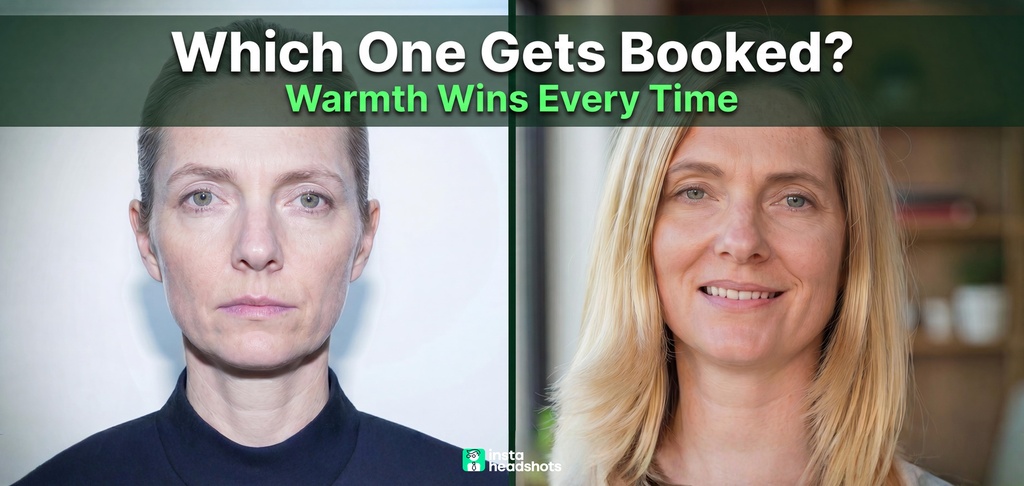
I looked at dozens of Psychology Today profiles last month. Same credentials. Same specialties. Wildly different results.
One therapist had a steady stream of inquiries. The one right next to her, with arguably better training, sat empty. The only real difference was the photo. After digging into the research, I found the pattern was not random. It was structural.
If your listing gets views but few contact clicks, the buck stops with the one thing you can change fastest: your face. Here is what actually converts an anxious stranger into a booked consultation, and how to fix your own photo today.
The Quick Answer: Approachability, Not Authority
Let me give you the takeaway before you scroll.
On a therapy directory, clients book based on perceived safety and warmth before they read a single word of your bio. The photos that win are not the most polished or authoritative. They are the ones with soft, direct eye contact and a genuine smile that signals "you are safe with me."
Here is the core checklist. Fix these and you fix your conversion problem:
- Gaze: Look directly into the lens. Soft and engaged, not a stare.
- Expression: A genuine smile that reaches your eyes, not a stiff neutral face.
- Framing: Tight head and shoulders. Face fills 60 to 70% of the circle.
- Lighting: Soft and diffused. No harsh shadows under the eyes or chin.
- Attire: Business casual. What you would wear to a first session.
- Background: Warm and inviting. Never clinical or stark white.
That is the whole game. The rest of this article explains why each one matters, backed by the data.
Your Photo Gets Judged in 100 Milliseconds
Here is the part most therapists underestimate. The decision happens before reading begins.
Princeton researchers found that people form trust judgments from a face in just 100 milliseconds. One-tenth of a second. More viewing time did not change the verdict. That snap judgment is your gatekeeper.
Think about how Psychology Today actually displays you. On desktop, a grid of 20 to 30 circular face thumbnails. On mobile, a single column. A prospective client is not reading credentials. They are scanning faces, looking for one answer: "Is this person safe?"
The specific features matter more than you would expect. Todorov's follow-up work showed that a face with a slight upward mouth and relaxed brow reads as trustworthy. A face with a tight mouth or angled brows reads as a subtle threat. Your expression is not aesthetic. It is a survival cue.
Most growth problems are structural. This one is too. If your photo fails the warmth test in that first tenth of a second, your bio, your specialties, and your training never get seen.
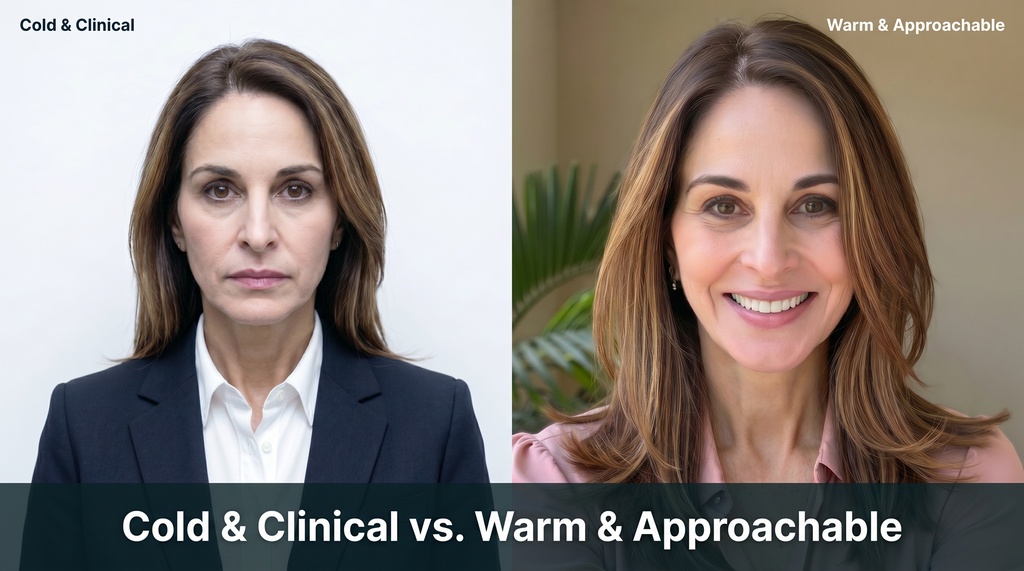
Why Warmth Wins When Competence Loses
This is where conventional headshot advice fails therapists. "Look professional and authoritative" is the wrong instruction for your field.
Susan Fiske's research established two universal dimensions of how we judge people: warmth and competence. The finding that matters: warmth is judged first and carries more weight in how people actually behave.
The behavioral piece is the kicker. The BIAS Map work from Cuddy and Fiske showed that warmth predicts active approach behavior. Competence only predicts passive admiration.
Read that again. A therapist who looks competent but cold gets admired. Not contacted. An anxious client needs the active behavior, the click on "Contact," and that requires perceived warmth.
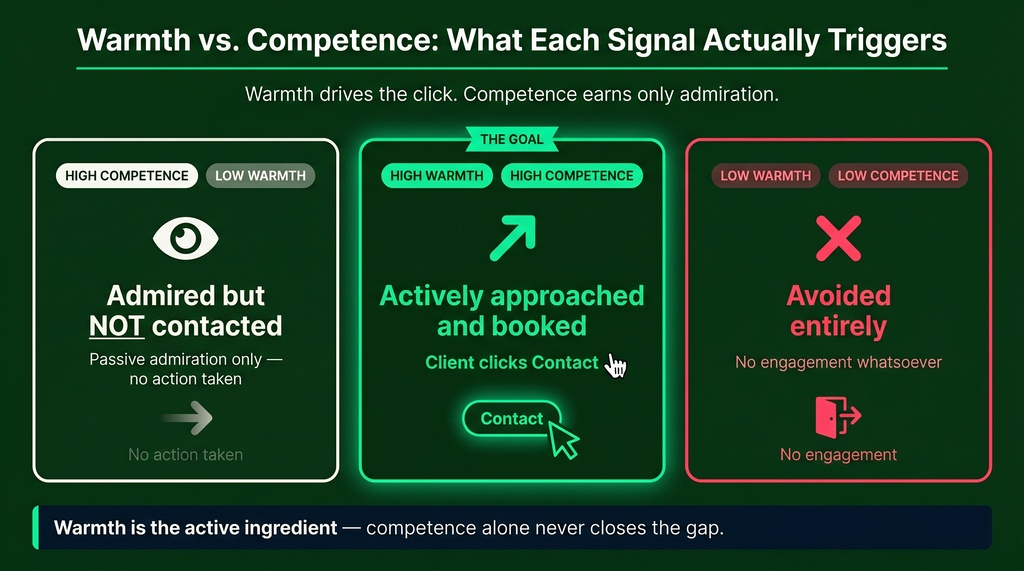
This is why therapy is different from law or finance. A lawyer's client asks, "Can this person deliver results?" Competence is the gatekeeper. A therapy client asks, "Do I feel safe with this person?" Warmth is the gatekeeper.
When someone is vulnerable, intent matters more than ability. A brilliant therapist who looks cold triggers avoidance. A moderately credentialed one who radiates warmth triggers approach.
The Six Factors That Build Trust in a Photo
Let me break down the levers. I treat this like progressive overload in the gym: small, specific adjustments that compound. Fix one factor and you improve. Fix all six and you transform your conversion rate.
Gaze: Look Into the Lens
Direct eye contact with the camera lens simulates the first moment of connection a client would feel walking into your room. Research confirms direct gaze amplifies perceived warmth and approachability.
Look into the lens. Not the screen. Not the photographer. Keep it soft, not a stare. Looking off to the side breaks that connection and reads as detached.
Expression: The Smile That Reaches Your Eyes
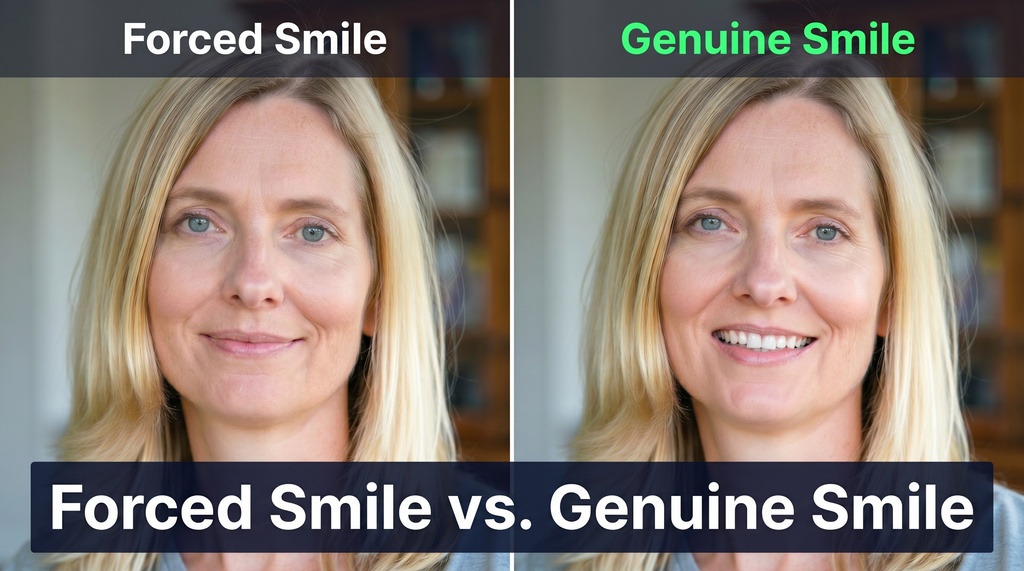
This is the single most powerful signal you have. A genuine smile, what researchers call a Duchenne smile, engages the muscles around your eyes. A meta-analysis found these smiles are linked to trustworthiness with an effect size of r = .51, far stronger than a mouth-only social smile.
The difference shows in the eyes. A real smile crinkles them. A forced one does not, and it reads as insincere. I wrote more about the eyes versus the lips distinction, because it is the detail most people miss.
A practical trick: have the photographer ask you to picture a client breakthrough moment right before the shutter clicks. The eyes do the rest.
Framing and Angle: Center the Face, Keep It Eye-Level
Psychology Today crops your photo into a circle, which cuts off roughly 22% of a rectangular frame at the corners. Anything near the edges disappears. Your face needs to fill 60 to 70% of that circle.
Camera angle sends a signal too. Low-angle shots looking up at you read as dominant and commanding. Eye-level or slightly above reads as equal and approachable. For a therapist, you want equality, not authority. A very slight head tilt softens the impression, but keep it subtle.
Lighting: Soft Always Wins
Soft, diffused light makes you look warm and welcoming. Harsh light, like direct flash or overhead fluorescents, casts shadows under the brow and chin that the brain links to coldness.
The easiest test is the nose shadow. Hard edges mean hard light. Soft edges mean soft light. Shoot near a large window on an overcast day and you get this for free. I cover the full lighting setup if you want to DIY it at home.
Attire: Dress for the First Session
This is where I see therapists overcorrect into stiffness. Attire research shows business casual hits the sweet spot, keeping competence high while maximizing warmth.
Formal attire, a stiff suit and tie, pushes you toward competence at the cost of approachability. That lands you in the "admired but not contacted" zone. Casual like a wrinkled t-shirt undermines both. The simple rule: wear what you would wear to a first session with a client.
| Attire | Competence | Warmth | Right For |
|---|---|---|---|
| Business formal (suit/tie) | Highest | Variable, often cold | Law, finance |
| Business casual (blazer/sweater) | High | High | Therapists |
| Casual (t-shirt/jeans) | Low | Variable | Neither |
Background: Warm, Never Clinical
A bright white wall signals a doctor's office. That is the opposite of emotional safety for someone seeking therapy. Warm-toned walls (soft beige, sage green, muted blue) create an inviting feel. Color does heavy lifting fast, which I dig into in our background guide.
Use a warm wall, a softly blurred home office, or a natural outdoor setting. Avoid anything that looks sterile.
What Anxious Clients Are Really Looking For
Step into the client's shoes for a second. They are stressed. They are scanning faces and feeling overwhelmed.
Research on the therapy search found that 78% of seekers cannot get a "good read" on a therapist from a directory listing. Your photo has to fill that gap. It is the one piece that can convey personality and emotional availability at a glance.
Therapists themselves admit this. On Reddit, one noted choosing a therapist based on photos was "less about appearance, and more about vibe. What feeling do you get from their photo." That feeling is what you are engineering.
There is even a fun data point on warmth cues. A TherapyDen analysis of 452 profiles found therapists with a dog in their photo were clicked 1.65 times more often. The dog itself is not the point. It is what the dog signals: warmth and approachability. You can get the same boost from your face alone.
The Self-Audit: Score Your Current Photo
Pull up your current Psychology Today photo right now. Run it through this checklist honestly.
The final test is the simplest. If you were an anxious stranger scrolling through 30 faces, would yours be the one that says "safe to approach"? Be brutal with yourself here. Constraints create clarity.
The Conversion Math That Makes This Worth It
Let me show you why this is not a vanity exercise. It is a business decision.
One practitioner shared a real benchmark: 8 calls from 120 profile visits, a 6.6% conversion rate. That means roughly 93% of viewers do not reach out. Your photo is one of the only levers you have to shift that.
If a warmer photo lifts that rate from 6.6% to 10%, the same 120 visits produce 12 contacts instead of 8. That is a 50% jump in inquiries with zero extra traffic. Leverage beats effort. You are not chasing more views. You are converting the ones you already have.
How to Get a Warm Headshot
You have three real paths. Each has a trade-off.

A professional photographer who does expression coaching is the gold standard for capturing a genuine smile. Expect to pay $150 to $500. Tell them to prioritize a real smile over a posed one. The trade-off is cost and scheduling, and some people freeze up in a studio.
A phone selfie with a tripod and good window light can work if you can relax enough to smile naturally. It is nearly free. The risk is suboptimal lighting and framing.
AI headshot tools are a middle path. Services like Headshots by Magic Studio generate studio-quality lighting and framing from your selfies for $49 to $69, ready in minutes instead of days. They are strong on lighting, background, and composition. The honest trade-off: AI can struggle to nail a genuine Duchenne smile, so upload reference selfies where you are already smiling naturally. The same trust principles apply to healthcare workers, which I covered in our guide on AI headshots for doctors.
| Method | Cost | Best At | Watch Out For |
|---|---|---|---|
| Photographer | $150-500 | Genuine expression coaching | Cost, scheduling |
| Phone selfie | $0-30 | Familiar, relaxed setting | Lighting, framing |
| AI tool | $49-69 | Fast, great lighting | Smile genuineness |
Whichever you pick, the method matters less than whether the final image hits the six factors. Don't scale what you haven't stabilized. Nail the warmth signals first.
The Bottom Line
Stop treating your directory photo as a checkbox. It is your single most powerful trust signal.
An anxious stranger decides whether you feel safe in 100 milliseconds, long before they read your bio. Warmth, not authority, drives the click. Soft eye contact, a genuine smile, gentle lighting, and an inviting background are what fill a caseload.
Run the self-audit today. Fix the factors you are failing. The clients you want are scanning faces for one thing, and your job is to make yours the face that says: you are safe here.