Best AI Headshot Generator for Actors and Models in 2026: What Casting Expects and Where AI Fits
Where AI headshots help actors and models, what casting sites ask for in a photo, and the AI headshot generators for actors compared on looks and speed.

The best AI headshot generator for actors is one that gives you many realistic looks of your own face quickly, so you can find your type, test commercial and theatrical looks, and keep your profiles current between photo shoots. Headshots by Magic Studio makes 50 headshots across 5 looks in about 15 minutes, and you see them all before you pay. For the main headshot you submit to agents and casting sites, many casting directors still expect a photo from a session with a photographer, and some casting sites ask for the photographer's name.
Below: what casting needs from a headshot, what the casting sites ask for, where AI headshots help actors and models, and the tools compared. Every figure comes from each site's own pages, checked on October 20, 2026.
What casting needs from a headshot
- A current likeness. Casting directors need the person who walks into the room to match the photo. Spotlight's own guidance is that a photo "must be 'natural' and an accurate representation of how you look".
- Head and shoulders, vertical. The standard print is 8 x 10 inches, framed from the chest up with your eyes about a third of the way down.
- Light retouching only. Stray hairs and blemishes can go; skin texture, lines and features stay.
- Your type, clearly. A commercial headshot is warm and approachable; a theatrical headshot is more grounded and serious. Most actors need both. Our guide to commercial vs theatrical headshots explains the difference.
What to wear, how to pose and how many you need are in our full guide to acting headshots.
What the casting sites ask for
| Site | Photo size | Files | Worth knowing |
|---|---|---|---|
| Actors Access | 500 x 700 pixels is "optimal" | could not find | two photos are free |
| Casting Networks | at least 360 x 360 pixels | JPG, PNG or GIF, up to 30 MB | its advice: "not a selfie" |
| Spotlight (UK) | at least 500 x 500 pixels | 1 MB to 40 MB | you cannot upload without the photographer's name |
| Backstage | could not find a minimum | JPEG, PNG or GIF, up to 100 MB | its thumbnail is a square crop of your main photo |
| 2400 x 3000 pixels (8 x 10 inches at 300 DPI) | for in-person auditions |
None of these sites publishes an upload rule against AI-made photos. Their advice points the other way, though. Backstage's own headshot guide, updated in October 2026, tells actors to skip AI-generated images as their acting headshot, because casting directors need to trust that the photo matches the actor. Spotlight asks for the photographer's name on every upload.
Every size is in our headshot dimensions guide.
Where AI headshots help actors
- Finding your type before you pay for a session. Seeing yourself in five looks, from a warm commercial smile to a darker, more serious frame, shows you which looks suit you and what to bring to your photographer.
- Planning wardrobe and backgrounds. Try colors, necklines and backdrops on your own face before the shoot day, instead of guessing on set.
- Your other profiles. A personal website, social media, a newsletter, and the LinkedIn profile for your day job or your teaching and coaching work.
- Staying current between shoots. After a haircut or a change in color, an AI set keeps your social and website photos up to date until your next session.
- Starting out. Students and new actors can see what a professional headshot of them could look like, and go into their first session knowing what they want.
Where a photographer still wins
- The headshot you submit for roles. Agents and casting directors read the main headshot as a promise of what they will see in the room. A session with a headshot photographer is still what they expect.
- Sites that ask for credits. Spotlight will not take a photo without a photographer's name.
- Model digitals. Agencies ask models for plain, unretouched digitals, head to toe, to see exactly how they look today. Those need a camera, not a generator.
For models, AI headshots are useful in the same places as for actors: testing looks, a portfolio site and social media, but not the digitals an agency asks for. Our guide to modelling headshots covers what agencies want.
AI headshot generators for actors compared
| Tool | Looks for actors | Headshots per shoot | Ready in | See them before paying |
|---|---|---|---|---|
| Headshots by Magic Studio | 5 looks per shoot, from casual to formal | 50 | about 15 minutes | yes |
| HeadshotPro | natural poses and a variety of looks | 30 | about 2 hours | no |
| BetterPic | commercial and theatrical looks, in an 8 x 10 crop | 20, in 4K, 1 style | 2 hours | no |
| Secta Labs | character looks such as "a gritty detective" | 200+ | under 1 hour | no |
| Dreamwave | commercial, theatrical, character and lifestyle looks | 40 | under 2 hours | no |
Figures are for each tool's entry pack.
Headshots by Magic Studio
Headshots by Magic Studio turns about ten of your own photos into 50 headshots across 5 looks in about 15 minutes. It trains a separate AI for each shoot, which keeps the results looking like you, and you see all 50 before you pay, so testing your looks carries no risk. Your photos are used only for your headshots and never for training other models, and your data is deleted automatically 30 days after your headshots are made.
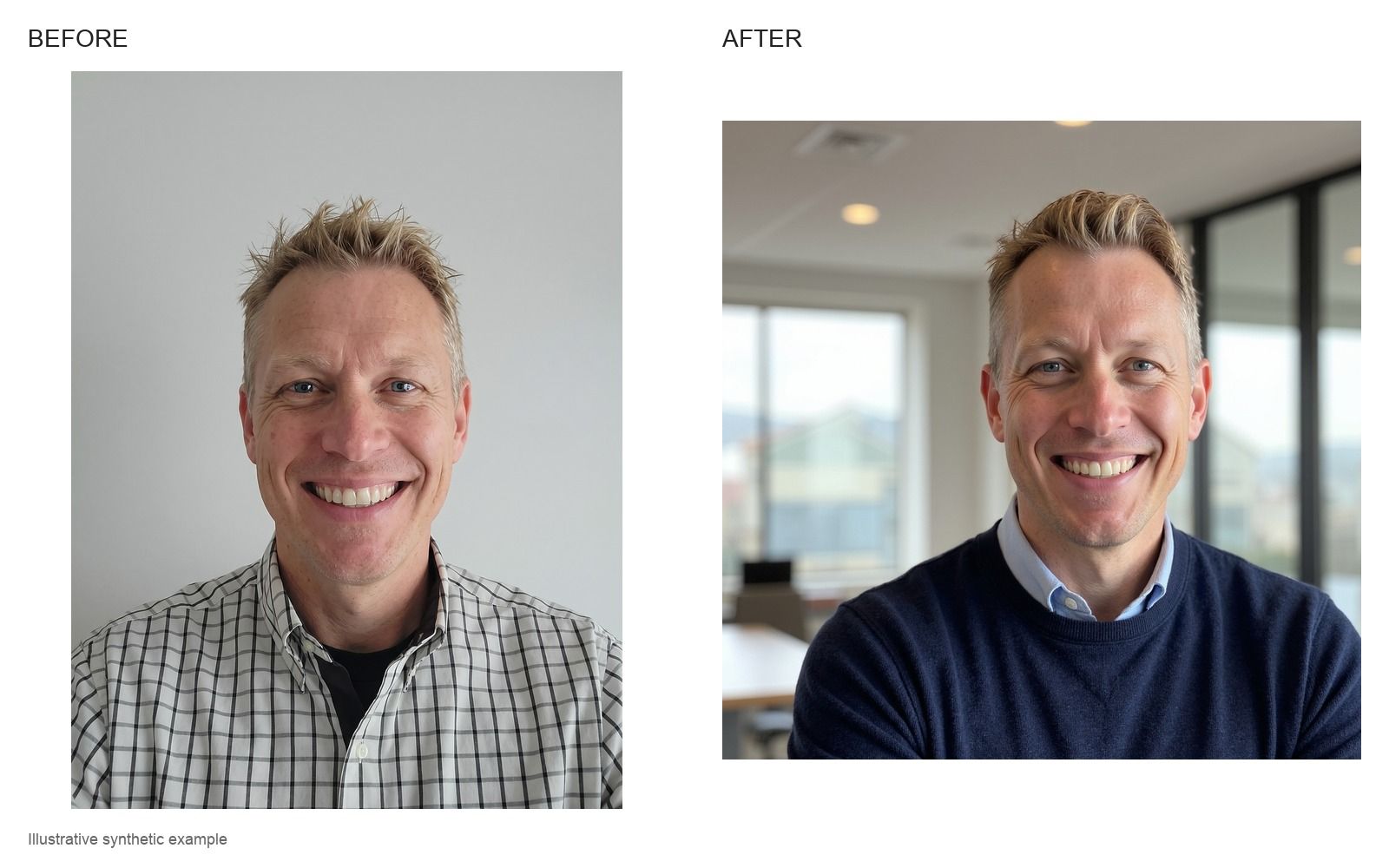
Best for: seeing yourself in several looks quickly before you book a session, and keeping your other profiles current.
HeadshotPro and BetterPic
HeadshotPro generates natural poses with subtle expressions. BetterPic offers commercial and theatrical looks in an 8 x 10 crop and 4K files. See Magic Studio vs HeadshotPro and Magic Studio vs BetterPic.
Secta Labs and Dreamwave
Secta Labs lets you generate character looks and gives the most images per shoot, but asks for 25 or more photos of you. Dreamwave offers commercial, theatrical, character and lifestyle looks from a single photo, with no refunds. See Magic Studio vs Dreamwave.
How actors can use Magic Studio before a headshot session
- Upload about ten recent photos. Use your current hair, color and glasses, so the results show you as you are now.
- Pick five contrasting looks. For example a bright commercial look, a darker theatrical look, and three wardrobe colors you are considering.
- Review all 50 with someone who knows your work. An acting teacher or agent will tell you which looks match the roles you go out for.
- Take your shortlist to your photographer. Share the looks, colors and framing you liked, and use the session time to get them right.
Common questions
What is the best AI headshot generator for actors?
For seeing yourself in several looks quickly, Headshots by Magic Studio: 50 headshots across 5 looks in about 15 minutes, and you see them before you pay. For the headshot you submit to casting, most casting directors still expect a photographer's session.
Can I submit AI headshots to casting sites?
Actors Access, Casting Networks, Spotlight and Backstage do not publish a rule against it, but their advice favours a real photo session: Backstage's guide tells actors to skip AI for their acting headshot, and Spotlight asks for the photographer's name on every upload.
What size should an acting headshot be?
8 x 10 inches for print, which is 2400 x 3000 pixels at 300 DPI. Actors Access suggests 500 x 700 pixels, Spotlight needs at least 500 x 500, and Casting Networks at least 360 x 360.
What is the difference between commercial and theatrical headshots?
A commercial headshot is bright, warm and smiling, for adverts and commercials. A theatrical headshot is more serious and grounded, for film, television and stage. Most actors keep one of each.
Can models use AI headshots?
For a portfolio site, social media and testing looks, yes. For the digitals an agency asks for, no: those are plain, unretouched photos that show exactly how you look today.